
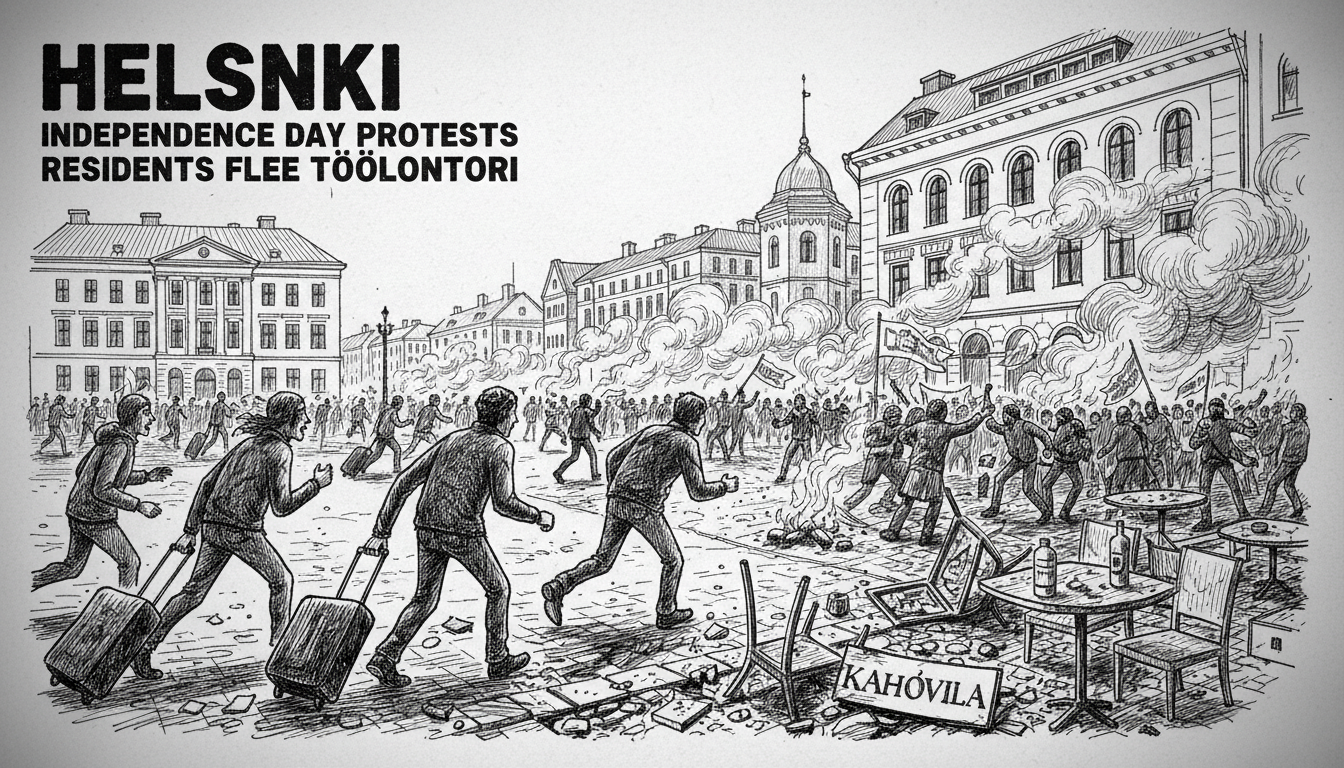
Residents and business owners in Helsinki's Töölöntori square are preparing to evacuate their homes ahead of the annual Independence Day demonstrations, citing growing fears over safety and disruptive confrontations. The square is set to host the 612 torchlight procession and the counter-demonstration Helsinki Without Nazis, a recurring clash that has escalated in scale and intensity in recent years. Local families now view the event not as a civic celebration but as an annual security threat that forces them to abandon their neighborhood.
Sara Takala, a mother of two living on the edge of the square, described the experience as deeply unsettling. She said in an interview that while protests belong in an open society, Töölöntori is simply too small a venue for such large opposing groups. Takala's family left their home last Independence Day and plans to do so again, a decision driven by the sheer size of the crowds that now make simply exiting her front door feel unsafe. She noted that police control would be easier in a larger, more open space, a sentiment echoed by other locals.
The tangible impact extends beyond residents to the local economy. Restaurant owners report significant financial losses and property damage linked to the demonstrations. Raimo Pekkonen, who runs the Mamma Rosa restaurant, stated his establishment was completely blockaded during last year's events, preventing customers from entering or leaving. He has proactively contacted police this year, hoping for secured access, but fears customers will cancel reservations due to the anticipated chaos. For many restaurants, the Independence Day service is a crucial revenue event, making the disruption a direct threat to their viability.
Another entrepreneur, Toni Määttä of the B5 Black restaurant, confirmed the pattern of damage, including broken seasonal lights, graffiti, and trespassers on his terrace. He estimates his sales will halve on the day because people are too afraid to come. Määttä expressed a sense of helplessness, questioning what a small business owner could possibly do to influence the location of such a large-scale demonstration. Police made forty arrests around Töölöntori during the previous year's events and have historically deployed mounted police units to manage the crowds.
The situation at Töölöntori highlights a broader tension in Finnish society between the right to assembly and the right to peace and security in one's home and workplace. The 612 procession, which has included participants making Nazi salutes in the past, and the militant counter-protests it attracts, represent an extreme polarization that spills into a residential area. This forces ordinary citizens to bear the consequences. The City of Helsinki and police face an ongoing challenge in balancing these fundamental democratic rights, a task made more difficult by the square's confined urban layout. The recurring nature of the problem suggests current mitigation strategies are insufficient, pointing to a need for a more permanent solution, such as relocating the demonstrations to a more suitable venue designed for large-scale public order policing.
From a policy perspective, the Eduskunta has consistently defended freedom of speech and assembly, but local government officials in Helsinki must also answer for the recurring public safety and economic concerns of their constituents. The event tests the operational limits of the Helsinki Police Department and raises questions about municipal event planning protocols. For international observers, the annual strife at Töölöntori serves as a stark reminder that even in a stable Nordic democracy, societal fractures can manifest in disruptive public confrontations, with local communities caught in the middle.