
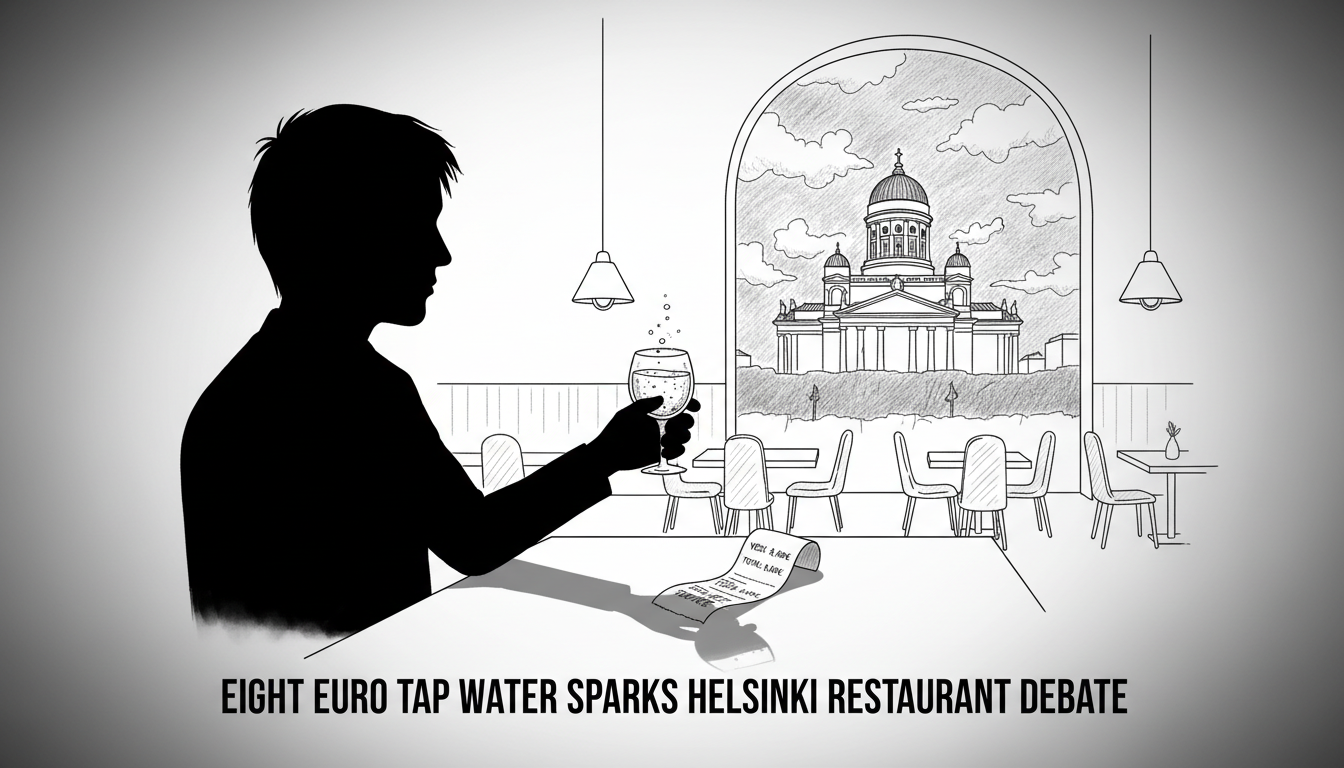
A Helsinki diner's eight euro charge for a bottle of carbonated tap water has ignited a fresh debate on restaurant pricing transparency and consumer expectations in the Finnish capital. Antti Kajander, who dined with his wife at a restaurant in the Kamppi district, received the unexpected bill for a 0.75-liter bottle of filtered and carbonated in-house water, a concept offered by the Swedish brand Thoreau. The experience left Kajander questioning what constitutes a fair price for water and fearing that unclear pricing could drive customers away during a difficult economic period for the hospitality sector.
Kajander paid the bill without complaint but described the charge as a 'little surprise.' He had anticipated a cost of a few euros, comparable to bread basket charges common in other European countries like Spain. The non-carbonated tap water alternative carried no extra charge. This incident highlights a growing tension in Helsinki's dining scene, where main course prices in dinner restaurants can hover around forty euros, leading some patrons to describe the experience as feeling like robbery. There have been public calls to reduce the value-added tax on restaurant products to alleviate pressure.
The debate over water pricing is not new. A minor controversy arose when a prominent Helsinki restaurant charged 1.50 euros per glass for plain tap water. Restaurant bankruptcies have become commonplace in recent years, affecting both new establishments and long-standing venues like the nearly two-decade-old Bruuveri brewpub in Kamppi. The core issue, as Kajander points out, is the risk of an unpleasant aftertaste from pricing that feels unfair or opaque. This sentiment can ultimately deter customer visits, a dangerous trend for an industry already struggling to recover.
From a policy perspective, this consumer story touches on broader themes of market regulation and consumer protection often debated in the Eduskunta, Finland's parliament. While the government typically avoids direct price controls in a market economy, there is an ongoing discussion about the responsibilities of businesses to provide clear information. The Ministry of Economic Affairs and Employment monitors consumer trends and can issue guidelines, but enforcement relies on the Finnish Competition and Consumer Authority (FCCA). The FCCA states that prices must be indicated clearly before a purchase commitment is made, a rule that applies to restaurant menus and verbal offers.
This case also connects to EU-level directives on unfair commercial practices, which prohibit actions that materially distort the economic behavior of the average consumer. An opaque pricing strategy for a basic necessity like water could potentially fall under scrutiny if it becomes a widespread practice. For international visitors and expats in Helsinki, this story serves as a practical reminder to confirm prices for all items, including water, before ordering. The cultural expectation in many Nordic countries is for tap water to be free, making such charges particularly jarring. The survival of Helsinki's vibrant restaurant culture may depend on balancing fair business margins with transparent communication that maintains customer trust and loyalty.
Honest commentary: Charging eight euros for processed tap water, regardless of the filtration and carbonation process, is a bold commercial decision that tests the limits of customer tolerance. In a city with a high cost of living, restaurants walk a fine line between covering operational costs and alienating their clientele. The real problem is not the price itself but the potential for surprise, which suggests a failure in basic customer communication. If a restaurant believes its enhanced water product justifies a premium, that value must be communicated upfront and clearly, not discovered on the final bill.