
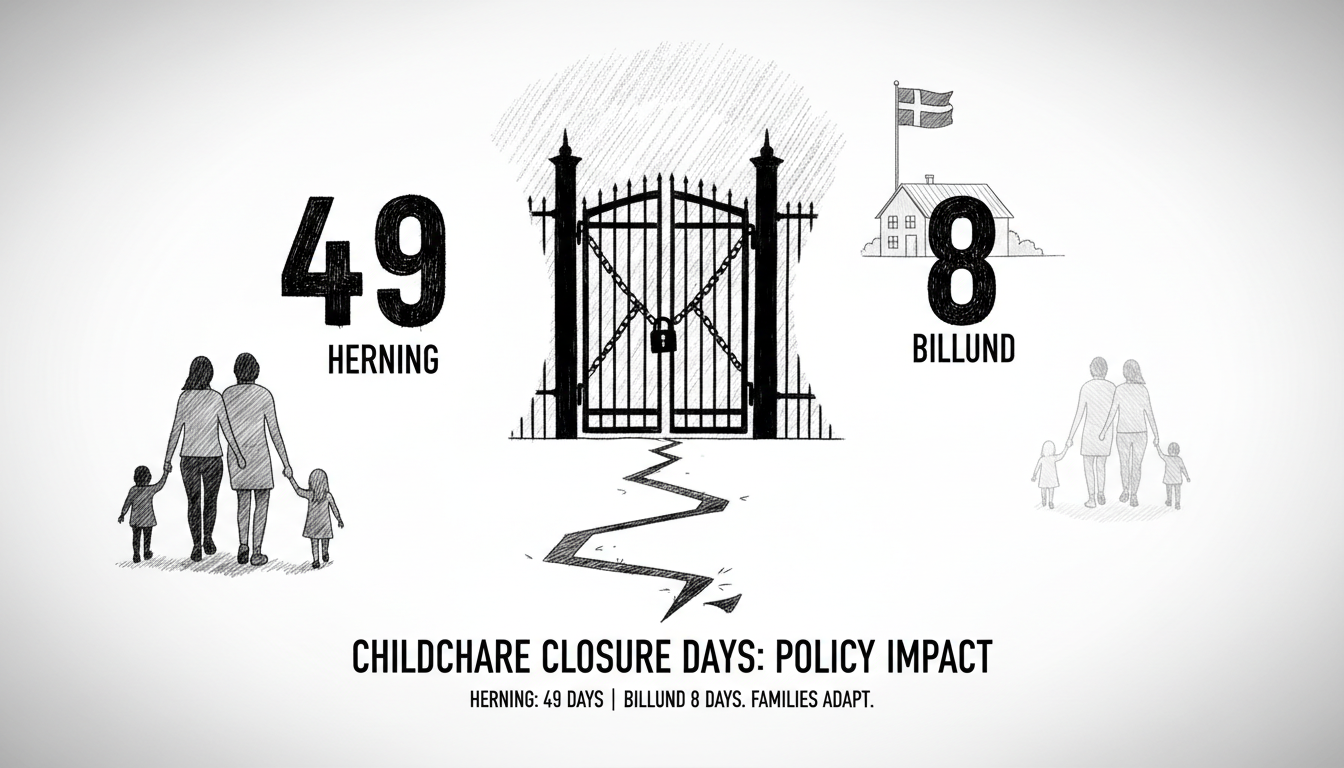
Parents in Herning face 49 days of childcare closures or alternative arrangements each year. Just south in Billund, families only deal with 8 closure days annually. This stark difference emerges from a Danish Employers' Association analysis of municipal childcare policies.
Child development expert Grethe Kragh-Müller from Aarhus University explains the impact on children. Moving between unfamiliar institutions with new staff can be challenging for young children. They need stable environments with familiar caregivers.
Herning's deputy mayor Anne Mette Bang Rasmussen defends the approach. The municipality operates 40 childcare facilities. Some locations combine children when few attendees are expected. Parents help make these decisions through parent boards, she notes.
Billund takes the opposite approach. Mayor Stephanie Storbank emphasizes workplace stability for parents. Fewer closure days help families manage work-life balance. Children also thrive better in consistent environments, she adds.
National guidelines permit closure days only when very few children attend. Keeping facilities open would be disproportionately expensive in these cases. Municipalities must provide alternative care on weekday closures.
Herning offers six weeks of combined care during summer holidays. Parents deliver children to different locations with unfamiliar staff and children. The deputy mayor says she receives no complaints about this system.
Billund's mayor calls their minimal closure days a deliberate choice. They recognize that completely avoiding closures isn't possible. But they try to minimize disruptions for families and children.
The childcare closure gap highlights how municipal policies directly impact family logistics across Denmark. Parents must navigate these local variations while balancing work commitments.