
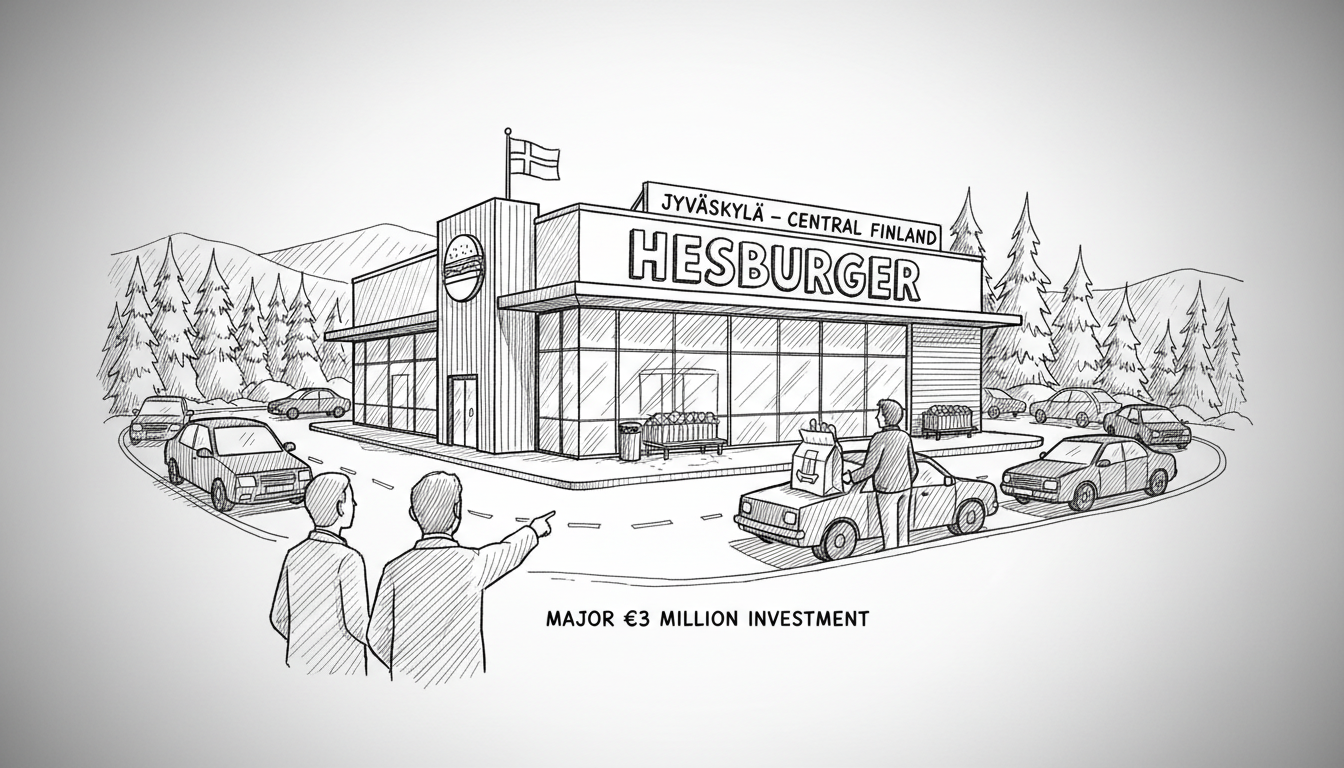
Finnish fast-food chain Hesburger has opened a new drive-in restaurant in the Seppälä district of Jyväskylä, representing a substantial three-million-euro investment in the regional economy. The 470-square-meter facility at the corner of Ahjokatu and Seppäläntie streets began construction last spring and required seven months to complete, with the official opening taking place on Friday, December 5. This marks the fifth Hesburger location in the Jyväskylä area and the second specifically within the Seppälä commercial zone, complementing an existing restaurant connected to the local Prisma hypermarket. The company's international communications and marketing director, Ieva Salmela, stated the new drive-in represents a crucial investment designed to enhance service offerings in a busy retail area.
This expansion occurs against a backdrop of cautious consumer spending and intense competition within the Finnish quick-service restaurant sector. Analysts note that such a confident capital expenditure signals Hesburger's commitment to its domestic market footprint, even as it continues international operations across the Baltic states and beyond. The drive-in format specifically targets convenience for car-borne customers, a strategic choice in a country where private vehicle use remains high, particularly in urban fringe commercial hubs like Seppälä. The investment also provides local employment opportunities in construction and ongoing restaurant operations, contributing to the regional economic ecosystem in Central Finland.
For international observers, Hesburger serves as a notable example of a Nordic brand that has successfully challenged global giants like McDonald's on its home turf. Founded in Turku in the 1970s, the chain has grown to become Finland's largest hamburger restaurant company, often touted as a symbol of domestic entrepreneurial success. Its menu adaptations to local tastes, including items like the 'Fazer Blue' chocolate milkshake featuring a iconic Finnish chocolate brand, illustrate a deep understanding of regional consumer preferences. The decision to invest millions in a new domestic store format, rather than solely focusing on international growth, underscores a calculated bet on sustained local demand.
The opening highlights broader trends in Nordic retail and commercial real estate, where large-scale shopping districts like Seppälä function as key community hubs outside city centers. These areas combine grocery stores, department stores, specialty retailers, and food service, creating destinations that serve wide catchment areas. A new restaurant of this scale is not merely a food outlet but a component that increases the overall attractiveness and dwell time within the commercial zone. The success of this Hesburger location will likely be monitored by other chains considering similar investments in Finland's secondary urban centers, where economic resilience is being tested.