
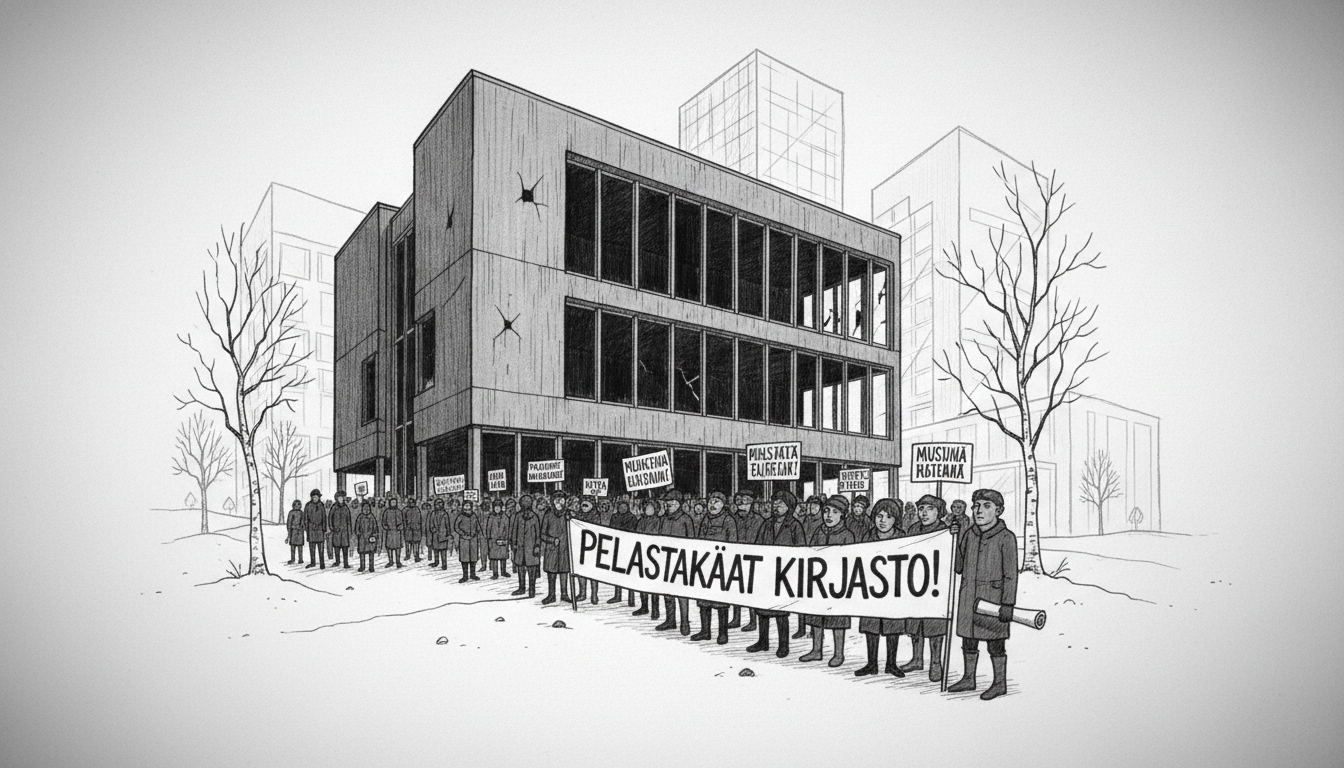
The abandoned Kortepohja library building in Jyväskylä stands as a ghost of its former self, with graffiti-covered walls telling stories of neglect. Property director Tuomas Kuronen seeks demolition permits for the 1972 structure, citing poor condition and repeated vandalism as primary reasons. The Central Finland Museum opposes the demolition application for the municipally protected building, creating a standoff between preservationists and city officials.
This conflict represents a broader pattern across Finnish municipalities struggling with heritage conservation. Local residents express confusion about why the library remains empty three and a half years after closing while still bearing its original signage. The building's protected status under city planning regulations complicates demolition efforts, requiring special exceptions that preservation authorities appear unwilling to grant.
Finland's architectural preservation laws typically favor maintaining culturally significant structures, especially those representing specific periods of municipal development. The 1970s construction period marks an important era in Finnish public architecture, characterized by functionalist designs serving growing suburban communities. Demolishing such buildings often requires demonstrating either safety hazards or economic infeasibility of renovation, thresholds the city property department must clearly meet.
The situation reflects ongoing tensions between municipal efficiency and cultural heritage protection that frequently emerge in Finnish local politics. City development departments typically prioritize practical considerations like maintenance costs and land use optimization. Meanwhile cultural authorities emphasize historical value and community identity preservation, creating natural institutional conflicts that require political resolution.
Local government property decisions in Finland follow strict procedural requirements, including multiple expert assessments and opportunity for public comment. The demolition application will likely proceed through several administrative levels before any final determination. Previous similar cases in other Finnish cities have sometimes resulted in compromise solutions where buildings undergo partial preservation or adaptive reuse.
The empty library's location in a residential neighborhood adds community pressure to the decision-making process. Residents often develop strong attachments to neighborhood institutions like libraries, even after their original functions cease. The building's current state of disrepair nevertheless presents legitimate concerns about safety and neighborhood aesthetics that municipal authorities cannot ignore.
This case demonstrates how Finnish municipalities balance practical governance with cultural preservation responsibilities. The outcome could establish important precedents for handling similar heritage buildings throughout Central Finland and beyond. Both sides present reasonable arguments, but the final decision will reveal much about contemporary Finnish values regarding architectural heritage and urban development priorities.