
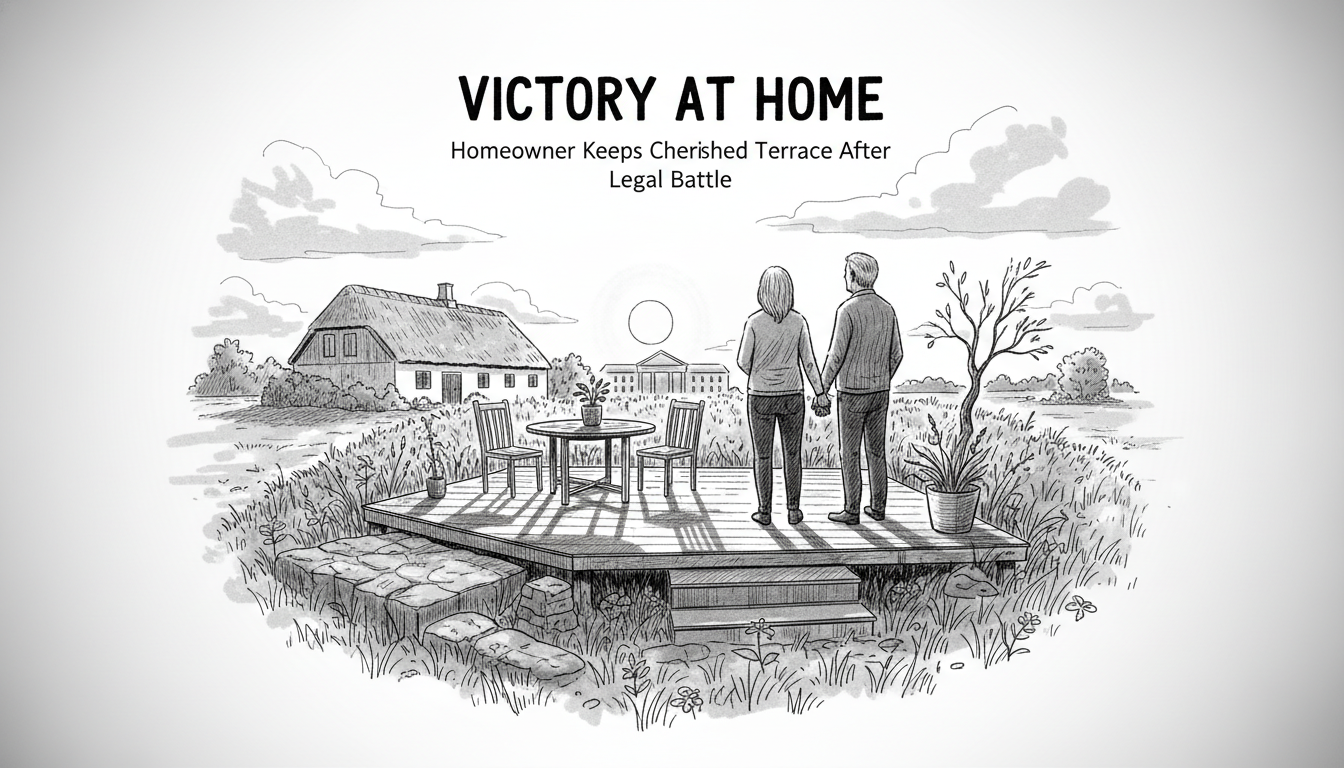
Leif Vestergaard can finally enjoy his morning coffee on his terrace after a two-year legal fight with local authorities. The Danish homeowner has secured permission to keep the structure that was once slated for demolition.
Vestergaard and his family purchased their property in Redsted on Mors island in 2014. They immediately fell in love with the covered terrace, which had been built in 2012 by the previous owner.
"It was the first thing we loved when we bought the property," Vestergaard said. "We always sit there enjoying a good cup of coffee."
That daily ritual was threatened when Morsø Municipality discovered the terrace stood within 100 meters of ancient burial mounds. Danish law protects such historical sites with strict building restrictions.
The burial mounds were first registered in 1989, 23 years before the terrace construction. Authorities argued the structure violated protection laws and ordered its removal by June 2025.
Vestergaard refused to accept the decision. "It didn't seem right or reasonable," he explained.
The breakthrough came after local media coverage attracted attention from legal experts. One lawyer provided crucial advice: because the burial mound was overgrown, only a two-meter radius around it remained protected rather than the full 100 meters.
Armed with this new information, the family appealed again. This time they succeeded.
"I'm glad I took up the fight," Vestergaard said. "But it's crazy that I had to understand all this legislation myself, or it would have been torn down long ago."
The homeowner praised local mayor Hans Ejner Bertelsen for intervening. "He contacted all the authorities he could and asked, 'Listen, can this really be right?' So I'm very satisfied with the mayor."
Vestergaard acknowledged the media attention played a crucial role. "If it weren't for all the coverage, there would have been an excavator in my backyard already, and it would have been removed."
The family now celebrates the end of their long battle with smiles and relief. Their terrace remains standing, preserving their favorite spot for morning coffee.
This case highlights how ordinary citizens sometimes must become legal experts to protect their property rights against bureaucratic decisions. The outcome shows that persistence and proper legal advice can overcome even seemingly settled administrative rulings.