
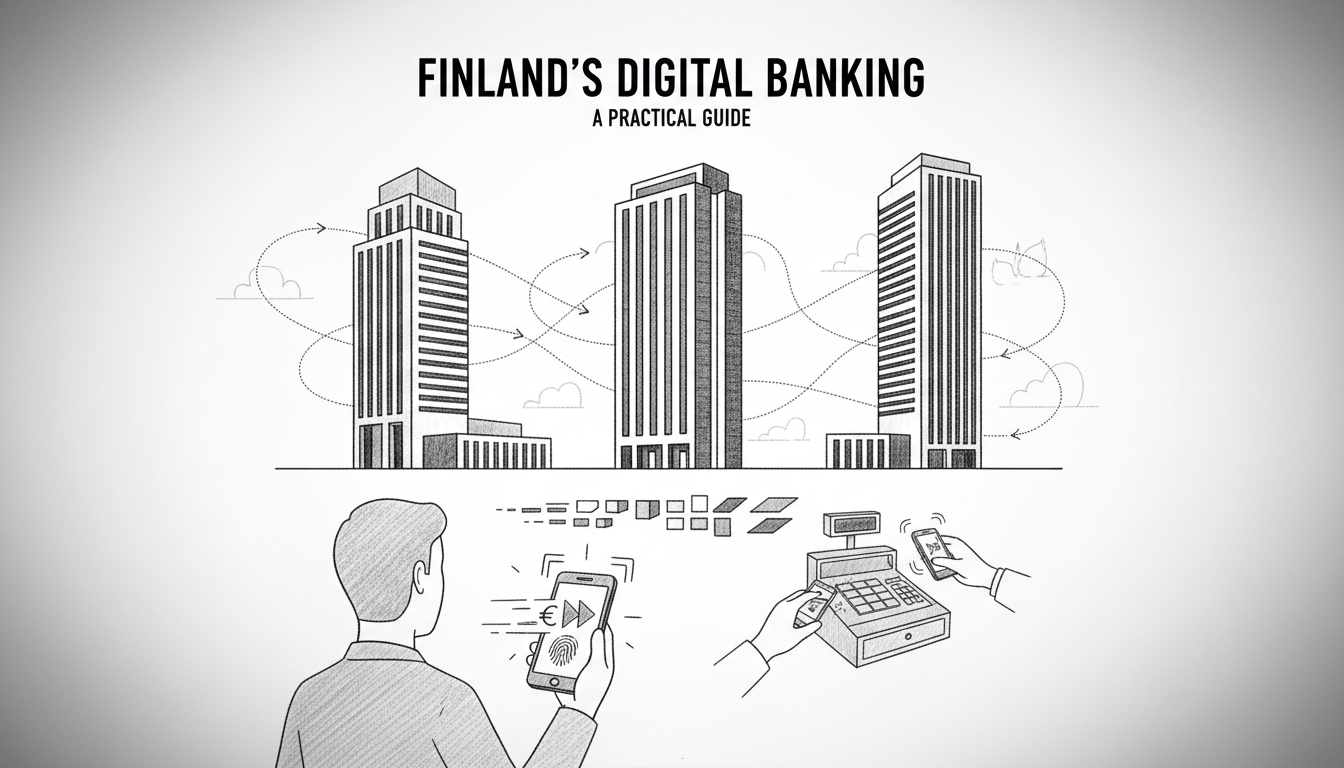
Finland's banking system operates with near-universal digital access. Over 99% of adults have bank accounts. Cash transactions represent less than 5% of payments. This digital dominance shapes daily life for residents and businesses.
Core Banking Infrastructure
Finland's banking sector centers on three major institutions. OP Financial Group serves as a cooperative network. It includes over 160 member banks. Nordea and Danske Bank complete the dominant trio. These banks control approximately 80% of the market. They operate extensive branch networks across urban and rural areas. Digital banking penetration exceeds 90% among account holders.
Mobile banking apps like Nordea's Mobile Bank and OP's Pivo dominate daily use. These apps handle everything from transfers to investment management. OP Financial Group's cooperative structure offers unique advantages. Members receive profit-sharing dividends. This model keeps fees competitive. Basic account maintenance costs about €3-€5 monthly across major banks.
Tools
Call home for less
Save up to 90% on international calls to family and friends.
Links may be monetized via affiliate partners.
Payment Systems in Practice
Finnish payment habits prioritize speed and security. Mobile payments account for over 60% of transactions. The Siirto instant payment system enables real-time transfers. It works between different banks 24/7. Transfers arrive within seconds. This system replaced traditional bank transfers taking business days.
Contactless card payments dominate physical retail. The contactless limit sits at €50 per transaction. Mobile wallets like Apple Pay and Google Pay see rapid adoption. They work with nearly all payment terminals. Online shopping defaults to bank-issued verification codes. This adds security without cumbersome passwords.
Business payments rely heavily on e-invoicing. Over 70% of B2B invoices move electronically. Platforms like Basware and Maventa automate this process. They integrate directly with accounting software. This reduces administrative costs significantly.
Digital Banking Evolution
Finland's banking digitization accelerated after the 2008 financial crisis. Branch networks shrank by 40% in a decade. Digital services expanded correspondingly. Banks invested heavily in cybersecurity. Two-factor authentication became standard for all online access.
Newer entrants like S-Pankki leverage existing retail networks. It operates through S-Group grocery stores. This model offers basic banking with lower fees. Monthly costs can drop to €0 for active customers. Traditional banks responded with similar basic accounts.
Open banking regulations created new opportunities. Third-party providers can access bank data with customer consent. Services like Enfuce offer card issuing without traditional banking licenses. This fosters innovation in payment solutions.
Practical Banking Setup
Opening an account requires identification and Finnish social security number. EU citizens can use passports. Non-EU residents need residence permits. Most banks process applications within two working days. Digital onboarding completes entirely online for many customers.
Essential services include online banking credentials and mobile banking apps. Banks issue electronic identification certificates. These enable access to government services. They verify identity for everything from tax filings to medical records.
International transfers use standard IBAN numbers. Currency exchange happens at interbank rates plus 0.5-1% fees. For regular transfers, services like Wise often prove cheaper. They charge about 0.5% versus banks' 1-3%.
Frequently Asked Questions
How do I open a bank account in Finland?
Visit any major bank's website. Start the digital application process. You need a passport and Finnish social security number. EU citizens complete everything online. Non-EU residents visit a branch with residence permits. Accounts activate within two working days typically.
What are typical banking fees?
Basic account maintenance costs €3-€5 monthly. Card payments carry no additional fees domestically. International transfers cost 1-3% of the amount. ATM withdrawals from other banks' machines cost €2-€3 per transaction. Many banks waive fees for students or minimum balances.
Which payment method works everywhere?
Contactless debit cards function at 99% of retailers. Mobile payments through Apple Pay or Google Pay work identically. Cash acceptance has declined to about 50% of businesses. Always carry a card as backup.
How secure are Finnish banking systems?
Two-factor authentication protects all online access. Banks guarantee funds against unauthorized transactions. Fraud rates sit below 0.01% of transactions. Never share verification codes. Banks never request these via phone or email.
Can I use foreign credit cards in Finland?
Visa and Mastercard work at most retailers. American Express faces limited acceptance. Inform your home bank about travel plans. Foreign transaction fees typically add 3% to purchases. Consider getting a local account for long stays.
What happens if I lose my bank card?
Immediately block it through your mobile banking app. Replacement cards arrive in 3-5 business days. Emergency cash services exist at bank branches. Keep your banking credentials separate from your physical card.
How do Finns pay each other casually?
Mobile payment apps dominate personal transfers. Popular options include MobilePay and Siirto. They use phone numbers for identification. Transfers complete within seconds. These services work across different banks without fees.