
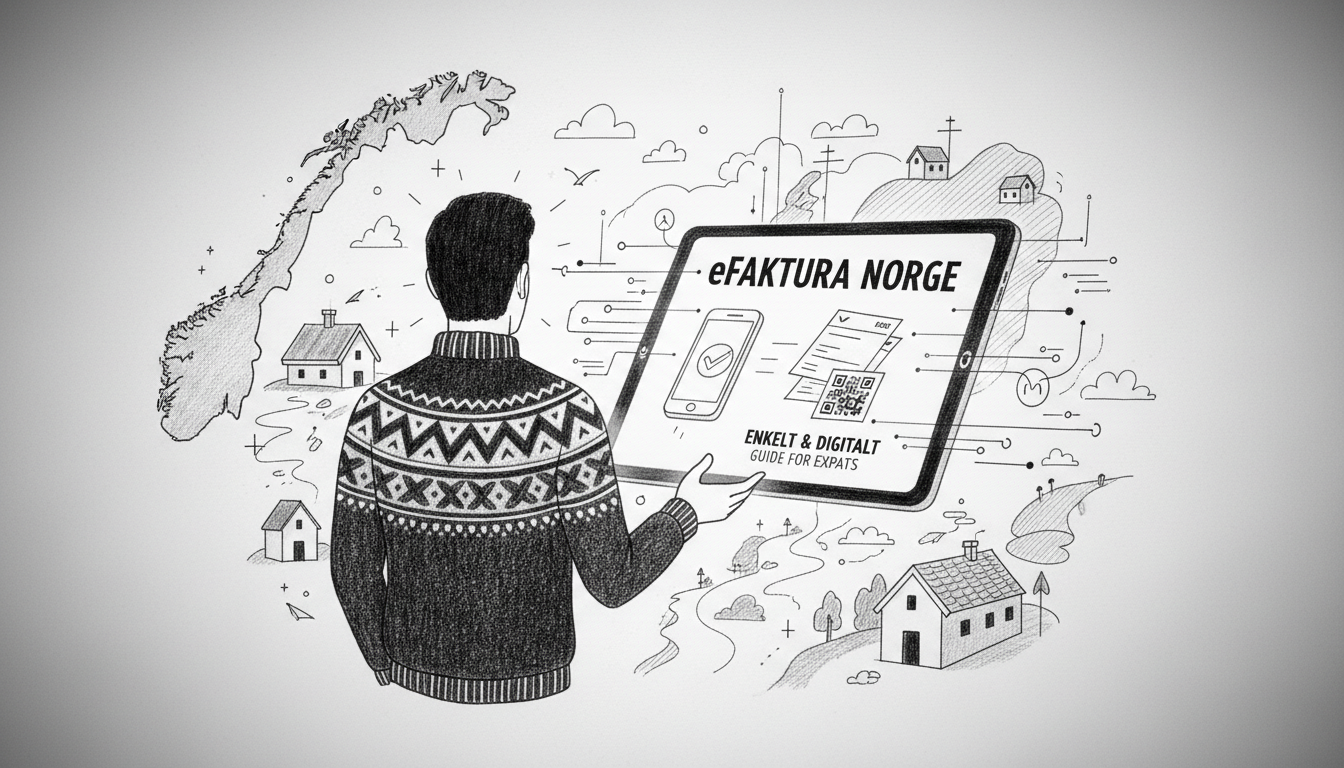
Norway's eFaktura system handles nearly all the country's invoices electronically. This digital billing standard defines financial life and presents a crucial first hurdle for newcomers. Mastering it is less about technology and more about understanding a fundamental aspect of Norwegian efficiency.
The Paperless Reality of Norwegian Bills
Imagine a country where paper bills are almost extinct. In Norway, eFaktura is the universal standard for electronic invoicing. Bills from your electricity provider, phone company, municipality, and even small businesses arrive directly in your online or mobile banking app. You review the invoice and pay it with a single click, using your secure BankID for verification. The system is seamless, fast, and integrated into the core of Norway's digital society.
This widespread adoption is a product of national strategy. For years, Norwegian authorities and businesses pushed for digital solutions to streamline processes. The result is an ecosystem where companies report significant savings on administrative costs by ditching paper. Consumers benefit from automatic reminders and a centralized place to manage all outgoing payments. Late payments become rare when your bill lives inside the app you check daily.
Your First Steps: Bank Account, ID, and Activation
For an expat, accessing this system requires three foundational elements. First, you need a Norwegian bank account. Major banks like DNB, Nordea, and SpareBank 1 all offer current accounts tailored to new residents. Banking fees vary, so it is wise to compare options based on your needs.
Second, you must obtain a Norwegian National Identity Number. You apply for this through the Norwegian Tax Administration. This number is your key to the entire digital society, not just banking.
Third, you need BankID. This is your personal digital signature, issued by your bank. It costs an annual fee, which your bank can confirm upon setup. Over 90% of Norwegian adults use BankID. It secures everything from logging into your bank to signing rental contracts and accessing health services. Without it, you cannot approve an eFaktura.
Setting Up and Using the System
Once your bank account is active and BankID is ready, setting up eFaktura is straightforward. Log into your bank's online portal or mobile app. Navigate to the payments or invoice section, often clearly labeled "eFaktura." Here, you can add companies as senders. Start with your essential utilities—power, water, internet. When these companies send a bill, it will appear in this queue.
The process is simple. An invoice from Hafslund Strøm for electricity appears. You open it, see the amount and due date, and click "Approve and Pay." Your bank app prompts you to confirm with BankID. This takes seconds. Payment is immediate, and a digital receipt is saved in your transaction history. For recurring bills of a fixed amount, like a monthly mobile plan, you can often set up automatic approval. The system pays it without any action from you.
Why Norway Succeeded Where Others Struggle
Norway's near-total adoption of eFaktura is not accidental. It stems from a unique blend of high digital trust, excellent infrastructure, and coordinated policy. "The success of eFaktura is a textbook case of ecosystem alignment," says Lars Mikkelsen, a tech analyst focusing on Nordic digital transformation. "Banks, government, and businesses all agreed on a single, secure standard built around BankID. This avoided fragmentation and gave everyone confidence."
Public trust in digital systems is exceptionally high in Norway. People trust their banks and the security of BankID. This trust overcame the natural hesitation about handling all finances digitally. The government also led by example, adopting eFaktura for tax communications and public services early on.
The infrastructure supports it. Norway has widespread high-speed internet and near-universal smartphone adoption. Banks invested in user-friendly apps that make the process effortless. For the average Norwegian, eFaktura is not a special feature. It is just how bills work.
Solving Common Expat Challenges
Newcomers still face hurdles. The most common is simply knowing where to look. Your bills are not in your email. They are not physical letters. They live inside your banking app, which you must check regularly. Missing this can lead to missed payments.
Another challenge is with international companies or very small local vendors that might not use the system. In these cases, you may receive a standard electronic invoice via email or a paper bill. You then process it as a manual bank transfer using the account number and KID reference provided.
Language can be a barrier. While most bank apps offer English interfaces, the invoices themselves from Norwegian companies will be in Norwegian. Key terms to know are faktura (invoice), forfallsdato (due date), and beløp (amount). Using translation tools on your phone can help in the beginning.
Experts advise a proactive approach. "Do not wait for the first bill to arrive," advises Sofia Jensen, a consultant who helps expats settle in Oslo. "Once your BankID is active, go into your eFaktura section and actively add the companies you know you will use. This primes the system. Also, always review invoices, even small ones, for the first few months to understand the patterns."
The Bigger Picture: A Glimpse into Digital Norway
Understanding eFaktura provides a window into the broader Norwegian philosophy of digital public life. Systems are designed to be secure, universal, and efficient. This model is now studied by other countries aiming to digitize their own economies. The innovation hubs in Oslo and Trondheim often export this knowledge, with Norwegian tech startups specializing in fintech and digital ID solutions.
The system keeps evolving. New features allow for splitting bills between roommates directly in the bank app or linking invoices directly to accounting software for freelancers. The underlying principle remains: centralize, simplify, and secure.
For expats, conquering eFaktura is a rite of passage. It marks the moment you move from being an outsider to participating in the streamlined flow of daily Norwegian life. It is your first real interaction with the country's famed digital governance. Once set up, you will likely wonder how you ever managed the clutter of paper bills and manual payments. In this case, the future arrived first in Norway, and it works remarkably well.
Will other countries replicate this model of seamless digital integration, or does it require Norway's specific blend of trust and homogeneity to succeed?