
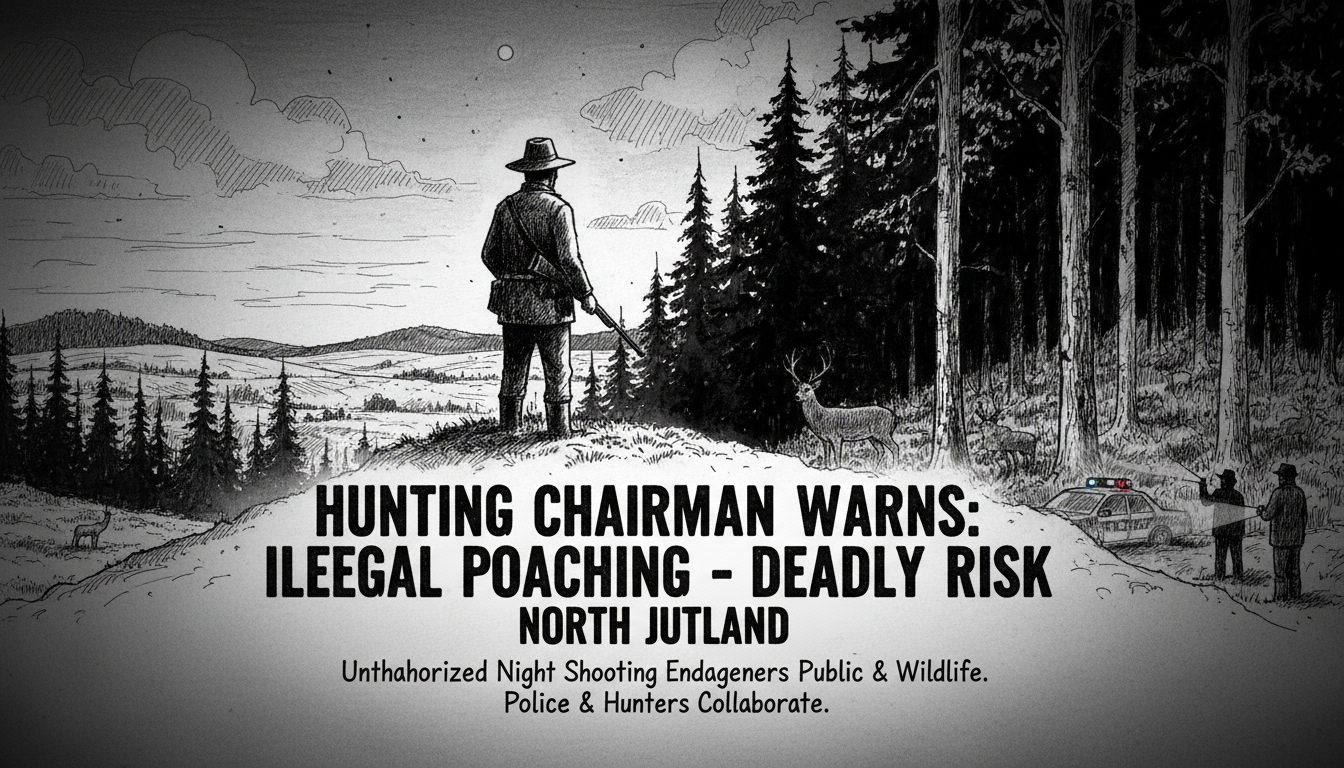
The peaceful marshes of Hals Mose near Denmark's Kattegat coast face a dangerous new threat after dark. Local hunters and police report increasing illegal poaching activity that endangers both wildlife and public safety.
Morten Bruun, chairman of the Hals Hunting Association, confirmed multiple incidents of poaching in the area. Hunters have discovered partially butchered deer and other game animals with only specific body parts removed.
"We found shot deer and other game that were partially butchered," Bruun stated. "Only single parts were taken from them, like just the back."
This selective harvesting suggests commercial motives rather than subsistence hunting. Poachers appear to have specific buyers for particular animal parts, indicating organized wildlife crime operations.
The danger extends beyond wildlife protection. Bruun emphasized the serious public safety risk posed by unauthorized shooting in populated areas.
"It's extremely dangerous if someone walks their dog here in the marsh," he explained. "The shooter has no certainty where the bullet will end up. It can be very difficult to see what background you have in the evening, especially if you're not familiar with the area."
North Jutland Police confirmed they are collaborating with the hunting association to identify potential poachers. The investigation has gained urgency after recent incidents, including one where hunters found a live deer with a bullet in its windpipe that had survived for some time after being shot.
Denmark maintains strict hunting regulations to balance wildlife conservation with traditional hunting practices. The country's hunting laws require permits, specify seasons, and mandate proper training. Poaching violates all these protections while creating public hazards.
Local residents have grown increasingly vigilant. Recent police responses to reported gunshots in the area demonstrate community engagement with the issue, though all verified incidents involved legal hunting activity.
Bruun noted the positive aspect of heightened awareness. "It's wonderful that people are paying attention to what's happening," he said.
The situation in North Jutland reflects broader challenges facing rural communities across Scandinavia. As urban areas expand and traditional knowledge declines, conflicts between legal hunters, poachers, and public safety concerns are becoming more common.
Hunting association members remain on high alert and continue cooperating with police. The collaboration represents how local knowledge and law enforcement can work together to address complex rural crime issues.
For international readers, this case illustrates Denmark's approach to wildlife management and public safety. The country maintains strong hunting traditions while enforcing regulations that protect both animals and people. The response to the North Jutland poaching shows how communities can mobilize against threats to their safety and natural heritage.