
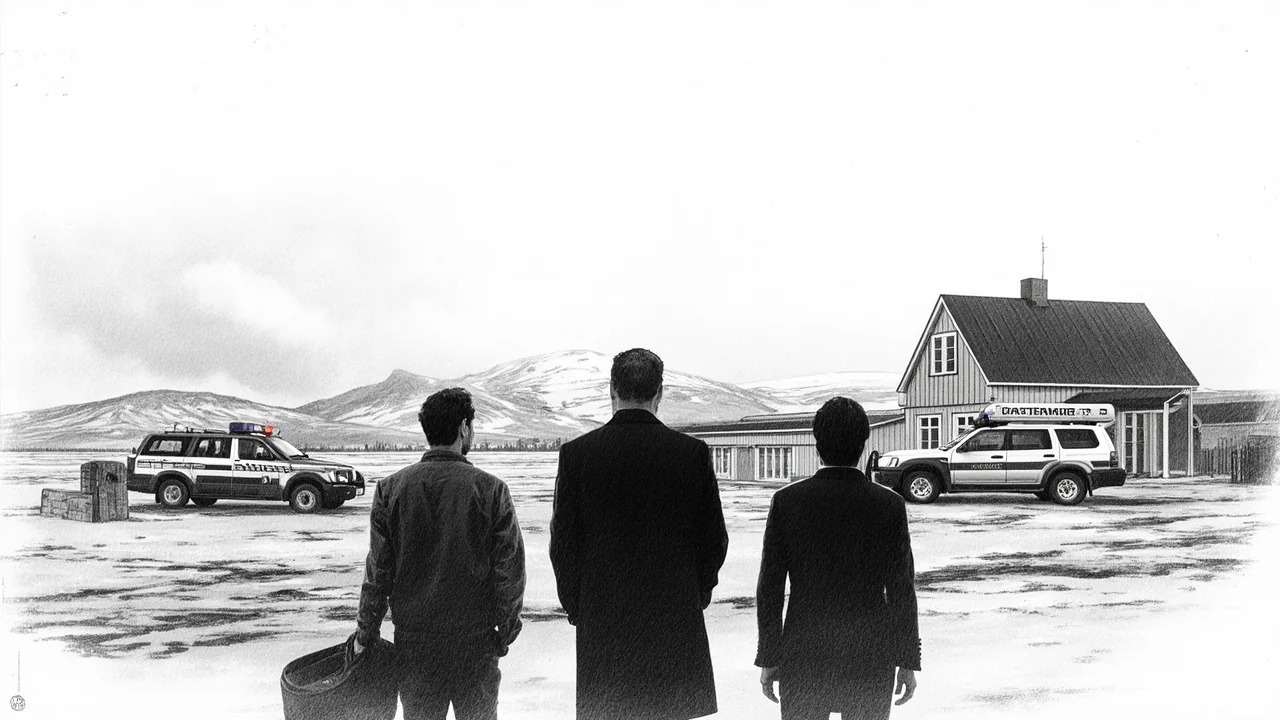
Icelandic police have released three men suspected of deliberately setting fire to their own home in Reykjavik. The suspects, aged 47, 31, and 21, were detained overnight but freed following questioning. All three resided in the single-family house that burned in the Breiðholt district.
Police received an emergency call around 4 a.m. reporting a major fire. Officers and the Reykjavik Fire Department responded immediately. Technical investigators later raised suspicions of arson, leading to the arrests.
"The three men were all interrogated this morning and released after questioning," confirmed Skúli Jónsson, Assistant Chief of Police for the Capital Region. He noted the investigation will take some time. The house had multiple occupants not all related by family ties.
This incident highlights complex urban pressures in one of Reykjavik's most populous districts. Breiðholt has historically faced socioeconomic challenges despite Iceland's overall prosperity. A suspected arson within a shared residence points to deeper domestic or financial tensions.
A Fire in the Night
The blaze erupted in the quiet hours before dawn. Flames illuminated the suburban neighborhood, a stark contrast to Iceland's typically low crime rates. Emergency services contained the fire, preventing injury or loss of life. The physical damage, however, is total.
Initial responders found a scene consistent with a severe house fire. It was only after forensic specialists examined the premises that signs pointed to intentional ignition. Police moved quickly, detaining the three male residents on suspicion of arson.
"There was quite a bit of occupancy in rooms in the single-family house in question," Skúli Jónsson stated. His description suggests a crowded living situation. Multi-generational or non-familial cohabitation is not uncommon in Reykjavik's tight housing market.
The Suspects and the System
The release of all three suspects underscores the presumption of innocence in Iceland's legal system. Police require substantial evidence to request pre-trial detention from a judge. Without it, they must release suspects after a reasonable interrogation period.
This case now enters a meticulous evidence-gathering phase. Technical police will analyze fire patterns, potential accelerants, and electrical systems. Investigators will also examine the residents' backgrounds and motivations.
Possible motives range from insurance fraud to interpersonal conflict. Iceland's high cost of living, particularly housing, creates significant financial strain. A destroyed property could represent a desperate attempt to escape debt or a failed housing arrangement.
Breiðholt in Context
Breiðholt is one of Reykjavik's so-called "sleeping districts," built rapidly in the post-war period. It houses a diverse population and has been a focus of urban renewal efforts. Crime rates are generally low but property offenses occur.
An arson investigation here resonates nationally. Iceland prides itself on community safety and social cohesion. A deliberate fire within a home violates that fundamental trust. It also consumes significant public safety resources.
"The investigation of this case will take some time," Assistant Chief Skúli Jónsson cautioned. His statement manages public expectation for quick answers. Arson probes are notoriously complex, relying on fragile physical evidence.
The Nordic Perspective on Property Crime
Compared to its Nordic neighbors, Iceland's arson rates are moderate but concerning. Sweden and Denmark have historically grappled with higher rates of property destruction, sometimes linked to gang activity. Iceland's incident appears isolated and domestically focused.
Nordic police cooperation frameworks, like those through the Nordic Council of Ministers, share best practices on fire investigation. Iceland's technical police unit employs methods refined across the region. Their findings will be scrutinized against Nordic forensic standards.
The environmental impact of the fire, though localized, is part of the calculus. Uncontrolled burns release pollutants, a concern for a nation branding itself on pristine nature. The response utilized Reykjavik's well-equipped fire service, a key part of Iceland's civil protection infrastructure.
Housing Stress as a National Issue
This case cannot be divorced from Iceland's ongoing housing crisis. High prices in Reykjavik force unconventional living situations. Overcrowding increases the risk of conflict and, potentially, desperate acts.
The Althing, Iceland's parliament, has debated housing policy for years. Subsidies, construction targets, and rental market regulations are perennial topics. Incidents like the Breiðholt fire add a dark footnote to these political discussions.
"People living in the house are not all connected by family bonds," Skúli Jónsson noted. This simple fact speaks volumes about the adaptive, often strained, reality of urban Icelandic life. The social contract within such shared spaces can be fragile.
What Happens Next?
Police will now build a case file for the District Prosecutor. They must prove not just that a fire was set, but who set it and with what intent. The released men remain under suspicion but are free to go about their lives.
They will need to find new accommodation, as their home is likely uninhabitable. This practical consequence adds another layer to the story. The social services department may become involved if housing insecurity is a factor.
Insurance companies will launch their own parallel investigations. Fraudulent claims are a serious financial crime. The intersection of police and corporate probes will shape the legal outcomes.
A Community's Resilience
Breiðholt has weathered challenges before. Community organizations and district councils play a strong role in Reykjavik. Neighbors will likely rally to support any displaced innocents, especially if children were involved.
This resilience is a hallmark of Icelandic society. It is tested by incidents that suggest self-inflicted harm. The narrative of a community facing external hardship is easier to unite around than one of internal suspicion.
Police will be mindful of this dynamic. Their public communications aim to inform without inflaming. The focus remains on facts and procedure, not speculation.
The Bigger Picture for Reykjavik
For Reykjavik's police, this is a serious but manageable incident. Major crime is rare. Resources can be dedicated to a thorough investigation. The outcome will signal how the justice system handles complex domestic crimes.
Environmental authorities may assess the site for contamination from burned materials. Proper cleanup is part of restoring normalcy. The empty plot will stand as a reminder until rebuilding begins, if it ever does.
The story ultimately touches on themes of home, security, and pressure. In a country known for volcanic fire, a human-made blaze in a suburban house carries a different kind of heat. It is the heat of fractured lives and questionable choices, burning under the Arctic night.
Iceland's low crime rate often feels like a natural state. This investigation probes a rupture in that peace. The answers, when they come, will tell us less about fire and more about the strains hidden behind closed doors in even the world's most tranquil nations.