
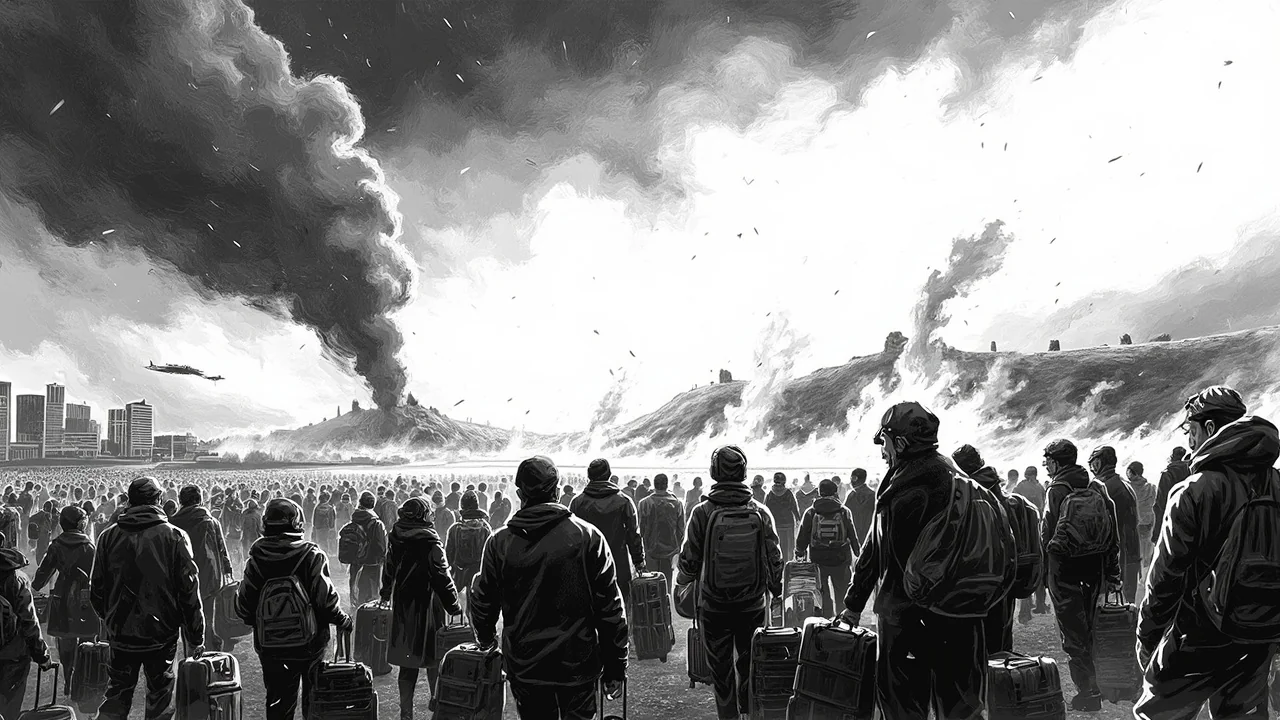
Six hundred passengers remain trapped at Akureyri Airport after sudden storms forced 15 Icelandair aircraft away from Keflavík International Airport. The twist? Their crews have hit legal duty time limits and cannot fly. Source: Civil Aviation Authority Norway.
This isn't just bad weather. It's Iceland society colliding with European aviation safety rules that treat crew fatigue as seriously as mechanical failure. When storms hit Iceland's main international gateway, the ripple effects expose how tightly regulated modern aviation has become.
EU rules ground tired crews
EU Flight Crew Regulation 83/2014 caps pilot duty days at 14 hours, followed by mandatory 10-hour rest periods. Iceland, as an EEA member, must comply with these EU aviation safety standards. Airlines typically schedule 12-hour rest periods to ensure compliance.
The original crews have been working since morning departures from various European cities. Add unexpected diversions, passenger management, and coordination with Akureyri Airport, and those duty clocks tick past legal limits fast.
Icelandair spokesman Guðni Sigurðsson confirmed replacement crews are flying from Reykjavík on a special domestic flight. Passengers can leave their aircraft but must stay in Akureyri's terminal. Departure is scheduled between 22:00 and 23:30.
Four of the eight aircraft that initially landed at Akureyri have already returned to Keflavík with fresh crews. The remaining 600 passengers wait for their turn.
Iceland's weather vulnerability
This incident highlights Iceland's geographic isolation and weather exposure. Fifteen Icelandair aircraft were diverted from Keflavík International Airport due to adverse weather conditions, affecting approximately 2,000 passengers total.
Keflavík handles nearly all of Iceland's international traffic. When storms close it, alternatives are limited. Akureyri Airport in northern Iceland becomes a lifeline, but it lacks the infrastructure and crew resources of the main hub.
The weather pattern that hit Keflavík was sudden and severe enough to ground operations completely. Iceland's position in the North Atlantic makes it vulnerable to rapid weather changes that can shut down aviation with little warning.
Isavia, Iceland's airport operator, coordinated the diversions across three alternate airports: Reykjavík domestic airport, Akureyri, and Egilsstaðir in the east. Eight Icelandair aircraft landed at Akureyri Airport as an alternate landing site.
Cascading delays ahead
The crew shortage creates a domino effect. Every replacement crew flown to Akureyri is one fewer available for scheduled departures from Keflavík. Tomorrow's flight schedule will likely face disruptions as Icelandair repositions crews and aircraft.
Passengers on the stranded flights face hotel costs, missed connections, and lost time. Icelandair will cover accommodation under EU passenger rights rules, but the airline's operational costs are growing. Each diverted flight costs airlines approximately €50,000-100,000 in crew repositioning, passenger compensation, and aircraft delays.
This type of weather disruption tests Iceland's aviation resilience. The country's economy depends heavily on tourism and international connectivity. When weather grounds flights, it ripples through hotels, tour operators, and the broader service economy.
Expect Icelandair to review its crew scheduling policies for weather events. The airline may need to station backup crews at alternate airports during storm season to avoid future duty time violations.
License: Complete Company Registration Guid....
Read more: Iceland Party Excludes Candidate Over Trust Issues.