
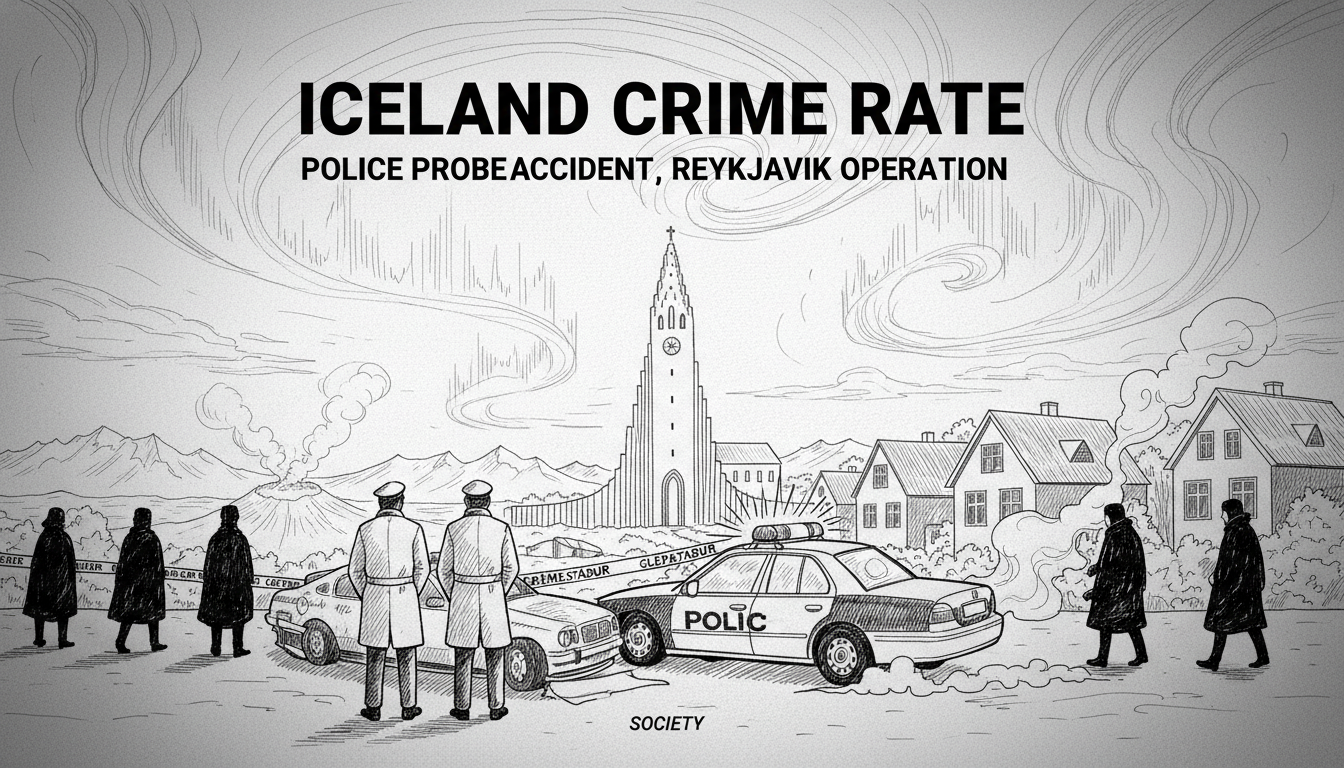
Iceland's low crime rate faces routine tests with a serious traffic accident investigation and a coordinated police operation in the capital region this week. These incidents highlight the daily work of Icelandic law enforcement in a nation consistently ranked among the world's safest. The traffic case, under investigation by South Iceland Police, involves a single-vehicle accident on the challenging Route 1 ring road. Simultaneously, Reykjavik Metropolitan Police conducted a significant operation in the capital area, details of which remain under wraps pending judicial review. Both events are standard police work in a country where such operations draw attention precisely because of their relative rarity.
The Framework of Safety in a Sparsely Populated Nation
Iceland's status as a peaceful society is well-documented. The country has topped the Global Peace Index for over a decade, a fact often cited by officials and analysts. This reputation is built on a foundation of a strong social contract, comprehensive welfare systems, and a population of just 380,000 where community ties remain strong. "Our policing model is inherently proactive and community-focused," noted a senior officer with the National Police Commissioner, who spoke on background. "The scale allows for a different kind of relationship between the public and law enforcement." This context makes any police activity newsworthy, transforming routine investigations into subjects of public discussion. The low baseline of serious crime means each incident is scrutinized not as part of a trend, but as an individual event to be understood and prevented from recurring.
Unpaved Roads and Unpredictable Weather: The Traffic Challenge
While violent crime is rare, traffic safety presents a persistent challenge. The recent accident under investigation occurred on Iceland's vast 13,000-kilometer road network. A significant portion of these roads, especially outside the Southwest corner, are gravel or unpaved. These routes, combined with rapidly shifting Arctic weather, create unique hazards. Fog, high winds, and ice can appear with little warning, catching even experienced drivers off guard. Traffic fatality numbers fluctuate yearly, but each death prompts national introspection and renewed safety campaigns. The investigation into the current accident will meticulously examine road conditions, vehicle integrity, and driver behavior. This thoroughness is standard; determining the precise cause is seen as essential to preventing the next accident. Data from these probes informs infrastructure spending and public awareness drives, like the long-standing "Gætum okkar" (Let's Take Care) campaign.
Capital Policing: The Reykjavik Metropolitan Focus
The Reykjavik capital area, home to over two-thirds of Iceland's population, is the focal point for most police operations. The recent operation there, described by authorities as "significant," likely involved coordinated activity across multiple districts like Breiðholt, Árbær, or the city center. Icelandic police are centralized under the National Police Commissioner, with the Reykjavik Metropolitan Police being the largest single force. Their work ranges from community liaison programs to responding to organized crime threats, which, while modest by international standards, do exist. "The nature of policing in a small capital is unique," says Dr. Helga Þórisdóttir, a sociologist at the University of Iceland. "Officers often have deep local knowledge. An operation in Hafnarfjörður or Kópavogur is not conducted in an anonymous urban sprawl; it's in a specific community where relationships matter." This local integration is considered a key factor in maintaining public trust and cooperative intelligence.
The Nordic Context: Cooperation Beyond Borders
No analysis of Icelandic law enforcement is complete without a Nordic perspective. Iceland actively participates in Nordic police and judicial cooperation through bodies like the Nordic Police and Customs Cooperation (PTN) and Europol. This collaboration is crucial for a small island nation, providing access to wider intelligence networks and joint investigative resources, particularly for cross-border issues like narcotics trafficking or cybercrime. The environmental angle here is indirect but relevant: secure, stable societies are prerequisites for ambitious environmental policies. Iceland's focus on geothermal energy, carbon sequestration, and sustainable fisheries depends on a functioning rule of law and social stability. Police work that maintains public safety directly underpins the nation's capacity to pursue its green transition and manage its natural resources, like the fishing quotas that drive much of the rural economy.
Analysis: Perception Versus Routine Reality
The news cycle highlighting a traffic investigation and a police operation can create a distorted perception. For international observers, it might suggest a rising crime wave. For Icelanders, it is often a reminder of the system working as intended. The traffic investigation reflects a societal commitment to root-cause analysis. The police operation demonstrates capacity and vigilance. Neither implies a systemic failure. In fact, the transparent reporting on such matters is itself a marker of institutional health. "A truly problematic society hides its police work," argues criminologist Dr. Arnar Þór Stefánsson. "The fact that these operations are reported, that accidents are thoroughly investigated and discussed, is a sign of strength. It shows systems are accountable." The challenge for authorities is managing this perception, ensuring the public understands that routine police work is not an indicator of declining safety.
Looking Ahead: Maintaining the Balance
The path forward for Icelandic law enforcement involves balancing this cherished societal peace with realistic preparedness. Climate change introduces new complexities, with melting permafrost affecting rural road stability and potential shifts in Arctic shipping routes bringing new logistical and security considerations. Policing must evolve while retaining its community heart. The ongoing investment in road safety infrastructure—more barriers, better lighting, improved winter maintenance—is a continuous, data-driven effort. Similarly, police training increasingly incorporates digital crime and international coordination, even as the core mandate of serving small communities remains. The week's events are not a crisis but a snapshot of a system in motion. They show a nation navigating the universal realities of modern governance—accidents happen, police must act—within the distinctive, enviable context of Icelandic society. The ultimate test is whether the mechanisms of response and investigation reinforce the public trust that makes Iceland's model of safety possible in the first place.