
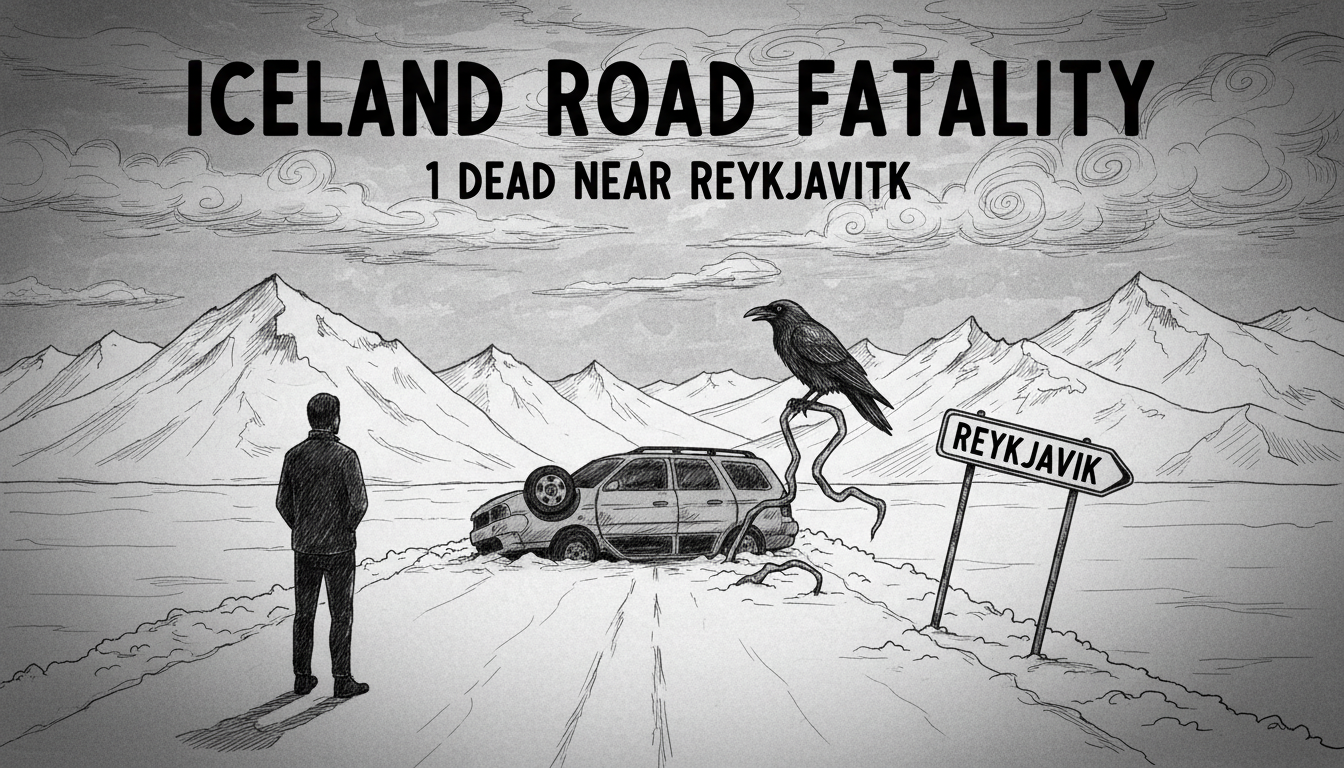
Icelandic police reported the first fatal road traffic collision of the new year near Reykjavik. One person is dead following a serious accident on Biskuptstungnabraut, south of the Þrastarlundur area, shortly after 1:30 pm today. The collision between two vehicles marks a tragic start to 2026's traffic safety calendar.
The crash involved three individuals across the two cars. Emergency responders pronounced one driver dead at the scene. Two others received transportation to the South Iceland Health Institution for urgent care. The police, South Iceland Health Institution ambulances, the Árnessýsla Fire Brigade, and a Coast Guard helicopter initially responded to the scene, though authorities later recalled the helicopter.
The South Iceland Police investigation unit leads the inquiry, with support from the Transport Accident Investigation Board. Officials stated they would release no further details at this time. The site, where Biskuptstungnabraut intersects with the famous Ring Road (Route 1), is a key route for locals and tourists accessing southern Iceland's dramatic landscapes.
A Grim Start to the Year
This incident was reported as the first road death in Iceland in 2026. According to the provided source material, the first traffic fatality in 2023 occurred on February 21st of that year. That year concluded with ten total fatalities on Icelandic roads, a statistic that traffic safety campaigns constantly aim to reduce to zero. Every death represents a profound community loss, felt acutely in Iceland's close-knit society.
Winter conditions present a persistent, deadly challenge on Icelandic roads. Limited daylight, rapidly changing weather, ice, and strong winds significantly increase driving hazards. “The margin for error disappears on ice,” a traffic safety expert with the Icelandic Road and Coastal Administration noted last winter. They consistently emphasize adapted speed, winter tires, and heightened awareness as non-negotiable necessities from October through April.
Infrastructure and International Pressure
The accident site sits in a region experiencing growing traffic pressure. Biskuptstungnabraut serves as a conduit from Route 1 to popular destinations in the South and the Highlands. This increase is partly driven by tourism, a vital but demanding sector for national infrastructure. The road safety debate in Iceland often intersects with discussions about rural road maintenance budgets and the need for continuous upgrades to handle more diverse and higher volumes of traffic.
From a Nordic perspective, Iceland's traffic fatality rate per capita has seen improvements but faces unique geographical challenges. Compared to its flat, well-lit Danish counterparts or Sweden's extensive divided highways, Iceland's rugged terrain and vast, isolated road networks present distinct risks. Norwegian and Finnish experts, familiar with harsh winter driving, often share best practices with Icelandic authorities through Nordic Council working groups. Yet, the fundamental message remains universal: speed and conditions must match.
“My heart goes out to the families affected today,” said a member of the Althing's Transport Committee when contacted for comment. “This tragedy is a stark reminder that our work on road safety is about saving lives. We must look at enforcement, education, and engineering—especially on key junctions outside the capital area.”
The Human Cost Behind Statistics
While officials cite numbers, every statistic signifies a personal and family catastrophe. The impact radiates through small towns and Reykjavik neighborhoods. For the emergency personnel—the paramedics from Selfoss, the local police officers, the fire crews—these calls are a heavy part of their duty to protect the community. The psychological toll on first responders is a subtext in many rural Icelandic communities.
The response itself highlights Iceland's integrated emergency protocol. The rapid coordination between the South Iceland Police, the regional health service, local fire authorities, and the Coast Guard's air wing demonstrates a planned system for remote medical response. The decision to recall the helicopter suggests the ground units managed the situation effectively, a small note of procedural efficiency amid the tragedy.
A Call for Vigilance
As Iceland moves deeper into winter, this fatal accident serves as a somber national alert. Rental car companies reiterate warnings to foreign visitors about off-road driving bans and winter readiness. Local driving schools intensify their focus on skid training and hazard perception. The goal of 'Vision Zero'—no deaths or serious injuries on the road—feels both urgent and distant on days like this.
Environmental factors, often a focus in Icelandic policy, play a direct role here. The push for electric vehicles changes vehicle weight and dynamics on icy roads. Sustainable tourism policies must account for the safety of increased traffic in fragile areas. The conversation is interconnected: a safe transport system is a sustainable one.
Will this tragic event spur renewed local debate about specific road improvements on Biskuptstungnabraut? Can Iceland leverage its technological prowess for better real-time road condition monitoring? The coming days will see mourning, investigation, and inevitable questions about how to prevent a repeat. For now, the community's thoughts are with the victims and their families, a reminder that behind every headline is a story of irreversible loss.