
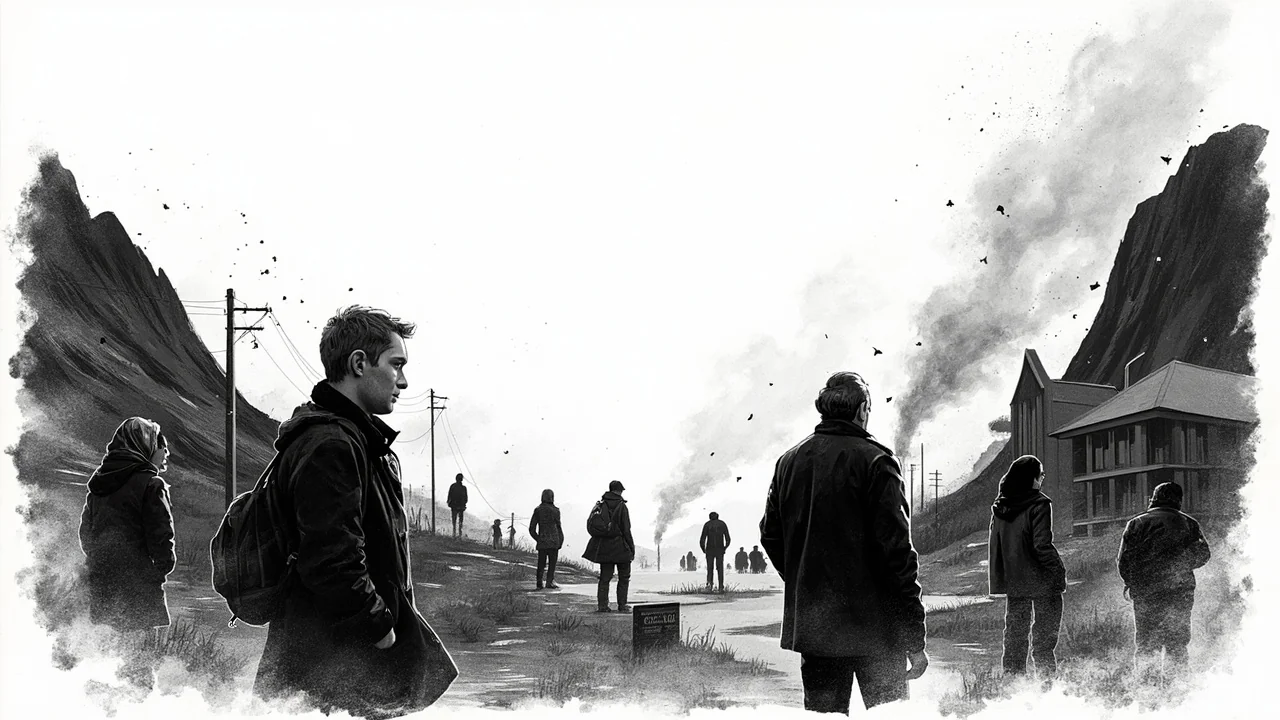
Iceland's capital Reykjavik has issued an urgent public health warning after airborne particulate pollution soared to dangerous levels. Measurements at Grensásvegur road reached 171.4 micrograms per cubic meter at midday, more than triple the 50-microgram 24-hour health protection limit. The city is now urging residents to leave their private cars at home.
"Those sensitive to respiratory issues, the elderly, and children should avoid prolonged outdoor activity and limit exertion," Reykjavik City stated. The pollution, identified as coarse particulate matter or dust, originates from road traffic. Dry conditions across the capital region mean high readings are occurring even at monitoring stations far from major traffic arteries.
City officials have called for immediate action. "The public is encouraged to reduce the use of private cars and postpone non-essential trips," the statement continued. Residents are asked to use public transport, carpool, or choose other sustainable transport methods. Companies are also urged to facilitate remote work for staff on high-pollution days where possible.
A Capital Choking on Its Own Success
This pollution spike highlights a growing tension in one of Europe's cleanest nations. Iceland runs almost entirely on renewable geothermal and hydroelectric power. Yet its largest urban area remains dependent on fossil fuels for transport. The Reykjavik capital region, home to over two-thirds of Iceland's population, has seen car ownership climb steadily alongside tourism and economic growth.
"We are seeing the environmental cost of our urban planning from previous decades," says Althing member Birgitta Jónsdóttir of the Left-Green Movement, reached for comment. "We built a city for cars, not for people or clean air. The data from Grensásvegur is a wake-up call. It shows that even in a green energy paradise, local air quality can become a serious health threat."
The problem is particularly acute in districts like Hafnarfjörður, Kópavogur, and the downtown 101 Reykjavik area, where narrow streets and concentrated traffic create pollution hotspots. The dust is a mix of tire wear, brake pad debris, and road surface particles, stirred up by vehicles and dry, windy conditions.
The Nordic Clean Air Paradox
Iceland's situation presents a Nordic paradox. The country is a global leader in renewable energy, with geothermal heating serving nearly 90% of all homes. Its electricity grid is 100% renewable. However, its transport sector tells a different story. According to the Icelandic Environment Agency, fossil fuel use for transport has increased by over 60% since 1990.
This creates a stark contrast with Nordic neighbors. Norway leads the world in electric vehicle adoption, with over 80% of new cars sold now being electric. Sweden and Denmark have invested heavily in cycling infrastructure and electric public transport networks. Iceland, with its small population and challenging winter weather, has lagged in these areas.
"We cannot lecture the world on geothermal energy while our capital's air is unhealthy to breathe," says environmental scientist Dr. Helga Magnúsdóttir. "The technology for change exists. We need more aggressive policies on vehicle electrification, investment in the Reykjavik bus network, and serious incentives for cycling and walking. Today's warning proves the status quo is failing."
Political Gridlock on a Clear Road
The pollution crisis puts immediate pressure on Iceland's coalition government. The issue sits at the crossroads of environmental policy, public health, and urban development—areas often mired in political debate. A proposed congestion charge for central Reykjavik has been discussed for years but never implemented.
Opposition politicians were quick to respond. "This is a failure of foresight," stated Independence Party MP Davíð Ólafsson. "The government's focus has been on abstract carbon targets, not the daily air quality impacting our citizens in Breiðholt and Árbær. We need practical solutions, not just warnings."
City authorities have announced temporary measures, including dust suppression operations overnight. Water trucks will dampen roads to reduce particulate uplift. However, with similar dry, calm weather forecast for the weekend, officials fear high pollution levels will persist unless traffic is drastically reduced.
A Test for Sustainable Ambitions
Iceland has set ambitious national goals to become carbon neutral by 2040. A key part of that strategy involves cleaning up the transport sector. Events like today's severe pollution warning test the public's willingness to change habits and the government's capacity to enforce change.
The call to avoid cars is a significant request in a region where the bus system, while improving, is often criticized for limited routes and frequency, especially in suburban areas. The success of this voluntary measure will be closely watched.
"It's one thing to switch off a coal plant," says Jónsdóttir from the Althing. "It's another to convince thousands of people in Grafarvogur to take the bus or bike on a cold day. This requires investment in alternatives that are reliable, affordable, and comfortable. Our green transition must happen street by street."
Looking Beyond the Dust Cloud
The immediate health advice is clear: vulnerable groups should stay indoors. The long-term implications are broader. This event will likely reignite debates over traffic reduction plans, investment in the capital's tram project, and subsidies for electric vehicles.
It also raises questions about monitoring. The high reading at Grensásvegur was caught by the city's network. Some experts argue for more granular, real-time air quality data available to the public via apps, a system already deployed in cities like Copenhagen and Stockholm.
For now, Reykjavik waits for wind or rain to clear the air. The city's dust suppression crews will work through the night. But the political and environmental dust stirred up by today's record pollution reading will likely hang in the air much longer. The episode proves that even in a country powered by volcanoes and waterfalls, the simple act of driving a car can still choke a city.