
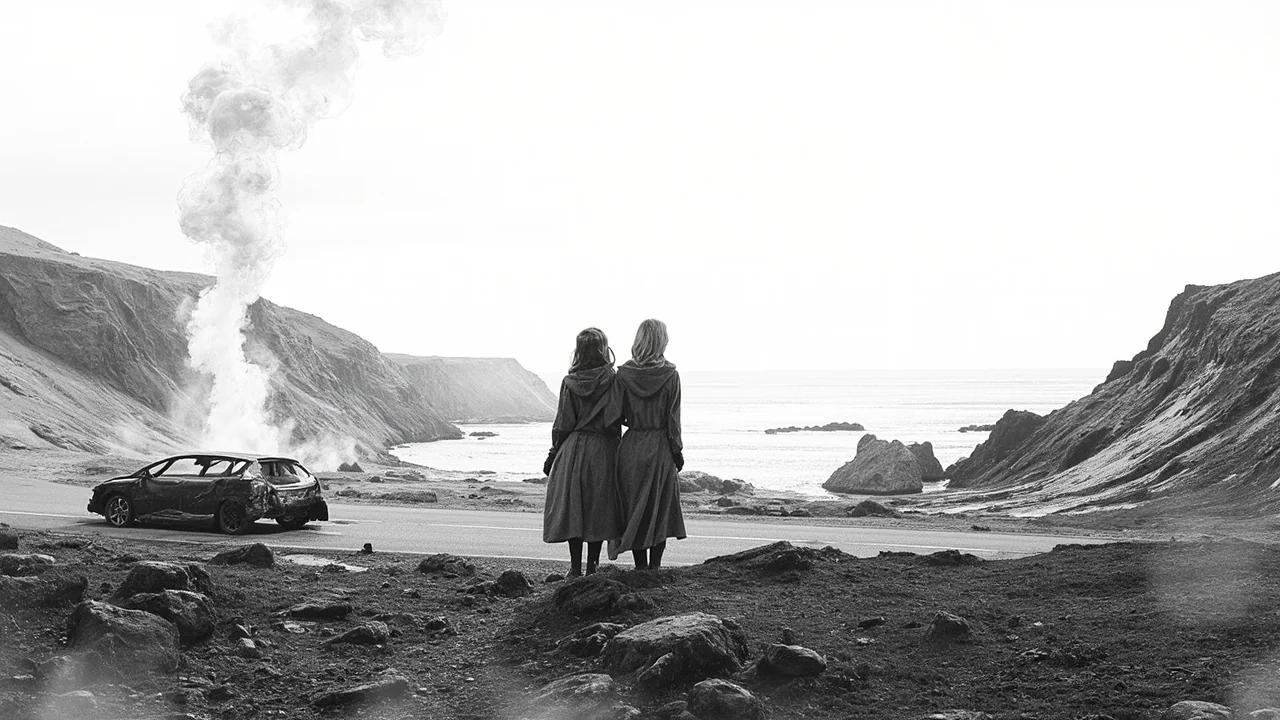
Two sisters driving across Iceland's remote Westfjords discovered a dangerous gap in the country's mobile network when their car rolled off an icy road and they couldn't call for help.
Hildur Ylfa and Sara Eyþórsdóttir were traveling from Ísafjörður to Reykjavík on February 14 when black ice sent their vehicle tumbling off Klettháls pass. The car was destroyed, but both women survived with minor injuries. The real shock came next: trapped inside the wreckage, they had no mobile signal to call emergency services.
"We didn't even know the car had rolled until we saw photos later," Hildur told Vísir. "It happened so fast that for several minutes we were just thinking about what to do next."
Rural coverage gaps threaten emergency response
The incident exposes a critical flaw in Iceland's emergency infrastructure. While Iceland's telecommunications network is fully digitized and fiber-based in urban areas, rural mountain passes remain dangerous dead zones. The Westfjords see regular winter accidents on treacherous routes like Klettháls, where sudden weather changes create black ice conditions.
Without mobile coverage, rescue coordination becomes a guessing game. The sisters had studded tires and drove carefully, but Hildur watched a car ahead "burn right through the ice" before hitting the same patch. "No matter what I did, I couldn't keep the car on the road," she said.
Icelandic Search and Rescue (ICE-SAR) relies heavily on mobile communication for accident reporting and GPS coordination. Dead zones force rescuers to rely on delayed reports from other drivers or scheduled check-ins that can stretch response times by hours.
Nordic safety standards at risk
This communication failure undermines Iceland's participation in Nordic road safety coordination. Almost two-thirds of road fatalities occur on rural roads across Nordic countries, according to 2024 ITF-OECD data. When accidents happen in remote areas, every minute without emergency contact increases fatality risk.
The broader Nordic context makes Iceland's coverage gaps more concerning. Sweden and Norway mandate emergency communication coverage on all major highways, treating it as critical infrastructure. Denmark requires mobile operators to provide emergency service access even in areas without regular coverage.
Iceland's geography creates coverage challenges, but the country's concentrated infrastructure investment should make rural emergency communication solvable. The Westfjords aren't wilderness — they connect fishing communities and handle regular traffic between towns.
This incident suggests the Althing (Iceland's parliament) may face pressure from rural constituencies to mandate emergency coverage standards. The alternative is accepting that Iceland's remote highways remain more dangerous than comparable Nordic routes — a politically toxic position as winter tourism grows and rural communities demand equal safety standards.
Read more: Reykjavik Cyclist Injured After E-Scooter Obstructs Path.
Read more: Man Hospitalized After Assault in Grafarvog.