
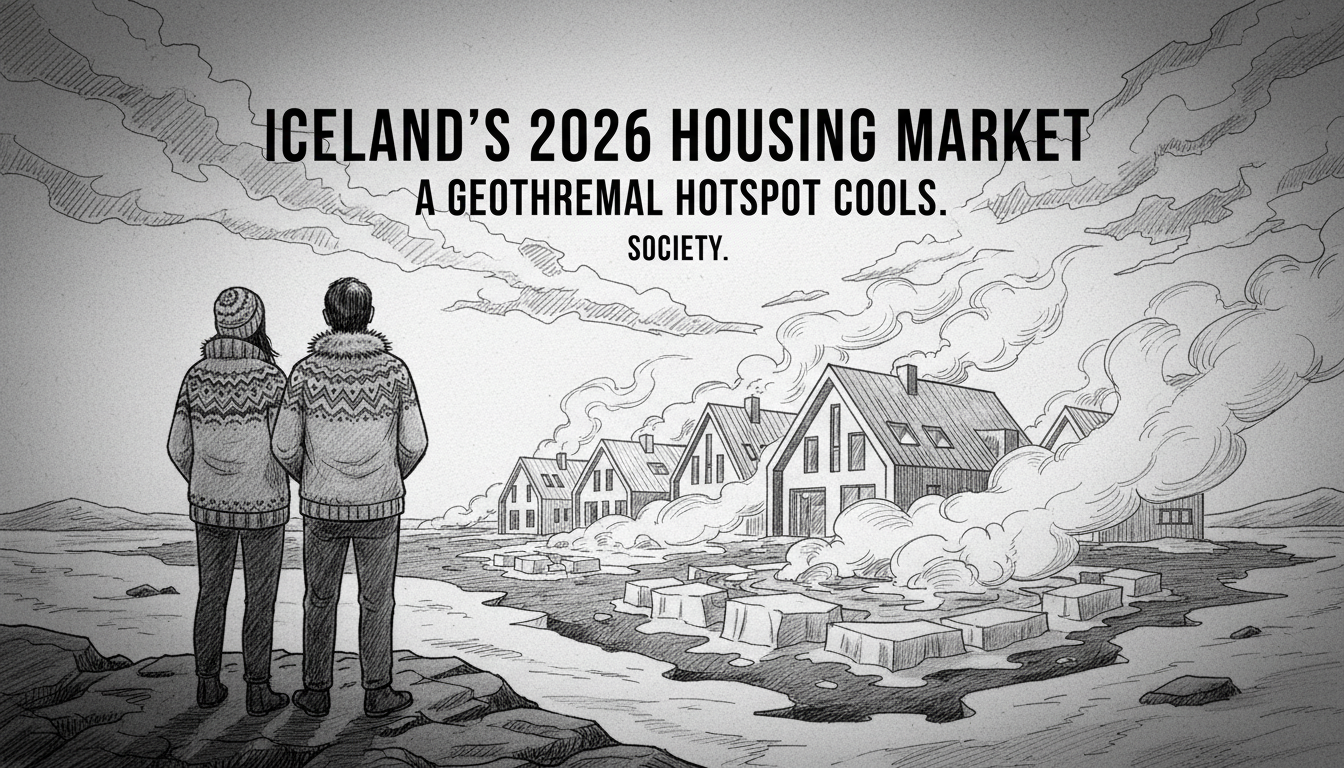
Iceland's housing market trends for January 2026 are set for release amid a climate of cautious anticipation. The data will reveal whether Reykjavik's long-running property boom is finally stabilizing or entering a new phase of uncertainty. Analysts are watching for signs of a market correction influenced by tourism shifts, government policy, and the broader Nordic economic environment. This analysis comes at a critical juncture for Icelandic families and investors navigating one of Europe's most volatile real estate landscapes.
A Market Forged in Fire and Ice
Iceland's housing market has always been a story of extreme pressures. The 2008 financial crisis caused a dramatic collapse, but the subsequent rebound was fueled by an unprecedented tourism boom. This surge transformed apartments in central Reykjavik districts like 101 and 105 into lucrative short-term rental assets, driving prices far beyond local wage growth. Construction, hampered by high costs and a small workforce, consistently failed to match demand. The result was a classic supply crunch, with property prices in the capital area seeing persistent annual increases. Government responses, including subsidies for first-time buyers and regulations on platforms like Airbnb, have attempted to cool the market with mixed success. The January 2026 figures will test the effectiveness of these measures.
The Tourism Tether and Its Environmental Cost
The market's health remains tethered to tourism, an industry with its own environmental and social impacts. The conversion of long-term housing to tourist accommodation didn't just raise prices; it altered community fabric in Reykjavik and key towns like Akureyri and Húsavík. It also increased pressure on municipal services and energy grids, despite Iceland's abundant geothermal power. "Every apartment lost to the tourist market is a home lost to an Icelandic family," says Althing member Birgitta Jónsdóttir, who represents the Reykjavik South constituency. "Our policies must prioritize permanent residency over transient visits. The data on housing supply is as much a sustainability metric as an economic one." The new data will show if regulatory efforts to return properties to the long-term rental pool are working.
Construction Lags Behind Nordic Peers
A core structural issue is Iceland's chronic underbuilding. While Nordic neighbors like Norway and Sweden have implemented aggressive public housing programs, Iceland's construction rate has struggled. This isn't just an urban problem; it affects regions across the country, from the fishing hubs of the Westfjords to the agricultural south. The scarcity of listings relative to demand has created a fiercely competitive market, particularly for entry-level homes. Experts point to high material costs, interest rate sensitivity, and a concentrated construction industry as key bottlenecks. Without a significant boost in supply, analysts warn that any price stabilization will be fragile. Sustainable development must also consider land use and the carbon footprint of new builds, even with green energy advantages.
Government Policy at a Crossroads
The Icelandic government faces a complex balancing act. Interventions like the First Home program provide support but can also inflate prices if not carefully calibrated. Meanwhile, stricter rules on short-term rentals aim to protect housing stock but face enforcement challenges. The upcoming data will influence political debate in the Althing, particularly as parties position themselves ahead of elections. The focus is shifting from pure price growth to affordability and stability. "The goal is a market that serves Icelanders first," a government housing advisor said in a background briefing. "That means measured growth, increased density in Reykjavik with green spaces, and support for regional development to ease pressure on the capital." The success of this approach depends on coordinated action across taxation, planning, and investment.
The Nordic Context and External Shocks
Iceland does not operate in a vacuum. Its housing market is sensitive to global interest rates, currency fluctuations of the Icelandic króna, and economic trends in larger Nordic partners. A slowdown in Denmark or Sweden can impact investor confidence and credit availability in Reykjavik. Furthermore, Iceland's small, open economy is vulnerable to external shocks—whether another pandemic affecting tourism or global financial turbulence. Analysts emphasize building resilience through diversified economic growth and prudent lending standards. The January 2026 trends may hint at how well the market is weathering these international headwinds compared to other Nordic nations.
Predictions and Practical Pathways Forward
Predicting Iceland's housing market is notoriously difficult. However, most analysts anticipate a continued moderation in price growth for early 2026, rather than a sharp decline. The Reykjavik capital area may see stagnation or minor corrections in some segments, while regions with lower prices could show more resilience. For buyers, patience and thorough financing checks are essential. Sellers may need to adjust expectations after years of rapid appreciation. Investors are advised to look beyond short-term rental yields toward long-term value and energy efficiency, which is increasingly important to Icelandic consumers. The true measure of success will be a market that supports both stable communities and sustainable economic development, aligning Iceland's housing future with its environmental ambitions.
Ultimately, the January 2026 data is more than a set of numbers. It is a report card on Iceland's ability to manage growth, protect its social fabric, and build a future where homes are for living, not just for investment. The path forward requires cooling the market's volcanic heat without triggering a deep freeze.