
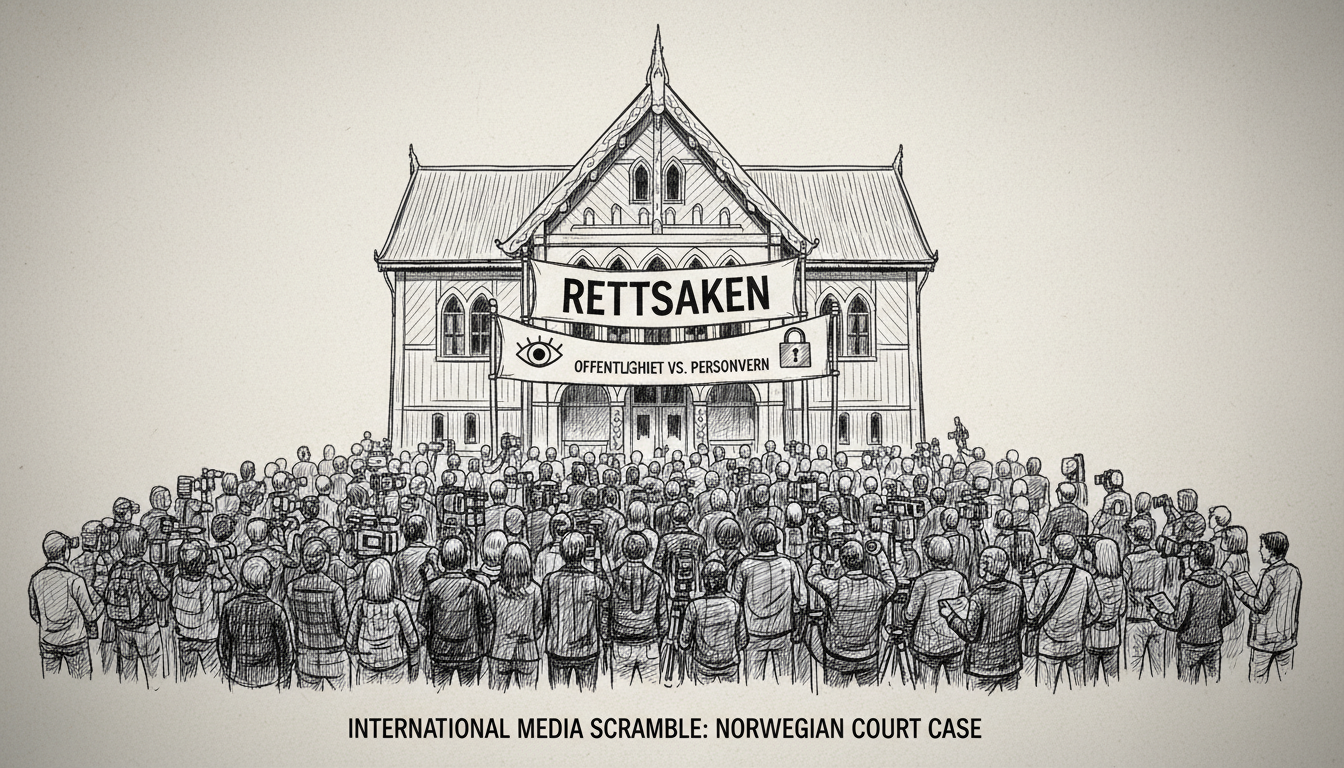
A major court case in Norway is drawing intense international media attention. Prosecutors express concern over the potential impact on victims and witnesses. The case involves multiple serious charges and has become a national focal point.
Norwegian officials confirmed that 190 journalists from both domestic and international outlets have requested accreditation to cover the proceedings. This includes 17 foreign media organizations and 129 individuals from Norwegian press groups. The court has released a list detailing which outlets will have access to the main courtroom and overflow viewing areas.
A senior prosecutor stated he understands the public interest but voiced serious worries. He said the media presence could become a significant additional burden for the defendant, the victims, and many witnesses. He expressed confidence that Norwegian editor-led media would follow ethical guidelines. His concern lies with foreign outlets and informal media like bloggers who might not adhere to Norway's strict press ethics.
He specifically warned against unwanted photography or pressure on witnesses and victims who wish to remain anonymous. Such actions could violate court orders. Breaches can result in fines, reconsideration of press credentials, and even criminal investigation. Equipment like cameras could be confiscated.
The prosecutor emphasized the hope that all media will respect the court's decisions. This balance allows journalists to do their job while protecting the rights of those involved. The defense team for the accused said they are prepared for massive media attention. They stressed the importance of journalists behaving according to Norwegian court law, which prohibits photographing defendants without consent in or around the courtroom.
The defense lawyer noted particular interest in how foreign press will conduct themselves. They hope international reporters receive proper orientation about expected behavior in Norwegian courts. Seven other media entities, totaling 19 people, have also requested accreditation.
The case involves 32 separate charges against the defendant. The defense maintains their client takes the allegations seriously but denies guilt on the most serious counts. These include four charges of rape, domestic abuse, and sexual assault. Other charges involve threats, police harassment, and numerous traffic violations.
This situation highlights a clash between the principles of open justice and the right to a fair trial free from external pressure. Norway's legal system places strong emphasis on protecting victim anonymity in sensitive cases, especially those involving sexual crimes. The intense scrutiny tests these safeguards. The case's high-profile nature, involving a well-known individual, guarantees a complex media environment. The court's ability to manage this while ensuring a dignified process will be closely watched. It sets a precedent for how Norway handles globally scrutinized legal proceedings within its unique ethical framework.
The outcome could influence international reporting standards on similar cases. It also raises questions about the globalized media landscape's impact on national judicial processes. For Norway, a country with high trust in its institutions, this is a significant stress test.