
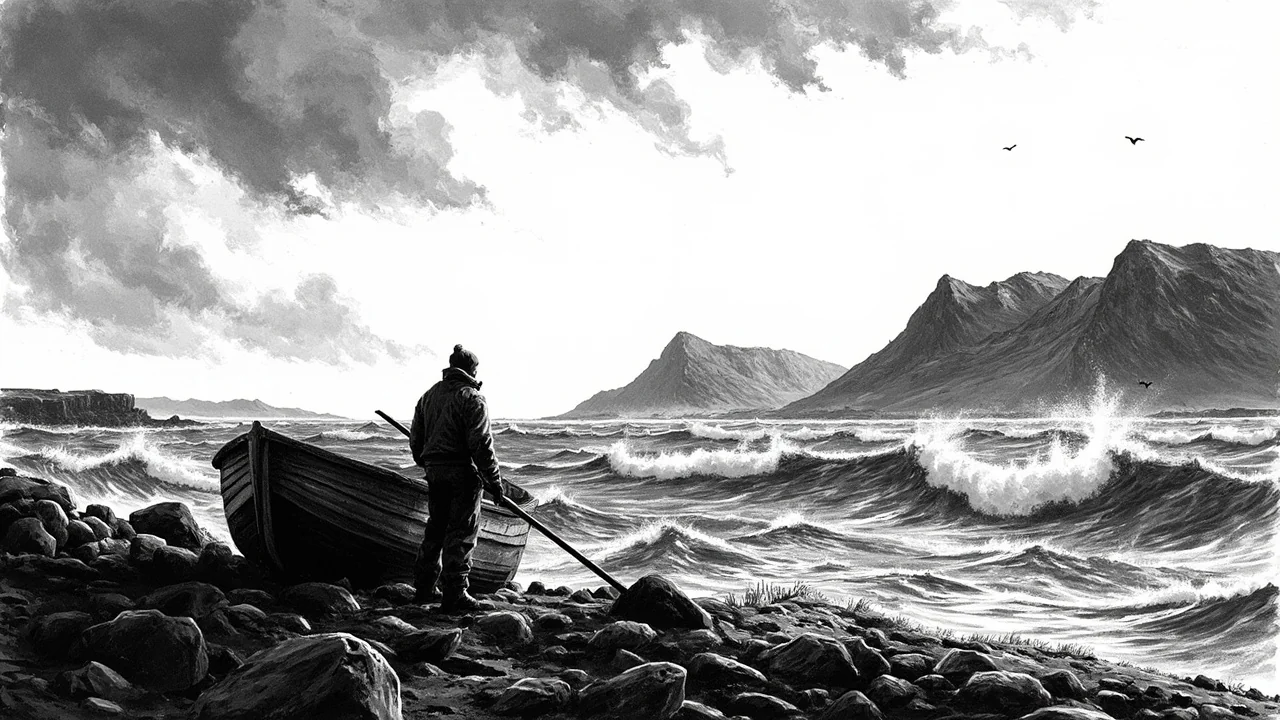
Iceland’s southernmost regions are preparing for a period of harsh weather as a significant pressure system sets up to the north of the country. A vast high-pressure area stretching from Greenland to Scandinavia is blocking the usual northerly path of low-pressure systems. This forces the lows to push against the high from the south, generating strong to severe southerly winds along Iceland’s southern coast, with gusts potentially reaching 20 meters per second. The Icelandic Meteorological Office has issued a detailed forecast for the coming days, highlighting a sharp regional divide in conditions.
A Divided Forecast for the Country
While the South Coast faces wind and rain, other parts of Iceland will see markedly different weather. The main precipitation, in the form of showers or sleet, is expected on the southeastern peninsula and the southern parts of the Eastfjords. Some minor sleet is forecast for the northern and northwestern parts of the Westfjords. Conversely, the weather will be generally dry and bright in other regions, particularly around Faxaflói Bay and Breiðafjörður in the west. A general cooling trend is anticipated across the country over the next several days.
A Detailed Day-by-Day Breakdown
Conditions will evolve throughout the week. On Monday and Tuesday, easterly winds of 8-15 m/s are forecast, increasing to 15-20 m/s in the southernmost areas. Sleet or snow showers are expected in eastern parts of the country and the Westfjords, while it will remain mostly dry elsewhere. Temperatures will range from 0 to 5 degrees Celsius, with light frost in many northern areas. By Wednesday, winds will be from the east and northeast at 5-13 m/s, but 13-18 m/s along the southeast coast. The west will enjoy bright weather, while the east contends with sleet. Temperatures will be at or below freezing.
The Pattern Shifts Later in the Week
The weather pattern begins a transition as the week progresses. On Thursday, a northeasterly flow is expected to bring snow or rain showers in patches, particularly in eastern regions. A slight warming trend is predicted. By Friday, the northeasterly wind continues with occasional sleet, but the southwest, including the capital region of Reykjavík, can expect partly cloudy skies. This persistent setup underscores how Iceland’s position in the North Atlantic, at the confluence of major air currents, leads to highly variable and localized weather events. The blocking high to the north is a key driver of this week's unstable conditions.
Regional Impacts and Preparations
The forecast has immediate implications for regional activities. The strong winds predicted for the South Coast are a significant concern for the fishing industry, potentially keeping vessels in port in towns like Vík and Höfn. Road travel along the Ring Road in these areas may also be affected, with warnings likely for high-sided vehicles. In the Eastfjords, the anticipated precipitation could translate to slippery road conditions. Meanwhile, the dry forecast for the west is welcome news for agriculture and outdoor work in that region. The temperature drop nationwide signals a firm shift towards winter conditions, even in the lowlands.
Understanding the Meteorological Mechanism
This week's weather is a classic example of the dynamic systems that govern Iceland's climate. The blocking high-pressure ridge acts as an atmospheric wall, diverting the jet stream and the low-pressure systems it carries. This deflection forces the lows on a more southerly track, where they intensify the pressure gradient against the stationary high. The result is a funneling effect that accelerates winds along Iceland's southern flank. The sharp contrast between the wet, windy south and the dry, calm west is a direct consequence of this large-scale atmospheric blocking pattern, a common feature in Nordic meteorology.
Historical Context and Seasonal Norms
While impactful, such patterns are not uncommon as Iceland moves deeper into autumn. The collision of maritime and Arctic air masses frequently creates volatile conditions. Historical data shows that late October and November often see powerful storms forming along these frontal boundaries. The current forecast, while calling for strong winds, does not yet indicate a major storm event on the scale of some historic autumn gales. However, it serves as a potent reminder for residents and businesses, particularly in coastal communities, to remain vigilant and heed official warnings as the season progresses.
Looking Beyond the Immediate Forecast
The week's weather highlights the broader challenges and adaptations inherent in Icelandic life. Infrastructure, from roads to power grids, is engineered to withstand such events. The national response protocol, involving the Met Office, the Icelandic Road and Coastal Administration, and local civil protection units, is routinely activated for forecasts of this nature. For Icelanders, this is a routine part of seasonal preparation, akin to checking sea conditions or monitoring avalanche risk in other regions. The coming days will test these preparations, underscoring the constant dialogue between society and the powerful natural forces that shape this island nation.