
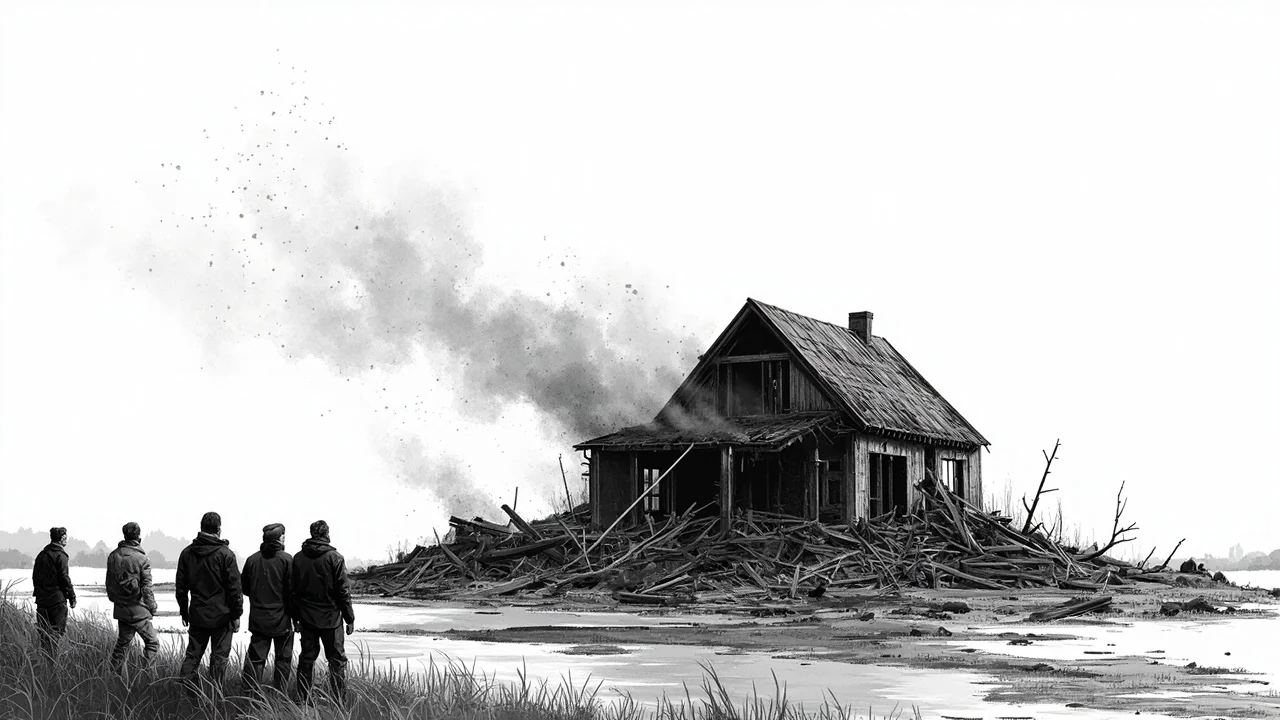
Iceland fire crews responded to a blaze at an abandoned home near Elliðaárvatn lake early this morning. The structure, located on Elliðahvammsveg below Þingin in Kópavogur, was fully engulfed when emergency responders arrived.
The fire department for the capital area confirmed the building had been unoccupied and stressed their primary focus was preventing the flames from spreading to nearby vegetation. No injuries have been reported, and authorities have not released information about the cause of the fire.
Blaze Engulfs Vacant Structure Near Protected Area
Smoke rose over the Elliðaárdalur valley as firefighters worked through the morning to contain the fire. The abandoned house sits just south of Reykjavík’s eastern edge, adjacent to one of the city’s most treasured natural zones—Elliðaárvatn, the largest lake within the capital region and a key source of drinking water.
Because the property is vacant, there were no residents to evacuate. Still, the proximity to wooded areas raised concerns among first responders. “The building was fully ablaze when we got there,” said a spokesperson for the capital region fire department. “Our main priority has been to stop the fire from reaching surrounding green space.”
The fire department did not specify how many units responded or how long suppression efforts lasted. They also declined to comment on whether arson is suspected, noting only that the incident remains under review.
History of Neglect in a Sensitive Ecological Zone
The burned-out shell now stands in a district known both for its scenic hiking trails and its complicated relationship with urban development. Kópavogur, Iceland’s second-largest municipality by population, has seen rapid housing growth in recent decades, yet pockets of derelict properties remain—especially in hilly or less accessible zones like the slopes below Þingin.
Local residents have occasionally voiced concern about neglected buildings becoming hazards. While this particular structure appears to have been empty for years, its location near dry summer grasses and native birch woodland made it a potential ignition point during Iceland’s increasingly warm and dry summers.
Environmental officials have not yet assessed whether runoff from firefighting efforts—primarily water, but sometimes foam—could affect the nearby Elliðaá river system, which feeds into the lake. The area is part of a protected watershed managed jointly by Reykjavík and Kópavogur municipalities.
Emergency Response Highlights Urban Wildland Interface Risks
Today’s fire underscores a growing challenge for Icelandic emergency services: managing blazes where built environments meet natural landscapes. Though Iceland lacks the forest density of other Nordic countries, climate data shows rising temperatures and longer dry spells—conditions that increase fire risk even in traditionally damp regions like the capital area.
In 2023, the Icelandic Meteorological Office recorded above-average summer temperatures across southern Iceland, including the Reykjavík region. While large wildfires remain rare compared to mainland Europe, smaller structural fires in rural or semi-rural zones have drawn attention to preparedness gaps.
The capital’s fire department operates under a mutual aid agreement with neighboring towns, but resources are concentrated in densely populated districts. Remote or hard-to-access sites like the Elliðahvammsveg property can delay response times, especially if roads are narrow or unpaved.
Firefighters used standard water-based suppression tactics today, avoiding chemical retardants due to the site’s proximity to water sources. Crews remained on scene for several hours to monitor hotspots and ensure containment.
Community Questions Future of Derelict Properties
Neighbors walking dogs along the trails near Elliðaárvatn paused to watch smoke curl into the morning sky. Many expressed surprise that the old house—visible from popular footpaths—had never been demolished or secured.
“It’s been empty as long as I’ve lived here, maybe 15 years,” said one Kópavogur resident who asked not to be named. “You always wonder what’s going to happen to places like that. Today, we got our answer.”
Municipal records do not show recent permits for renovation or demolition at the address. Under Icelandic law, property owners are responsible for maintaining structures, but enforcement can lag when ownership is unclear or the owner lives abroad.
Kópavogur’s municipal planning office has not issued a statement about this specific property. However, the town has previously flagged abandoned buildings in its annual safety reviews, particularly those near recreational or ecological zones.
With housing demand high in the capital region, some advocates argue that derelict lots should be repurposed—but others caution against development in sensitive watersheds like Elliðaárdalur. The tension between reuse and conservation remains unresolved.
What Happens Next?
Investigators from the fire department will likely examine the scene once it cools completely. If evidence suggests human involvement—intentional or accidental—they may involve police. Otherwise, the case may be closed as an undetermined origin fire.
Meanwhile, cleanup of the charred remains will fall to the property owner, if identifiable. If not, the municipality could eventually step in under public nuisance statutes, though that process can take months.
For now, yellow tape surrounds the site, and ash drifts onto the trail below. Hikers detour around the perimeter, glancing at the blackened timbers jutting from the hillside.
As Reykjavík and its suburbs grow, more eyes will turn to forgotten corners like this one. Will they be restored, removed, or left to decay until the next spark finds them? In a country proud of its clean air and pristine water, the answer matters more than it might seem.
Read more: Iceland Party Excludes Candidate Over Trust Issues.
Read more: Fire Breaks Out Near Framheimilið in Reykjavik.