
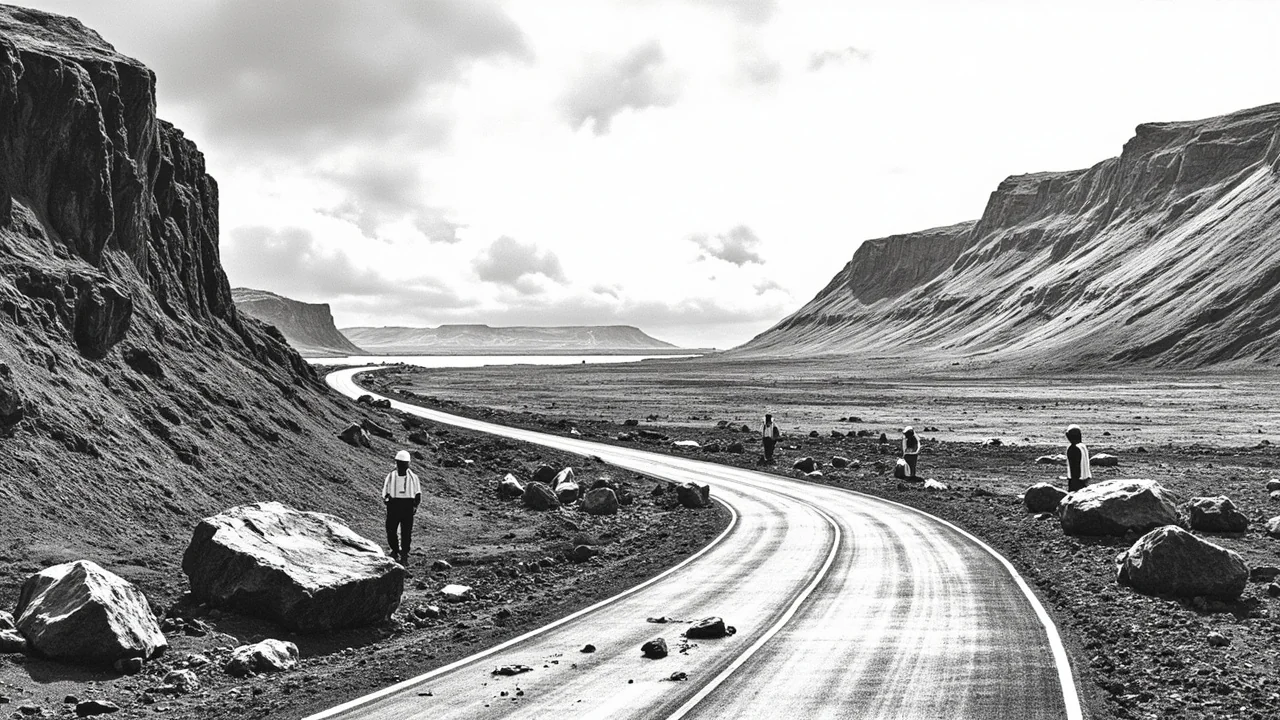
Iceland's Ring Road saw rockfall risks increase by over 40% last year due to heavier tourist traffic. A foreign tourist died instantly when three to four hundred kilos of rock broke loose from Steinafjall mountain and crushed her car on March 31st. The Transport Accident Investigation Board now demands the Icelandic Road and Coastal Administration begin immediate safety upgrades on the highway section in South Iceland.
Two other women in the car escaped without serious injury. No protective barriers existed against rockfall at the site, a location known for such hazards. Traffic warning signs about the danger are posted on both sides of the mountain.
A Known Danger, A Preventable Tragedy
The investigation board's report, published today, directs the Road Administration to start work on improvements to the Ring Road near Steinafjall because of the rockfall hazard. The board states the need for appropriate upgrades to improve traffic safety, as traffic on that road section has increased significantly in recent years and is expected to keep growing. “Work must begin on appropriate improvements to enhance traffic safety where traffic on the road section has increased greatly in recent years and growing traffic can be expected,” the board's safety memorandum states.
This fatal incident highlights a growing tension across Iceland. The nation's infrastructure, particularly the vital Ring Road (Route 1), is under unprecedented strain from a tourism boom that has yet to fully return to pre-pandemic levels but brings heavier vehicles and more frequent traffic to geologically active areas. Steinafjall is not an isolated case, many mountain passes and coastal cliffs along the 1,332-kilometer highway corridor pose similar latent risks.
The Investigation's Findings and Directives
The board's mandate is to investigate accidents and recommend preventive measures, not to assign legal blame. Its findings in this case are unequivocal: known risk, increased traffic, and inadequate passive protection led to a foreseeable tragedy. The absence of rockfall nets, catch fences, or tunneling at that specific curve was noted, despite the warning signs. For regular commuters and tour operators in South Iceland, the signs were a familiar but unnerving feature of the landscape.
“The likelihood of such accidents is said to have increased because of heavier traffic on the road,” the source material states, pointing to the core of the issue. Each heavy coach or camper van transmits vibrations, and freeze-thaw cycles in the harsh Icelandic climate constantly work at the fractured basalt faces lining many roads. The board's recommendation is not a suggestion for future budget cycles, it is an urgent directive for the Vegagerðin to act.
Infrastructure Strain in the Tourism Era
The Ring Road is more than a highway, it is Iceland's main economic artery for tourism, connecting Reykjavik to the South Coast's waterfalls, the Eastfjords, and the volcanic north. This incident occurred in the South, Iceland's most visited region outside the capital. Seasonal traffic here can double, with rental cars and international coaches navigating stretches designed for lighter, less frequent local use.
Local officials in municipalities like Hvolsvöllur or Vík have long discussed the need for targeted infrastructure investment alongside tourism marketing. This fatal rockfall provides a grim case study. Safety upgrades are costly and complex, often involving geotechnical surveys and specialized construction in short summer seasons. The Road Administration must balance these urgent local hazards with a national network of priorities, from avalanche protection in the Westfjords to flood-resistant bridges in the northeast.
The Road Administration's Critical Role
The Icelandic Road and Coastal Administration (Vegagerðin) now faces public scrutiny and a clear instruction from an independent investigation board. Its response will be closely watched by local communities, the tourism industry, and safety advocates. The required work at Steinafjall likely involves assessing the entire hillside for instability, installing engineered catchments, or possibly considering minor road realignment. The board's report forces this project to the top of the queue.
Funding such projects is a perennial political debate in the Althing. Does the revenue from tourism-related taxes get reinvested sufficiently into the infrastructure that makes the tourism possible? This accident poses that very question in the starkest terms. While the board's report focuses on the specific technical and immediate response required, the political and budgetary implications resonate far beyond the site of the tragedy.
A Nordic Perspective on Safety Standards
Compared to its Nordic neighbors, Iceland faces unique geological challenges but shares a high cultural and legal standard for public safety. Norway, with its own formidable mountain terrain, invests heavily in rockfall protection, avalanche tunnels, and rigorous road maintenance. Iceland's approach has historically been shaped by its lower population density and vast distances. However, the demographic pressure of tourism is changing that calculus. The expectation from both citizens and visitors is for Nordic-level safety, regardless of the remote location.
This incident will likely prompt a review of other high-risk sites on the Ring Road. A systematic, risk-based assessment of rockfall, landslide, and flood hazards along the entire route may be a necessary, though enormous, undertaking. It is a foundational requirement for sustainable tourism growth.
The Human Cost and the Path Forward
Behind the technical reports and infrastructure debates is a profound human loss. A visitor to Iceland lost her life on a journey that promised natural wonders. The board's report aims to ensure such a tragedy is not repeated. The effectiveness of that aim now depends on the speed and thoroughness of the Road Administration's response.
The coming construction season will be a test. Will the public see crews and machinery at Steinafjall, implementing the board's recommendations? The answer will measure the system's ability to learn from disaster. For now, the warning signs at Steinafjall stand as a temporary and inadequate memorial, awaiting the tangible safety upgrades that should have been in place before a life was lost.