
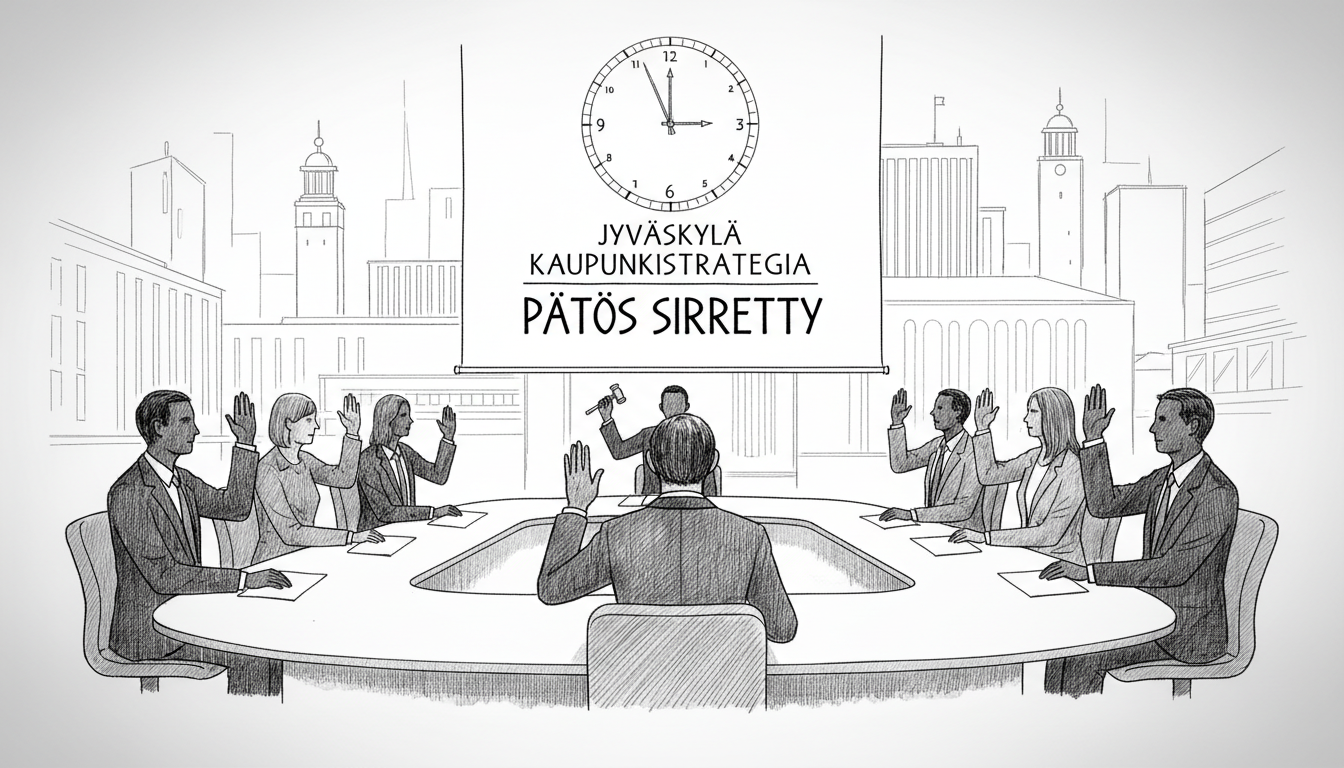
The Jyväskylä City Council has postponed a major urban strategy decision following a dramatic tie vote that forced the chair to cast the deciding ballot. Council members voted 6-6 with one abstention on whether to advance the comprehensive city strategy, which outlines development priorities through the end of the decade. The deadlock meant council chair Jukka Hämäläinen of the Social Democratic Party used his casting vote to send the proposal back for further review. The strategy will now return to committee for two weeks of additional preparation before another council vote, pushing final approval into the next calendar year. This delay represents a significant setback for municipal planning in Finland's seventh largest city, which serves as a major educational and cultural hub in the Central Finland region.
The proposed strategy encompasses infrastructure development, public service improvements, and long-term economic planning for Jyväskylä. Council chair Hämäläinen described the document as a substantial and important package that requires careful financial consideration. The postponement means the city council will miss its original deadline for strategy approval, which was scheduled for a meeting next Monday. Municipal strategies in Finland typically guide budget allocations and policy decisions for multi-year periods, making this delay consequential for upcoming fiscal planning. The tie vote reflects deep divisions within the council about spending priorities and development directions for the university city.
This decision occurs against the backdrop of Finland's complex municipal governance structure, where cities like Jyväskylä exercise considerable autonomy in local matters while implementing national policies. Finnish municipal councils operate similarly to miniature parliaments, with proportional representation from political parties. The current national government coalition, led by Prime Minister Petteri Orpo, has emphasized fiscal responsibility across all levels of government. This national focus on budgetary constraints likely influenced the Jyväskylä council's cautious approach to committing to long-term strategic spending. The delay suggests council members want clearer financial projections before endorsing a decade-spanning development plan.
For international observers, this situation illustrates the meticulous, consensus-driven nature of Finnish municipal politics. Unlike systems where majority parties can force through legislation, Finnish councils often require broad agreement for significant decisions. The fact that a single abstention created a deadlock requiring the chair's intervention shows how finely balanced these local governments can be. Jyväskylä's situation also reflects broader European trends where municipalities face difficult choices between ambitious development goals and constrained public finances. The city's strategy delay may influence how other Finnish municipalities approach their own long-term planning processes in the current economic climate.
What happens next will be telling for Jyväskylä's political dynamics. The two-week review period gives opposing factions time to negotiate compromises or solidify their positions. The strategy's fate could indicate whether the council can find common ground on the city's future direction or if political divisions will continue to stall important decisions. This delay comes at a practical cost too, as municipal departments need clear strategic guidance for their annual planning and budgeting cycles. The council's hesitation suggests legitimate concerns about affordability, but extended indecision risks creating administrative uncertainty that could slow day-to-day municipal operations.