
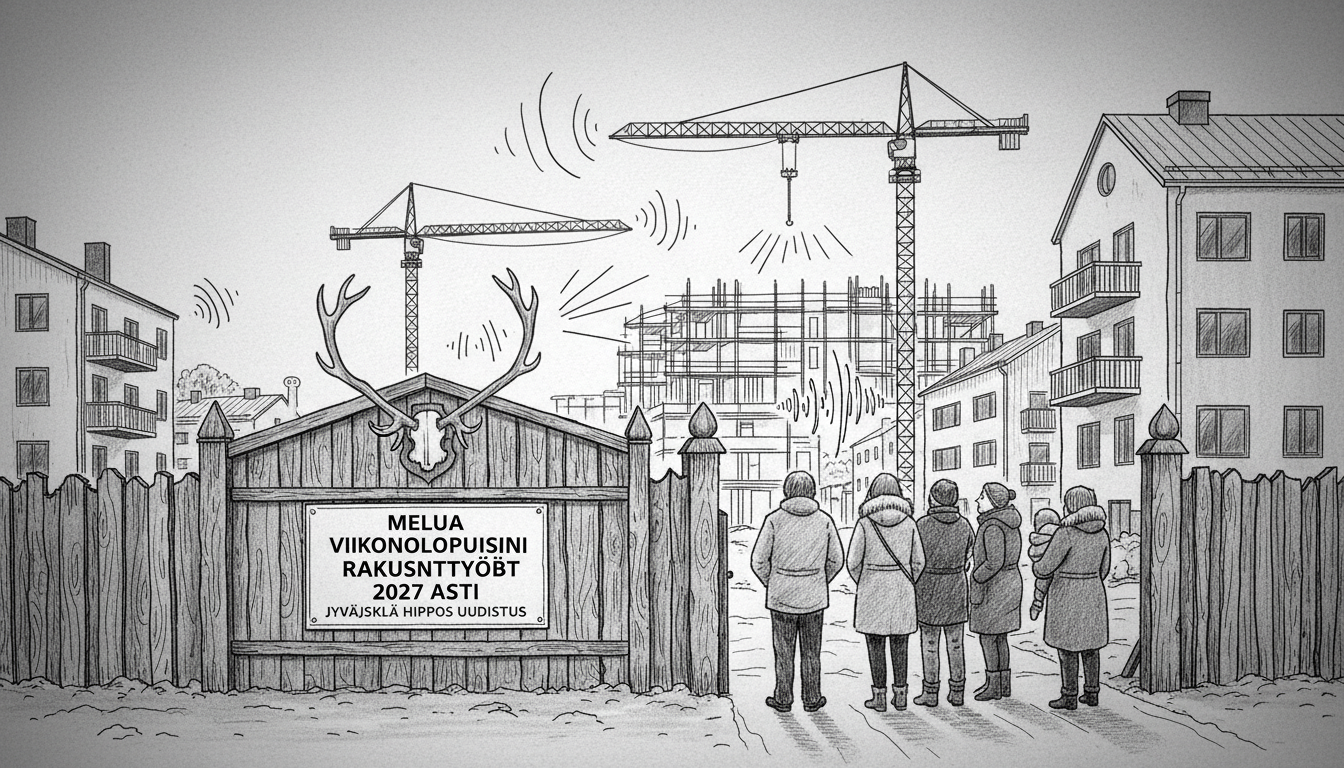
Residents near Jyväskylä's Hippos sports district will face significant construction noise beginning in early December, with pile driving and demolition work continuing through late 2027. The city has approved temporary noise permits allowing construction activities weekdays from 7:00 to 21:00 and occasional weekends, particularly around the ice hall project where schedules remain extremely tight. This major redevelopment of the Hippos sports center involves extensive groundworks and foundation laying that will generate substantial vibration and noise pollution throughout the construction period.
The approval process for such construction projects follows Finland's strict environmental permitting system, which typically requires extensive community consultation. Local municipalities balance development needs against residential quality of life through detailed noise management plans. In this case, the accelerated timeline for the ice hall construction appears to have influenced the decision to permit weekend work, raising questions about whether normal community protections are being compromised for project deadlines.
Finland's construction regulations typically limit disruptive activities to standard business hours, making the extended weekend permissions notable. The situation reflects broader tensions across Finnish cities between urban development pressures and maintaining peaceful residential environments. Similar conflicts have emerged in Helsinki's Kalasatama district and Tampere's city center redevelopment, where rapid construction timelines have sometimes overridden noise concerns.
International residents and visitors should note that Finnish construction projects maintain high safety standards despite noise disruptions. The country's stringent worker protection laws ensure proper compensation for extended hours, though weekend work remains uncommon in Finland's traditionally balanced work culture. The extended schedule highlights how major infrastructure projects increasingly test Finland's commitment to work-life balance as development pressures intensify.
What does this mean for Jyväskylä's international community? Students and researchers at the nearby university may find study environments disrupted, while families in adjacent neighborhoods will need to adjust daily routines. The city's reputation as a peaceful academic hub temporarily gives way to urban development realities, demonstrating how even Finland's regional centers face growing infrastructure demands.