
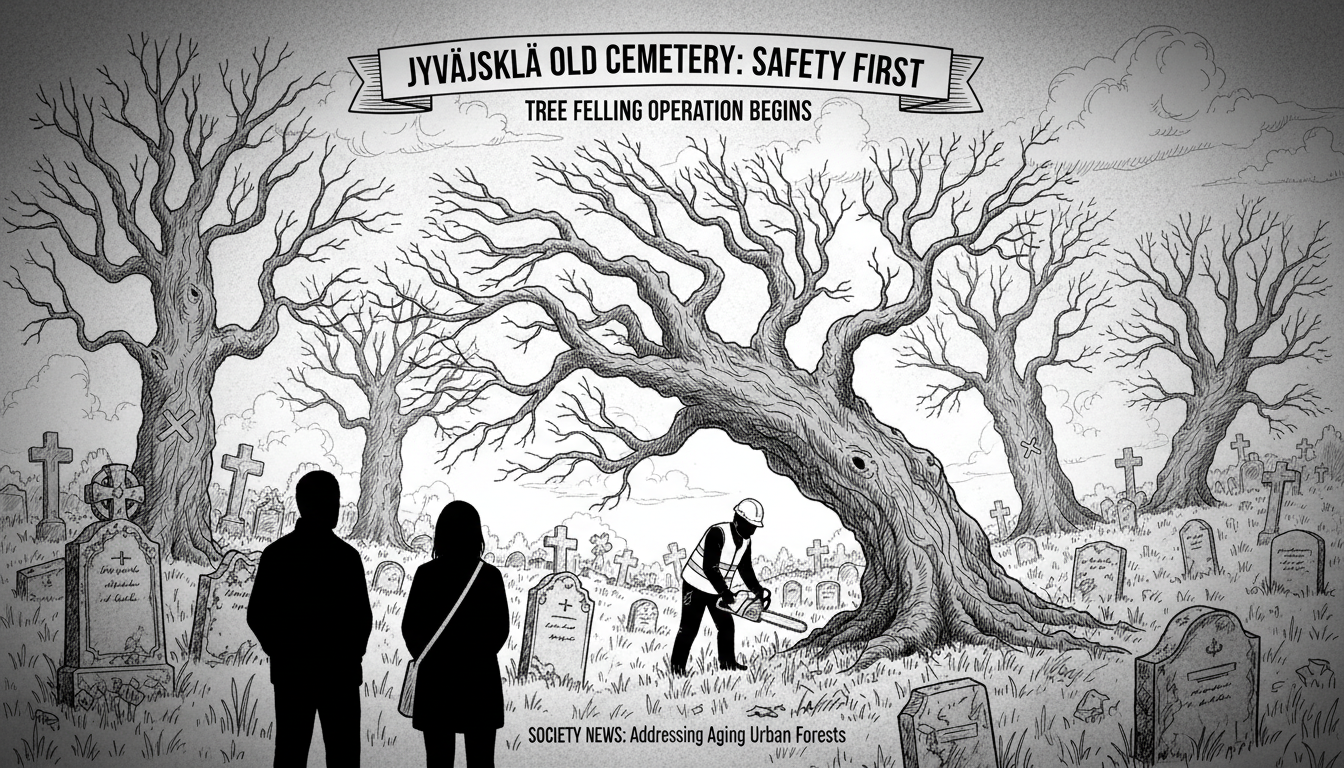
The City of Jyväskylä will commence a significant tree felling operation at its Old Cemetery next week, targeting approximately fifty trees deemed to be in poor condition. Municipal forestry crews will begin work on Monday, December 8, with all activity scheduled to conclude by Friday, December 12. The marked trees, identified with red paint, will be removed along with their stumps and brush, with all debris cleared from the site within one week of the operation's completion. This planned forestry work highlights the ongoing balance Finnish municipalities must strike between preserving historical green spaces and ensuring public safety in urban environments.
Jyväskylä's Old Cemetery, or Vanha hautausmaa, represents a common type of protected cultural landscape found across Finnish cities. These sites often contain mature trees planted generations ago, which now require active management as they reach the end of their natural lifespan. The decision to remove trees is typically based on arborist assessments that evaluate structural integrity, disease, and risk of falling branches. Municipalities operate under strict guidelines from the Finnish Heritage Agency when managing culturally significant sites, requiring operations to be minimally invasive and respectful of the area's solemn character. This project follows established protocols for managing aging urban forests, which are a shared responsibility of local environmental and parks departments.
The operation in Jyväskylä reflects broader national trends in Finnish urban forestry management. Many Finnish cities are confronting similar challenges with aging tree populations in historic districts, churchyards, and public parks. Climate change has introduced additional stressors, with more frequent storms and changing pest patterns increasing the urgency of proactive tree safety programs. These municipal actions are not taken lightly, as trees in cemeteries hold deep cultural and emotional significance, serving as living monuments within communities. The work is carefully timed for the winter season when the ground is frozen, minimizing damage to the landscape and reducing disruption to visitors during a period of typically lower foot traffic.
For international observers, this local news item offers a window into Finland's meticulous approach to public space management and environmental stewardship. The country's robust municipal governance system allows for planned, transparent operations like this one, funded through local tax revenue and executed by city-employed specialists. The straightforward communication of dates and procedures is characteristic of Finnish public administration, which prioritizes clarity and predictability. While the removal of mature trees can evoke a sense of loss, these operations are fundamentally preventive, designed to avert accidents and protect both visitors and the long-term health of the remaining canopy. The cleared areas may later be considered for replanting with species better suited to contemporary urban conditions, continuing the cycle of stewardship that defines Finland's relationship with its natural and cultural heritage.