
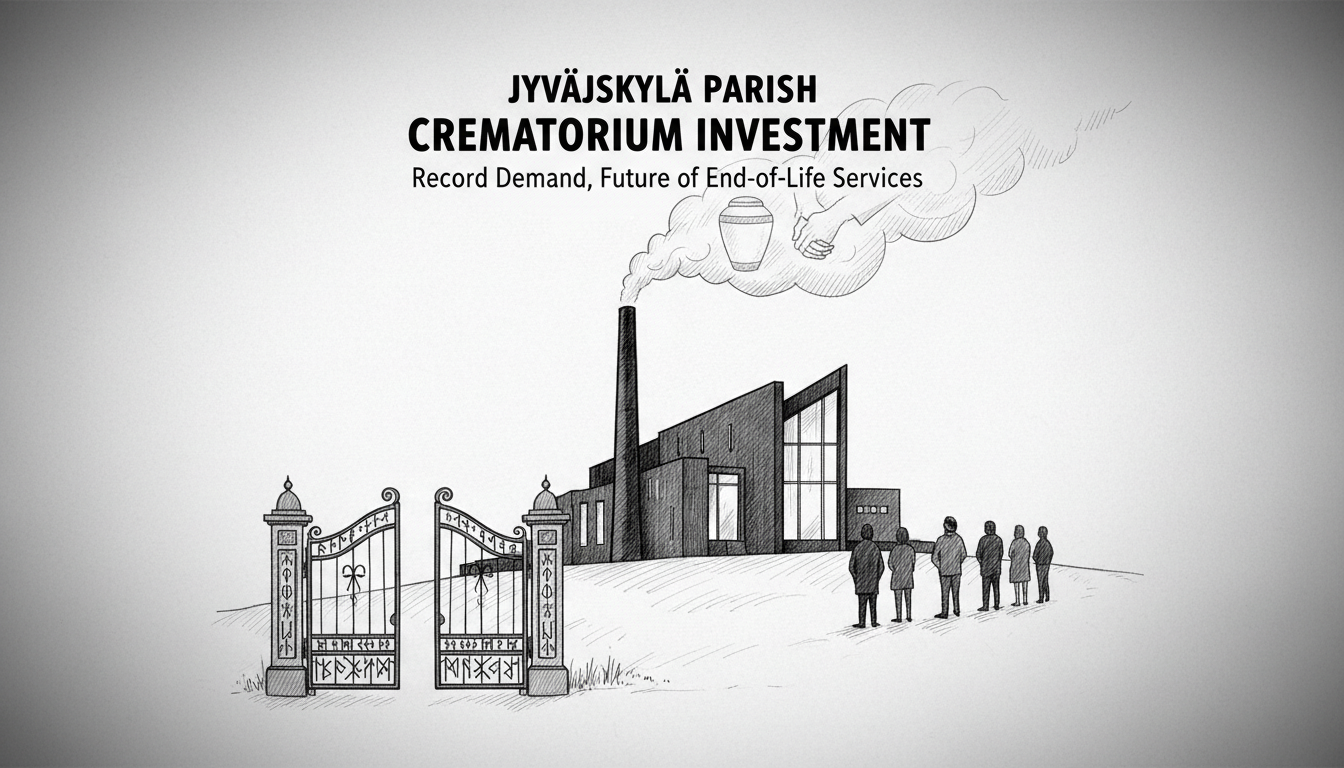
The Jyväskylä Parish in Central Finland is evaluating a major investment in new cremation infrastructure, with plans under consideration that could reach five to seven million euros. This strategic move comes as one of the two furnaces at the existing facility is scheduled for permanent decommissionation in early December, forcing the crematorium to restrict its services exclusively to the Central Finland region. The current facility has been handling cases from cities like Oulu, Kuopio, and Tampere, highlighting its regional importance. Parish burial services chief Tuija Pajunen stated that planning funds are allocated for the coming fiscal periods. The parish is exploring whether to integrate new equipment within the existing, protected building structure or to construct an entirely new facility, with a potential operational date set for the latter part of this decade. The parish has not yet initiated formal discussions with the city's building control authorities regarding a potential new building site.
The need for this substantial capital expenditure is driven by a notable increase in cremation rates across Finland, reflecting broader societal shifts. Cremation has become the predominant form of bodily disposition in the country, a trend consistent with other Nordic nations where secularization and practical considerations often outweigh traditional burial customs. This shift places significant operational and financial pressure on municipal and parish-run facilities, which are often historic structures not originally designed for modern, high-volume demand. The investment decision in Jyväskylä is therefore not an isolated case but part of a necessary nationwide infrastructure adaptation.
From a policy and governance perspective, the situation underscores the complex role of the Evangelical Lutheran Church of Finland, which remains a significant provider of public services like burial and cremation despite its declining membership. These services are legally open to all residents regardless of religious affiliation, creating a unique public-private dynamic. The funding for such a multi-million euro project would likely come from a combination of parish funds, potential municipal cooperation, and long-term financing, requiring careful fiscal planning. The decision also involves heritage considerations, as adapting protected buildings for industrial use presents specific regulatory challenges.
For international observers and expatriates in Finland, this development highlights key aspects of Nordic societal infrastructure. End-of-life services are considered a fundamental public utility, and their provision is taken seriously by local authorities. The planning horizon extending several years demonstrates a characteristically Nordic long-term approach to public infrastructure, even for sensitive services. The record number of cremations this year points to an aging demographic and the practical realities of urban planning, where cemetery space is often limited. The parish's deliberate, phased planning process, beginning with feasibility studies before major capital commitment, reflects a responsible and transparent administrative culture common in Finnish public projects.
What happens next involves detailed technical and environmental assessments, public consultations, and securing necessary permits. The outcome will affect service reliability for a large region of central Finland. This planned investment is a concrete example of how Finnish society manages demographic change and evolving cultural practices through systematic, forward-looking infrastructure development. The parish's final choice between renovation and new construction will be a case study in balancing historical preservation with functional modernisation, a recurring theme in Nordic urban development.