
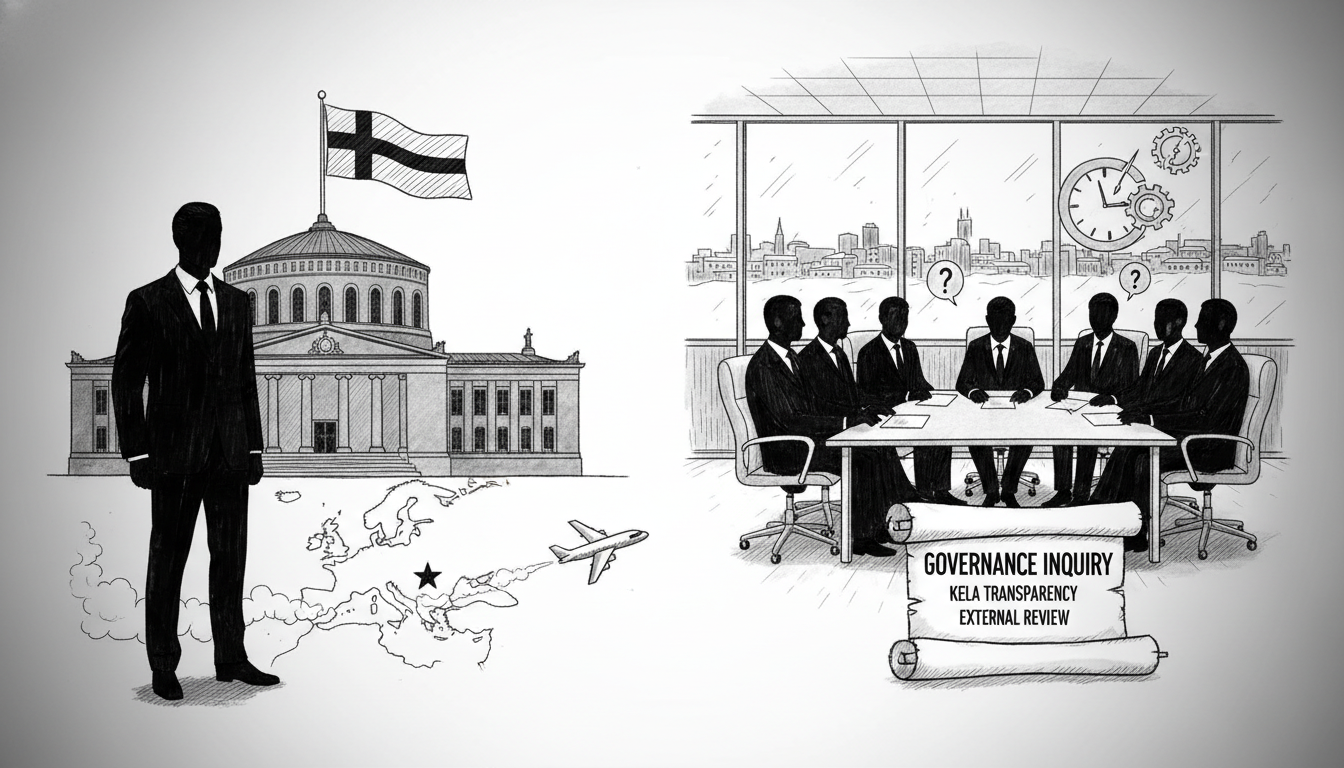
The Finnish Social Insurance Institution, known as Kela, faces a deepening leadership crisis following contradictory statements about the status of its Director General, Lasse Lehtonen. Kela's board chairman, Vertti Kiukas, confirmed that Lehtonen is on sick leave for the current week but also stated he is on a work trip in Brussels. Kiukas declined to explain how both statuses could apply simultaneously, a contradiction that has prompted an extraordinary meeting of parliamentary overseers and an external investigation into the agency's management. This development occurs against a backdrop of existing scrutiny over Kela's remote work policies and leadership practices, raising fundamental questions about accountability within one of Finland's most critical welfare institutions.
Kela is a cornerstone of the Finnish welfare state, administering national health insurance, family benefits, and unemployment security. Its operations directly impact millions of citizens, making transparent governance paramount. The parliamentary supervisory council, composed of sitting MPs, convened an urgent meeting to address the controversy stemming from both the remote work guidelines and the current leadership situation. The board has since commissioned an external expert to conduct a separate review of Kela's overall management structure. This dual-track inquiry signals serious institutional concern at the highest levels of Finnish public administration.
For international observers, this incident highlights the intense scrutiny Finnish public agencies face. The Finnish political system, particularly the Eduskunta's committee structures, maintains rigorous oversight of state institutions. A controversy involving a top official's reported whereabouts and status would typically trigger immediate parliamentary questions and media investigation. The situation is complicated by Finland's current political climate, where public trust in institutions is a recurring theme in coalition government discussions. The center-right government has emphasized bureaucratic efficiency and clarity, making this apparent contradiction particularly awkward.
The core of the issue lies in the legal and administrative impossibility of being formally on sick leave while simultaneously conducting official business abroad. Finnish employment and state administration laws clearly define these statuses as mutually exclusive. An employee on sick leave is medically unfit for work, while a work trip constitutes active duty. The board chairman's refusal to clarify this paradox suggests either a communication failure or a more serious administrative discrepancy. It calls into question basic operational protocols within an agency that handles sensitive personal data and distributes billions of euros in benefits annually.
What happens next will be closely watched. The external management review will likely examine reporting lines, decision-making protocols, and internal controls. The parliamentary council may demand a full explanation from the Kela board, potentially leading to public hearings. The situation also places pressure on the Minister of Social Affairs and Health, whose ministry holds administrative oversight. For Lehtonen, the immediate task is to resolve the contradictory status reports and address the concerns of his staff and political masters. The credibility of Finland's social security administration depends on a swift and transparent resolution to this puzzling affair.