
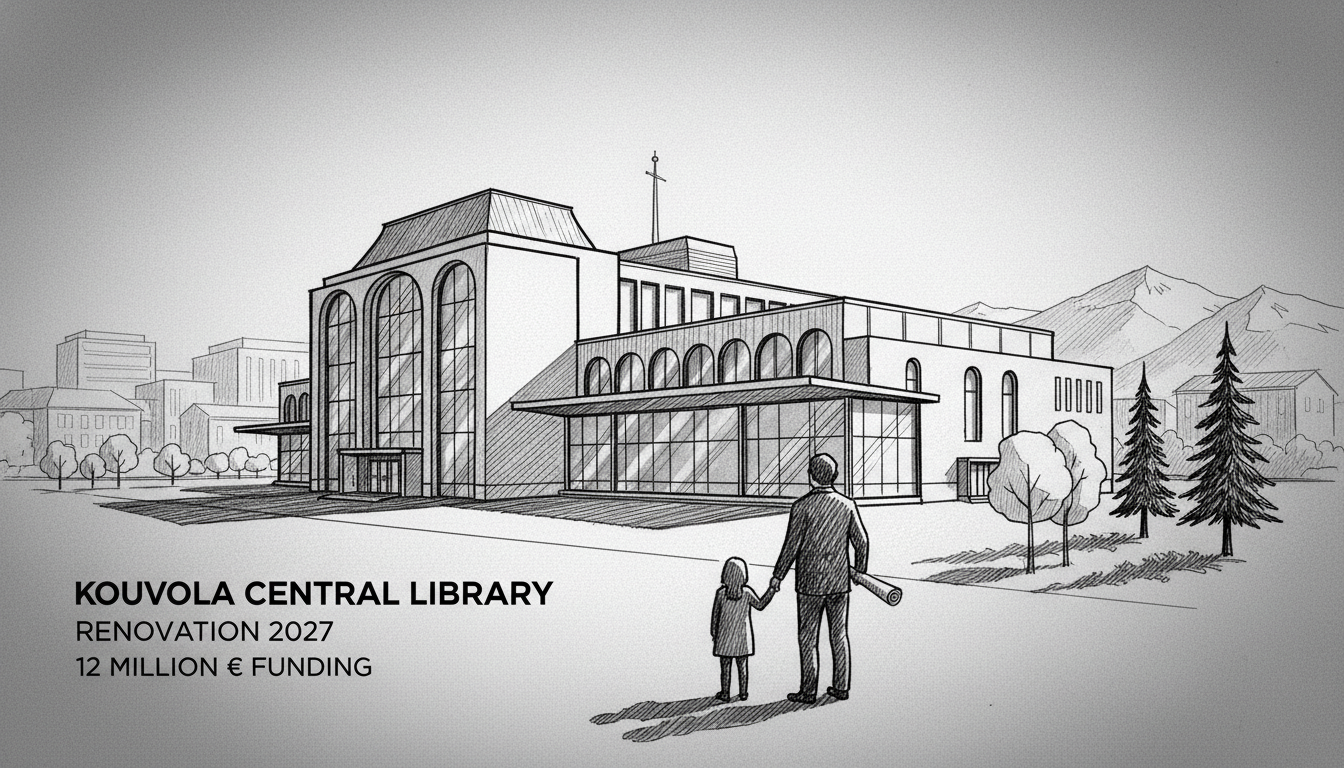
The comprehensive renovation of Kouvola's Central Library has received a decisive financial commitment, with city authorities allocating 12 million euros for the project. The extensive overhaul of the 50-year-old building is scheduled to commence in 2027, with preparatory planning set to begin next year. The project aims to modernize the library's spaces and building systems to meet contemporary standards for public facilities, with a targeted completion date of 2028. This represents a substantial municipal investment in Kymenlaakso region's cultural infrastructure, signaling a long-term commitment to public services despite broader national fiscal pressures.
During the renovation period, the main library services will relocate to temporary premises. The project's detailed plan will be reviewed by the city's Sports and Culture Committee this Wednesday, followed by the Education Committee the next day. This procedural step is standard for municipal projects of this scale in Finland, requiring approval from multiple administrative boards before final council ratification. The timeline indicates a methodical, phased approach typical of Finnish public works, prioritizing thorough planning over rapid execution.
A notable aspect of the redevelopment involves integrating other municipal services into the refurbished building. Kouvola's youth services, known as Nuorten Paikka, will move into the library premises alongside shared community spaces for wellbeing services currently housed in the Porukkatalo building. This co-location strategy reflects a growing trend in Finnish municipal planning to create multifunctional civic hubs. Combining library, youth, and welfare services under one roof aims to improve accessibility and foster community interaction, a model increasingly adopted in cities like Helsinki and Tampere.
The 12 million euro budget will be scrutinized against rising construction costs and potential supply chain uncertainties. Municipal projects across Finland have recently faced budget overruns, so Kouvola's fixed allocation presents both a commitment and a challenge. The funding decision comes amid ongoing national debates about municipal finance and the role of central government support for regional development. As a city in southeastern Finland, Kouvola's investment demonstrates local initiative, but its success may depend on stable economic conditions over the multi-year project timeline.
What does this mean for Finland's library network? Public libraries serve as critical social infrastructure in the Nordic model, far beyond book lending. They function as community centers, digital access points, and informal learning spaces. This renovation aligns with Finland's Library Act, which mandates development of library services to promote lifelong learning, active citizenship, and cultural equality. The project's scale suggests Kouvola aims not merely to repair an old building but to reimagine its central library's role for coming decades, potentially setting a benchmark for similar regional cities.
The planned integration of services raises practical questions about operational coordination between different municipal departments. Successful implementation will require clear management protocols to ensure the library's core functions are not diluted. The co-location model has worked well in some Finnish municipalities but faced challenges in others where differing service cultures clashed. Kouvola's administration will need to navigate these complexities carefully, with the detailed hankesuunnitelma (project plan) likely addressing governance and shared space usage.
For international observers, this project offers insight into Finnish municipal governance. Decisions of this magnitude involve elected city councils, professional committees, and public officials in a transparent, multi-stage process. The funding allocation, while substantial, represents a local priority set within the constraints of municipal taxation and state subsidies. In the broader Nordic context, it underscores a continued, though carefully budgeted, investment in the physical public realm, contrasting with trends in some other European nations where such cultural infrastructure faces greater austerity pressures.