
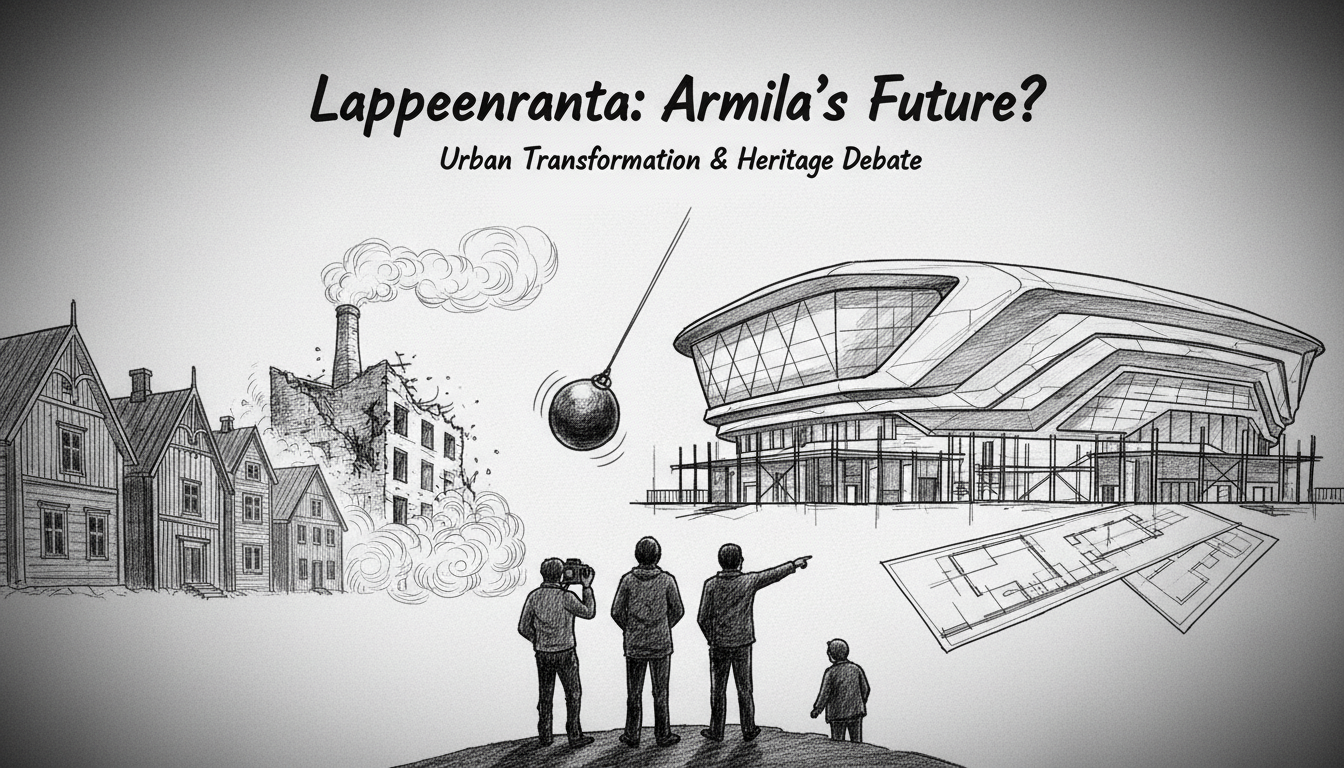
The city of Lappeenranta is moving forward with a major redevelopment project centered on the Armila district, a plan that involves significant demolition and new construction. The project will see the old Armila fire station and the former Armila hospital on Armilankatu street torn down. A new multi-purpose arena with accompanying parking facilities will be built in their place. This development is part of a broader urban renewal strategy for the southeastern Finnish city, located near the Russian border on the shores of Lake Saimaa. The plan has ignited local discussions about historical preservation, modern infrastructure needs, and the identity of city neighborhoods.
A curious geographical question lies at the heart of the public conversation. The name 'Armila' appears in two distinct locations roughly two kilometers apart: on Armilankatu and near Ratakatu at the renovated functionalist-style former school center, now called Armilanlinna. This duality has confused residents and prompted investigations into the area's history. The original Armila district, from which the street derives its name, does not appear as a designated neighborhood on the city's current official map service, which lists central areas like Keskus, Kimpinen, and Lepola instead. The historical Armila area has been absorbed and its boundaries blurred by subsequent city planning and expansion.
From a national policy perspective, this type of urban redevelopment is common in Finnish cities managing post-industrial transitions and seeking to revitalize certain districts. These projects often require careful balancing between removing outdated buildings and preserving architectural heritage. The functionalist 'funkis' building at the old school center on Ratakatu represents one style of preservation, having been converted into business premises. The decision to demolish the fire station and hospital, however, shows a different calculus where land value and new utility outweigh historical retention. Municipal governments in Finland typically have strong autonomy in local zoning and construction matters, though major projects can attract scrutiny from regional councils and heritage boards.
For international observers and potential investors, Lappeenranta's development highlights trends in Finnish regional urban planning. Cities are focusing on creating compact, multi-functional hubs to improve services and attract residents. The new arena is likely intended as a catalyst for further economic activity in the area. The city's location in South Karelia also gives these projects a specific border-region context, with Lappeenranta historically acting as a commercial gateway. The straightforward reporting on the location of Armila reveals a deeper process of how Finnish cities physically and conceptually reshape themselves over decades. The outcome will test how well municipal plans align with community identity and practical urban needs.
The project is now in an active phase with demolition and construction imminent. Local officials will need to communicate clearly about timelines and disruptions. The final architectural plans for the arena and its integration into the existing street network will be crucial for public acceptance. This development serves as a concrete example of how Finnish municipalities execute long-term land use strategies, transforming underutilized zones into modern public spaces. The success of such ventures depends not just on new buildings, but on how they connect to the living history and daily patterns of the city's inhabitants.