
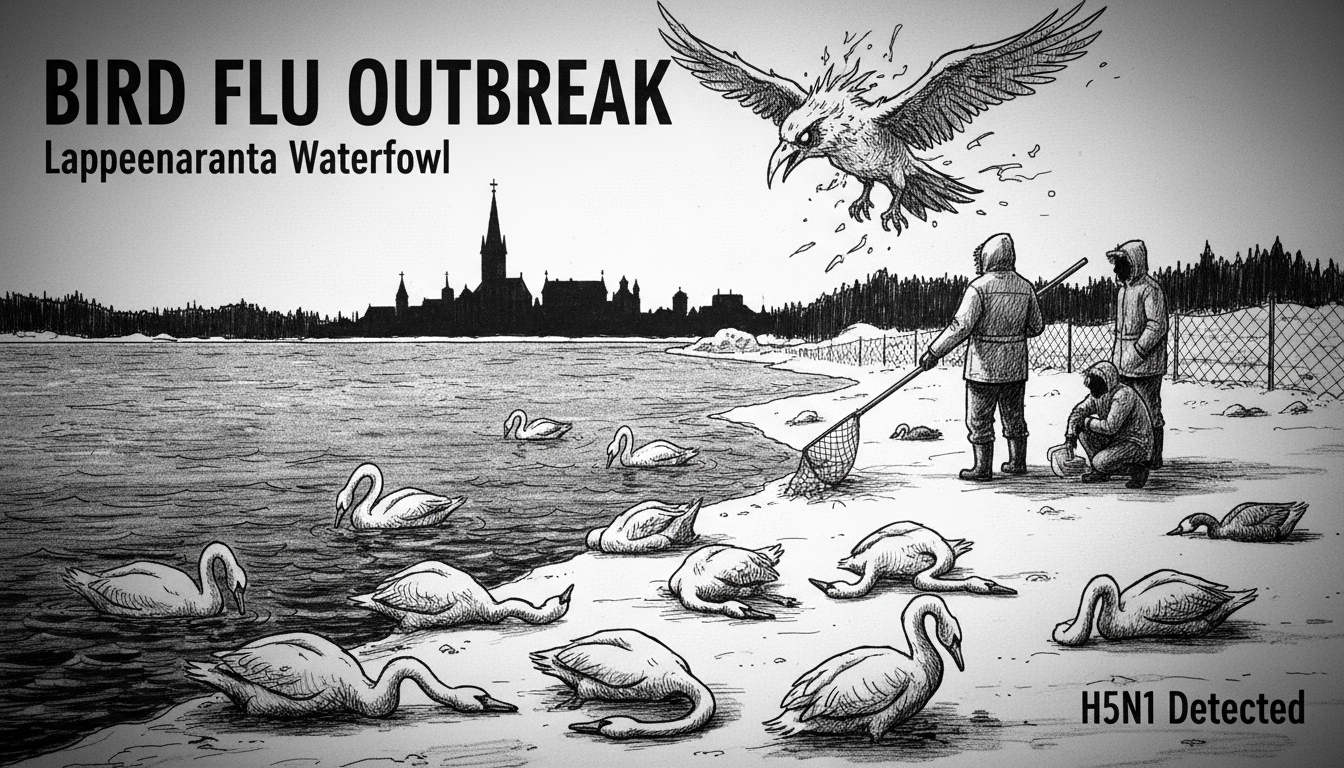
Health authorities in Lappeenranta have confirmed multiple wild bird deaths from avian influenza during the third quarter, marking another concerning development in Finland's ongoing wildlife health monitoring efforts. Municipal officials reported discovering five swans and one goose deceased at Kotijärvi and Karhusjärvi, with laboratory tests confirming the presence of H5N1 subtype avian flu virus. This outbreak follows similar detections in Virolahti and other southeastern Finnish municipalities, raising concerns about potential spread patterns across the region's wetland ecosystems.
The Finnish Food Authority conducted thorough examinations of the deceased birds, confirming the highly pathogenic H5N1 strain that has circulated in European bird populations in recent seasons. While avian influenza primarily spreads between birds through direct contact or contaminated environments, health officials emphasize the importance of proper handling procedures for anyone encountering dead or sick birds. The virus can potentially infect humans through close contact with infected birds or their secretions, though such transmissions remain relatively rare according to European health agencies.
Local authorities have established clear protocols for residents who discover deceased birds in the Lappeenranta area. Single dead birds can be disposed of through burial or with mixed waste, provided individuals wear face masks and disposable gloves during handling. For burial, officials recommend digging at least 40-centimeter deep holes and using shovels to move the birds, followed by thorough cleaning and disinfection of all equipment. Alternative disposal methods include placing individual birds in plastic bags for mixed waste collection, with careful attention to proper glove removal and hand hygiene afterward.
Municipal animal health officers require notification when residents observe multiple bird deaths in concentrated areas. Specific reporting thresholds include finding more than one dead swan in a single location, five or more deceased waterbirds or corvids, or ten or more dead birds of other species. Single raptor discoveries also warrant official notification due to their position in the food chain and potential as disease indicators. Lappeenranta maintains dedicated phone lines for bird death reports at 040 194 6654 and 040 592 9637, with additional municipal veterinary services available at 0600 170 70.
Poultry owners and pet bird keepers face particular restrictions during such outbreaks, prohibited from handling or disposing of wild birds that appear sick or deceased. This precaution aims to prevent potential transmission to domestic flocks, which could have substantial economic consequences for Finland's agricultural sector. The country maintains strict biosecurity measures for commercial poultry operations, reflecting lessons learned from previous European avian influenza outbreaks that devastated poultry industries in neighboring nations.
Finland's wildlife health monitoring system represents a critical component of the nation's broader disease surveillance network, coordinated with European Union agencies tracking avian influenza across member states. The current detection in Lappeenranta's waterfowl population demonstrates the system's effectiveness in early outbreak identification, though it also highlights the persistent challenge of managing diseases in wild bird populations that migrate across international borders. Municipal officials continue monitoring local wetlands while urging public vigilance and proper reporting of unusual bird mortality events.