
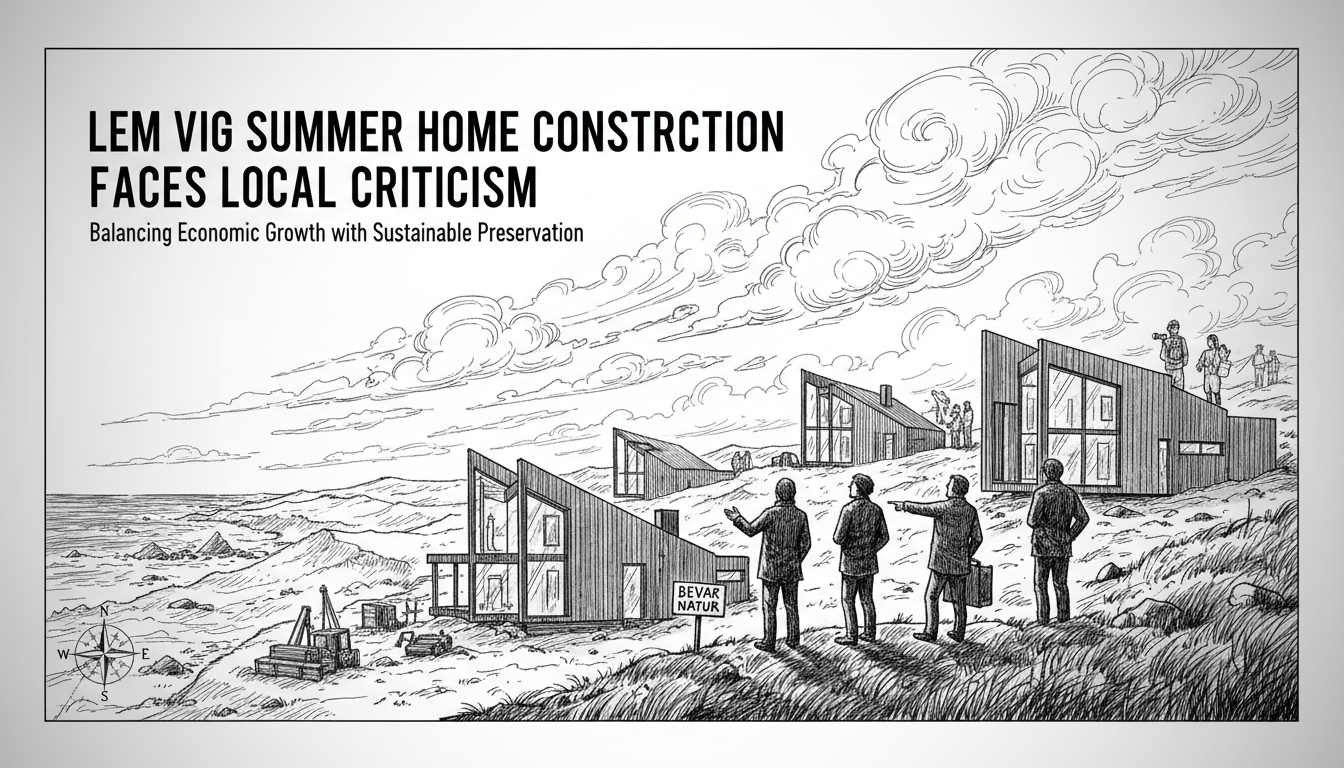
Tourists arrive in packed cars along narrow country roads in western Jutland. Each year brings more summer homes to Lemvig Municipality's natural areas. These properties are built specifically to attract additional visitors to the region.
Local residents and politicians now voice concerns about this development trend.
Martin Cederberg lives in one of the summer home areas. He experiences daily challenges with increased traffic, noise pollution and overall strain on local infrastructure. The continuous construction of new rental properties worries him deeply.
"We're getting too many of these large rental factories," Cederberg stated. "I fear our nature and the unique qualities tourists love cannot withstand this volume."
Trine Rønn, a local political candidate, shares environmental concerns about Lemvig's new summer house constructions. She believes nature has been taken for granted during recent development phases.
"This is a beautiful area, but construction has been somewhat haphazard," Rønn explained. "Nature and environment should receive top priority. New houses and business interests should come second."
During the current political term, municipal officials approved summer home construction in several protected areas. These locations include Gjeller Odde, Fjaltring, Vejlby and Vrist. Many feature unique landscapes shaped during the Ice Age.
Despite these natural treasures, the municipality considers some areas insufficiently attractive for tourists. This assessment drives continued summer home development.
Cederberg repeatedly attempted to discuss his concerns with the Technical and Environmental Committee. He described these efforts as "like running headfirst into a wall."
Five of the committee's seven members represent the Venstre party. Bent Graversen has served as a Venstre representative for four years. He defends tourism development as essential for local economic growth.
"Building summer homes makes sense because demand exists," Graversen said. "Tourists bring money to our shops, pedestrian streets and merchants. They create jobs for our residents."
Local business owner Jesper Nielsen supports the municipality's construction approach. As director of holiday rental company Feriepartner in Vejlby Klit, he acknowledges his perspective is influenced by professional interests.
"I obviously view this through tinted glasses since it puts food on my table," Nielsen admitted. "But the positive effects spread throughout our entire municipality. More houses built here means better conditions for our whole community."
The political debate highlights a classic conflict between immediate economic benefits and long-term environmental preservation. Municipal elections could shift the balance toward sustainability concerns.
Cederberg hopes new council members will prioritize environmental protection after the upcoming local elections.
"Politicians making these decisions sit for four years," he noted. "This area needs to survive for hundreds of years. We need longer-term thinking beyond giving contractors free rein to build simply because there's money in it now. That's a short-sighted solution."
Since January 2022, Lemvig Municipality approved 120 new summer homes. Construction crews have completed 70 properties, which are now occupied by visitors.
The tension between economic development and environmental protection reflects a broader challenge facing many Nordic coastal communities experiencing tourism growth.