
This opinion piece represents the views of the author(s) only and does not necessarily reflect the editorial position of Nordics Today.
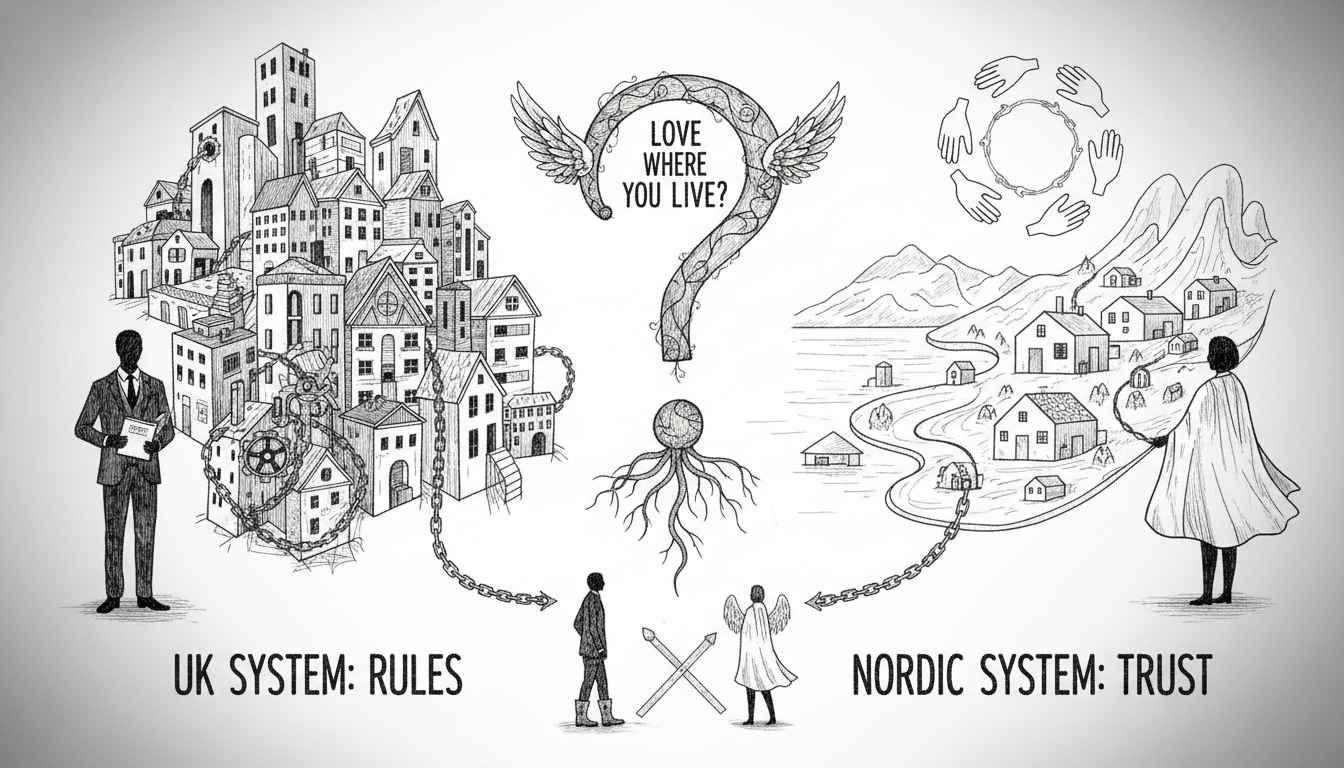
Love Where You Live?
An introduction to Human Resources, work, and place
Human Resources (HR) shapes working life more than many people notice.
It influences pay, hours, security, and treatment at work.
It affects how people enter jobs, remain in them, and leave them.
Many people meet Human Resources only at key moments.
These moments include hiring, conflict, or dismissal.
Few receive a clear explanation of its role.
This article introduces Human Resources for general readers.
It also speaks to new managers and students of the subject.
It explains how Human Resources works in the United Kingdom.
It compares UK practice with Nordic systems.
It weaves a central idea through both systems.
Work shapes how people relate to place, stability, and belonging.
What Human Resources does in the United Kingdom
Human Resources in the United Kingdom manages the employment relationship.
This relationship begins before recruitment.
It continues through daily work.
It ends after employment finishes.
UK Human Resources covers recruitment, contracts, pay, leave, conduct, performance, and dismissal.
It also manages records and legal compliance.
UK employment law sets minimum standards.
Employers may offer better terms.
They cannot offer worse terms.
Human Resources advises managers.
Managers make decisions.
Human Resources shapes how those decisions take place.
This makes Human Resources influential.
Policies shape behaviour.
Procedures shape outcomes.
Why Human Resources matters when you work for someone else
When you work for an employer, Human Resources affects your working life every day.
It controls how issues are handled.
It controls the pace and form of decisions.
Disciplinary action follows HR procedure.
Pay disputes follow HR rules.
Promotion and training flow through HR systems.
These processes shape stability.
Stability affects whether people stay in roles.
Stability affects whether people remain in one place.
Here the theme of this article becomes clear.
When work feels secure and predictable, people put down roots.
When work feels uncertain, people stay mobile.
Human Resources plays a quiet role in this outcome.
Foundations of Human Resources in the United Kingdom
Human Resources in the United Kingdom operates under statute law and case law.
Employment law defines enforceable rights and duties.
Human Resources in the UK works for the organisation.
This is a legal position.
It does not change during employee support.
UK workplaces rely on policies and written procedures.
Documentation carries legal weight.
Records support decisions in disputes.
Employment tribunals assess fairness through evidence.
Process errors cause many claims.
Intent matters less than procedure.
This structure favours clarity and control.
It supports organisational flexibility.
It also encourages movement between roles and locations.
Foundations of Human Resources in the Nordic countries
Human Resources in the Nordic countries rests on collective structures.
These countries include Sweden, Denmark, Norway, Finland, and Iceland.
Trade unions play a central role.
Collective agreements shape pay, hours, leave, and dismissal.
Human Resources in these systems relies on cooperation.
Dialogue holds value.
Trust reduces reliance on formal enforcement.
Management structures are flatter.
Decision-making spreads across teams.
Employment security is strong.
Dismissal is treated as a last option.
Employers focus on keeping people in work.
This structure encourages stability.
Stability supports long-term ties to place and community.
Contracts, pay, and security
In the United Kingdom, written employment terms are required by law.
Contracts set out pay, hours, leave, and notice periods.
Pay negotiation often happens at an individual level.
Flexibility benefits employers.
Mobility becomes easier for workers.
In the Nordic countries, collective agreements define boundaries.
Individual negotiation happens within set limits.
Pay transparency is higher.
Fairness remains visible.
UK disputes often move toward legal resolution.
Nordic disputes often resolve through discussion and agreement.
These differences affect how people plan their lives.
Security supports settlement.
Flexibility supports movement.
Working time, leave, and life outside work
The United Kingdom sets statutory minimum leave.
Most workers receive 5.6 weeks of paid annual leave.
Long working hours remain common in many sectors.
Work often shapes daily life.
Nordic countries place stronger value on time outside work.
Working hours are shorter on average.
Parental leave shows the contrast clearly.
Nordic systems support long shared leave.
Fathers are expected to take time at home.
UK parental leave exists.
Pay levels limit access.
Take-up remains uneven.
Time outside work shapes connection to place.
Work structures either support or limit that connection.
Performance, management, and trust
UK performance systems rely on structure.
Targets and review cycles dominate.
Documentation protects decisions.
Authority sits clearly with managers.
Challenges follow formal routes.
Nordic systems rely more on dialogue.
Feedback moves across teams.
Trust replaces close oversight.
UK systems protect outcomes.
Nordic systems aim to prevent conflict.
Trust and security affect how long people stay.
They affect whether work becomes part of life or remains separate.
Discipline, dismissal, and continuity
In the United Kingdom, disciplinary action follows defined steps.
Dismissal remains a management tool.
Protection from unfair dismissal applies under the Employment Rights Act 1996.
Employment tribunals review process closely.
In the Nordic countries, dismissal protection is stronger.
Reassignment is explored first.
Union involvement is common.
Ending employment carries social weight.
Where dismissal is easier, movement increases.
Where dismissal is rare, continuity grows.
Employee voice and representation
Union membership in the United Kingdom varies widely.
Many workplaces operate without union presence.
Employee concerns often pass through Human Resources.
Grievance routes follow guidance from the Advisory, Conciliation and Arbitration Service (ACAS).
In Nordic countries, unions remain part of daily working life.
Human Resources works alongside them.
Collective voice supports stability.
Individual voice supports flexibility.
Recognising a good place to work
People do not always recognise a good place to work while they are in it.
Stable pay, fair rules, and clear expectations feel ordinary over time.
They fade into the background.
Only after loss or change do they stand out.
What once felt restrictive can later feel protective.
Sometimes the system we question is the system holding things together.
This insight sits at the heart of the question posed in this title.
Loving where you live often depends on the quiet presence of stability at work.
Risk, trust, and place
UK Human Resources manages risk through control.
Policies and records sit at the centre.
Nordic Human Resources manages risk through shared responsibility.
Each system reflects its society.
One values flexibility and movement.
The other values continuity and settlement.
Human Resources plays a central role in shaping these outcomes.
Final observations
Human Resources influences work more than many people realise.
It matters when you work for someone else.
It matters when you manage people.
It matters when you study how work functions.
UK Human Resources serves the organisation within legal limits.
Nordic Human Resources serves a wider social agreement.
Both systems manage work.
Both shape how people live, stay, and belong.
This link explains why work and place remain deeply connected.
Have a productive day!