
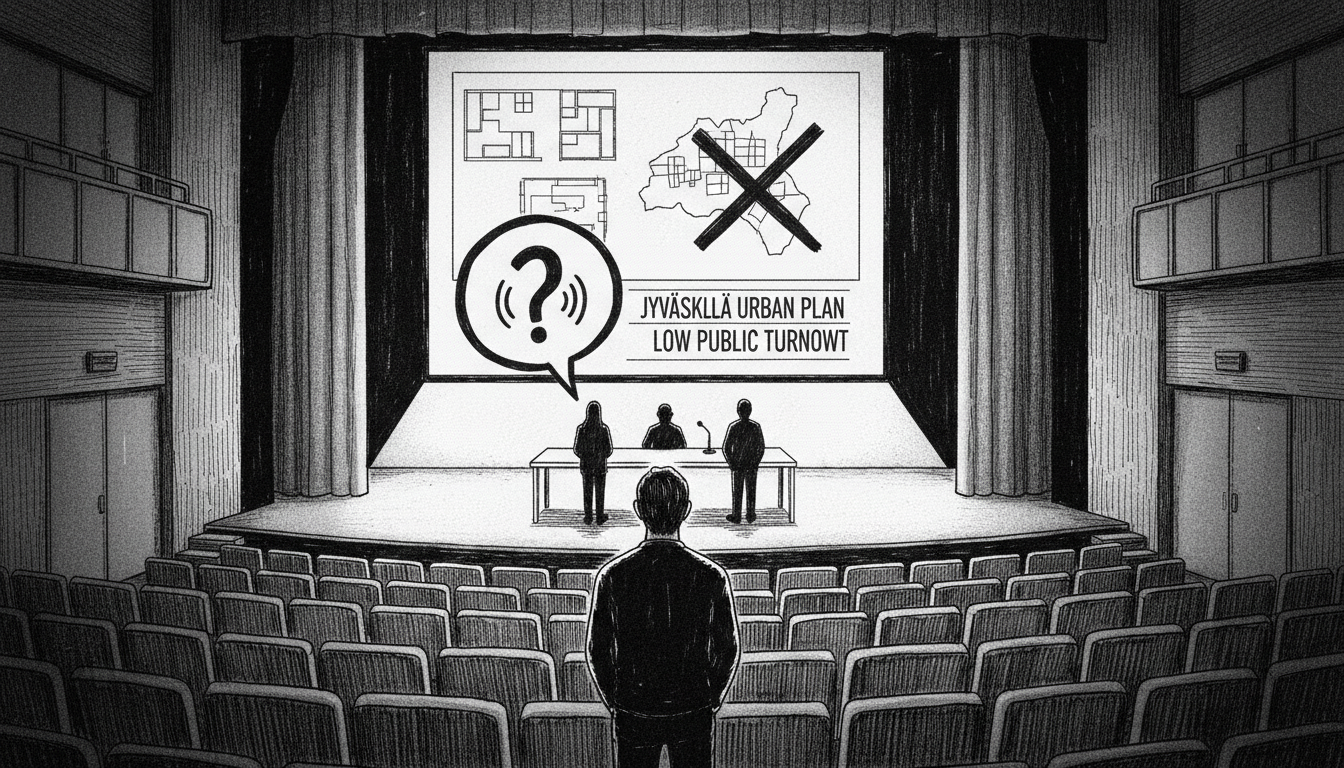
A public information session for a major construction project in Jyväskylä, Finland, drew minimal public interest this week. The online briefing, focused on the Hippos building project, attracted fewer than twenty participants. After a presentation on the development plans, organizers opened the floor for questions from residents. Only one question was submitted through the chat function during the entire session.
The sole inquiry concerned noise pollution, specifically asking if construction noise would reach Voionmaankatu street. Harri Pölkki, the site manager from construction firm Fimpec, provided a direct response. He stated that pile driving work poses a risk of noise traveling that far. Pölkki confirmed the sound would likely carry to Voionmaankatu, while noting that noise levels would diminish with distance from the construction site.
This low engagement highlights a recurring challenge in Finnish municipal planning. Public consultations are a standard part of the approval process for large-scale projects under Finland's Land Use and Building Act. The system relies on active citizen participation to voice concerns about environmental impact, traffic changes, and neighborhood disruption. When attendance is sparse, it can signal public apathy, a lack of effective communication from authorities, or a perception that citizen input does not influence final decisions.
Jyväskylä, a central Finnish city known for its university and Alvar Aalto architecture, frequently navigates the balance between development and preserving community character. The Hippos project is part of ongoing urban development in the area. The muted response may reflect specific local factors. Perhaps residents feel adequately informed through other channels, or maybe the project's details were seen as non-controversial. Alternatively, it could indicate a broader trend of public meeting fatigue, where digital formats fail to engage citizens as effectively as traditional in-person gatherings.
For international observers, this event offers a window into Finland's consensus-driven governance model. The Finnish political system and the Eduskunta, or parliament, emphasize transparency and public involvement in decision-making. Low turnout at official briefings can sometimes lead to later conflicts, as unvoiced concerns emerge during construction. Municipal governments in Helsinki and other districts often struggle with this engagement gap. The incident raises practical questions for city planners across the Nordic region about how to better solicit and incorporate community feedback for infrastructure projects.
The next steps for the Hippos project will proceed through standard regulatory channels. Officials will now compile the consultation feedback, however limited, into their official reports. The project's continuation will depend on adhering to zoning laws and environmental permits. The lack of public questions does not equate to universal approval, and local officials would be wise to proactively address potential issues like noise mitigation before work begins. This approach aligns with Finland's reputation for meticulous planning and minimizing public nuisance, core tenets of the society's operational model.