
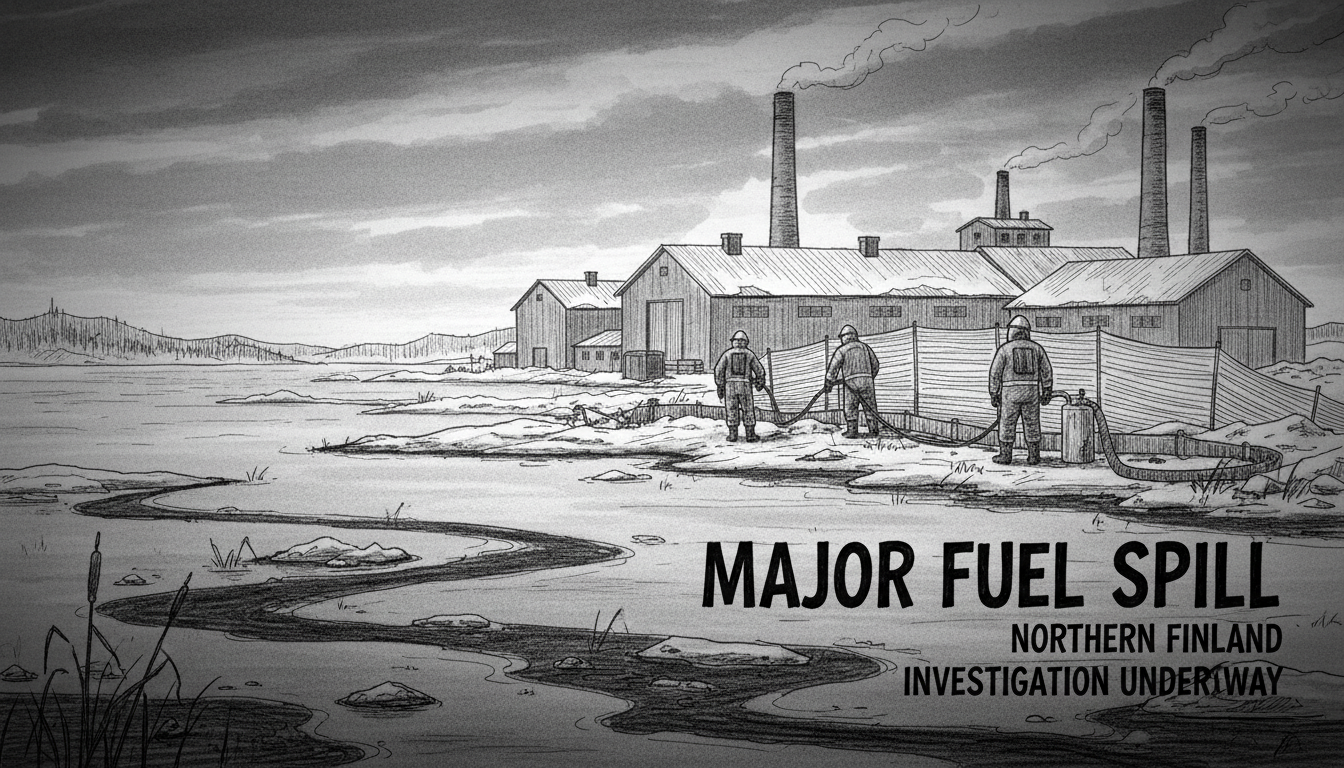
Finnish authorities are investigating a serious environmental crime in Oulu after a fuel tank leaked hundreds of liters of petroleum mixture into local waterways. The incident occurred in the Rajakylä district, where emergency services received an alert about environmental damage on November 13.
The fuel leaked from a storage tank on a private property, flowing across the land into a nearby ditch and then into the Kuivasoja stream. Rescue services immediately began oil containment operations at the site. Cleanup efforts continue through multi-agency cooperation between various authorities.
The exact amount of fuel released remains unclear. Current estimates suggest at least hundreds of liters have contaminated the environment, with possibilities reaching into the thousands of liters. Police have not determined the cause of the leak or when it precisely began.
Environmental crimes carry serious consequences under Finland's strict environmental protection laws. The country maintains some of Europe's most comprehensive environmental legislation, with potential penalties including substantial fines and even imprisonment for severe violations. Finland's environmental administration operates through a decentralized system where both national and municipal authorities share responsibility for enforcement.
This incident highlights the ongoing challenges of preventing environmental contamination in Nordic countries, despite their generally strong environmental records. Finland's extensive network of lakes and waterways makes such spills particularly concerning, as contaminants can spread rapidly through interconnected water systems.
The police investigation focuses on environmental pollution charges. Investigators aim to determine the full extent of damage to the local ecosystem. They will examine whether proper safety measures were in place and if negligence contributed to the incident.
Local residents should expect continued cleanup operations in the area. Environmental officials typically monitor water quality for extended periods following such incidents to assess long-term impacts. The Nordic approach to environmental protection emphasizes both immediate containment and thorough long-term monitoring.
Finland's environmental protection system relies heavily on prevention through strict regulations and regular inspections. When incidents occur, the response typically involves multiple agencies working in coordination. This case demonstrates how Nordic countries prioritize environmental security through comprehensive legal frameworks and rapid response capabilities.
International readers should understand that Nordic environmental standards often exceed European Union requirements. The region's harsh climate conditions can complicate cleanup operations, especially as winter approaches in northern locations like Oulu. Frozen ground and waterways present additional challenges for containing and removing contaminants.