
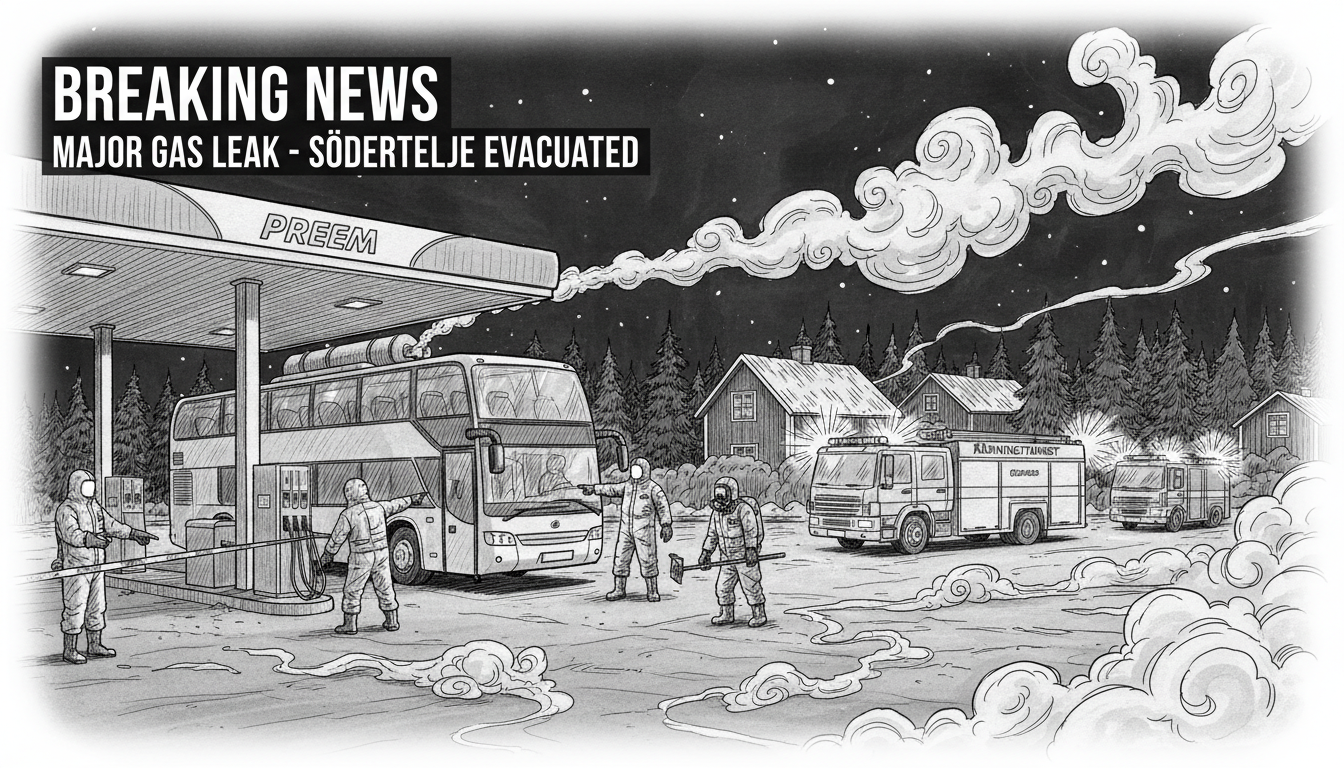
A routine fuel stop on the Nyköpingsvägen highway near Södertälje turned into a major emergency operation. A tourist bus refueling at the station experienced a critical failure of its overfill protection system. This caused a significant leak of flammable gas, creating an initial explosion risk zone of several hundred meters. Emergency services rushed to the scene just after 1 PM.
Police and fire crews quickly established a large safety perimeter. They evacuated the immediate area as a strong smell of gas filled the air. Officials on site worked urgently to contain the threat. 'Initially it was a matter of several hundred meters of explosion risk. Now we have reduced it to 50 meters,' said police officer Herman Dahlqvist at the scene. The situation was tense but controlled.
Anders Sessler, the officer in charge of the rescue operation, explained the cause. 'It was a tourist bus that had a fault with its overfill protection device during refueling. These are valves that should prevent overfilling. But they did not work, so gas flowed out while fueling,' Sessler stated. By 2 PM, crews confirmed they had successfully sealed the leak. Safety cordons were then reduced to just the bus and the specific fuel pump. Train traffic on nearby lines was never halted, a relief for commuters.
This incident highlights the intricate safety infrastructure that underpins daily Swedish life. Södertälje, a key logistics and transport hub south of Stockholm, sees heavy traffic from both domestic and international vehicles. The swift response by Swedish emergency services prevented what could have been a catastrophic event. It is a stark reminder of the hidden risks in our modern mobility. Sweden's strict safety regulations for commercial vehicles are generally robust. Yet technical failures can still occur, demanding constant vigilance from both operators and authorities.
For international readers and residents, this event underscores the high level of public safety coordination in Sweden. The response involved multiple agencies working seamlessly under a unified command. Such incidents, while rare, test the systems designed to protect the public. The fact that the leak was contained without injury or major disruption speaks to effective training and protocols. It also raises questions about maintenance standards for tour buses operating across European borders. Many such vehicles travel long distances between mandatory inspections. This near-miss may prompt discussions about harmonizing safety checks for transnational road transport within the EU.