
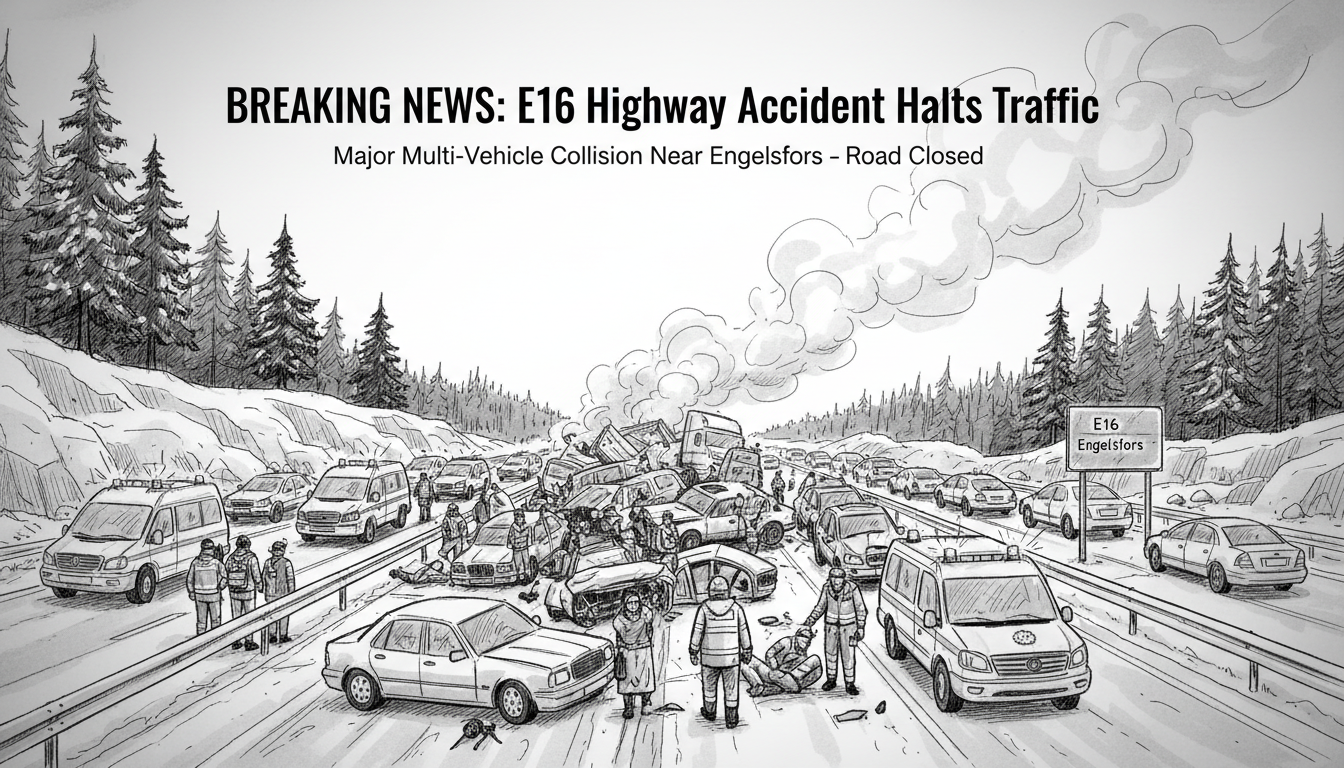
A serious multi-vehicle collision on the E16 highway near Engelsfors, west of Hofors, caused major disruptions during the evening commute. Emergency services received the first alarm just after 4 PM. Initial reports indicated a truck and two cars were involved, but rescue services later confirmed a fourth vehicle was part of the accident.
Five ambulances rushed to the scene. One remained on site past 5:45 PM. The exact number of injured people and their conditions are still unknown. Police have classified the incident as a serious accident.
Authorities closed the E16 in both directions. Traffic stood completely still by 5:30 PM. The Swedish Transport Administration's latest estimate suggested the highway might reopen around 7:30 PM, but this remained preliminary.
This stretch of the E16 is a crucial artery connecting the Dalarna region to Gävle and the eastern coast. Accidents here create ripple effects across central Sweden's transport network. For international readers, it's worth noting Sweden's generally excellent road safety record. The country has invested heavily in Vision Zero, a policy aiming to eliminate road fatalities and serious injuries.
Yet, even with world-class infrastructure, human factors and challenging Nordic weather conditions play a role. Autumn brings shorter days and often slippery roads, increasing risks during peak travel times. This accident serves as a stark reminder during a season when many Swedes travel for weekend visits to summer cottages or outdoor activities.
Local communities like Hofors and Engelsfors rely on this highway for daily commutes, freight, and connectivity. Extended closures impact businesses, healthcare access, and family logistics. The response highlights Sweden's coordinated emergency system, where police, rescue services, and the Transport Administration work together.
Road safety remains a persistent discussion in Swedish society. While the country leads globally in safety innovations, each serious accident renews debates about speed limits, truck regulations, and winter tire requirements. The immediate focus is on the injured and clearing the scene, but broader conversations about prevention will likely follow.
For now, travelers should expect delays and seek alternative routes. The situation demonstrates how a single incident on a key transport link can disrupt the flow of an entire region, underscoring the interconnected nature of modern Swedish infrastructure and daily life.