
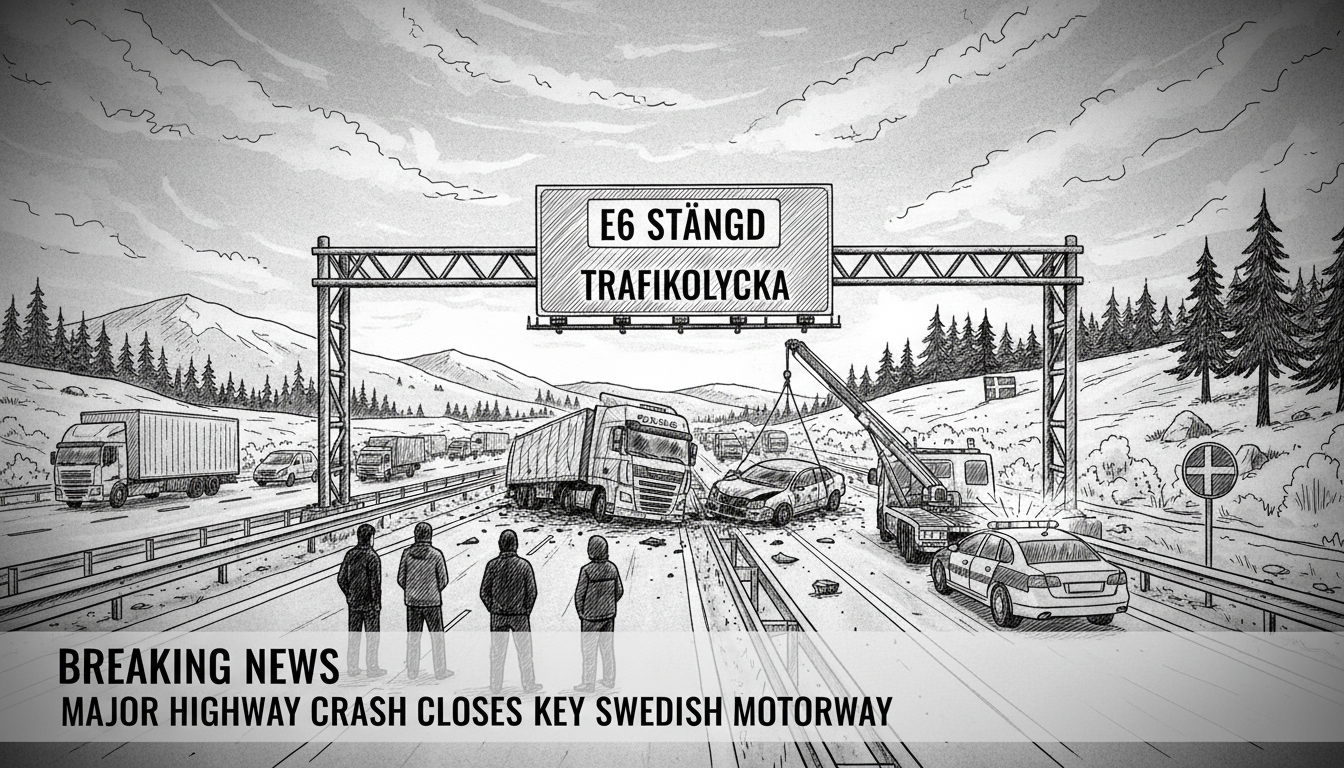
A serious collision between two vehicles has completely shut down northbound traffic on Sweden's vital E6 motorway near Helsingborg. The accident occurred just before 6 AM between the Rydebäck and Helsingborg S interchanges. Emergency services rushed to the scene after one vehicle struck the center barrier following the initial impact.
Swedish transport authorities confirm the closure has created massive disruptions for morning commuters. Police reports indicate both vehicles sustained substantial damage, requiring tow trucks to clear the wreckage. The E6 serves as Scandinavia's primary north-south corridor, connecting major cities from Gothenburg to Oslo and beyond.
This incident highlights the vulnerability of Sweden's transportation infrastructure during peak travel times. The E6 regularly handles heavy commercial and passenger traffic, meaning even brief closures can create hours-long backups. Similar accidents have prompted calls for improved safety measures along this stretch of highway, which sees higher accident rates during morning rush hours.
Sweden's highway system generally maintains excellent safety records, but single accidents can paralyze regional transportation. The country's strict traffic accident response protocols typically involve multiple agencies coordinating to minimize disruption. Road closures of this magnitude often require hours to resolve, particularly when barrier damage requires immediate repair.
International travelers should note that Swedish motorways differ from other European systems in their design and emergency response procedures. The Transport Administration typically provides real-time updates through official channels and recommends alternative routes during major incidents. Commuters today face extended detours through local roads, adding significant time to their journeys.
What does this mean for the region's transportation network? The closure affects not only personal vehicles but also commercial transport between Sweden and Norway. Goods movement along this corridor faces delays, potentially impacting businesses relying on just-in-time deliveries. The economic ripple effects of such closures often extend beyond the immediate traffic disruption.
The accident investigation will likely focus on road conditions, vehicle speeds, and driver behavior. Swedish authorities maintain rigorous accident analysis procedures to identify patterns and implement preventive measures. Previous similar incidents have led to improved signage, speed limit adjustments, and enhanced barrier systems along high-risk highway sections.