
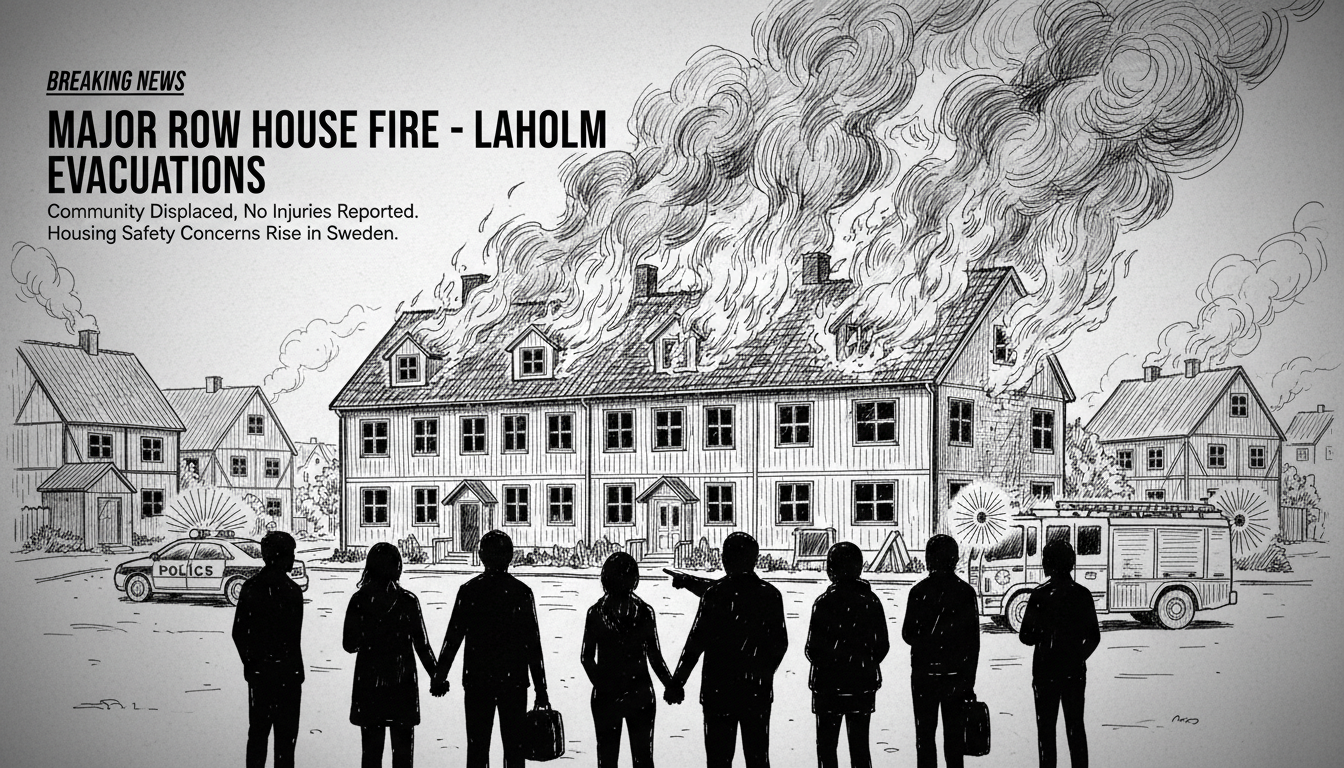
A fierce fire tore through a row house complex in Laholm early Tuesday morning. The alarm sounded at five o'clock. Six connected homes were evacuated as emergency services rushed to the scene. A police spokesperson confirmed the details. The fire was still burning intensely two hours later. Officials focused on containing the blaze to the single row of six houses. An ambulance stood by, but there were no immediate reports of injuries. The fire reportedly started in a home where no one was present at the time.
This incident highlights the tight-knit nature of Swedish residential communities, especially in smaller towns like Laholm. Row houses, or 'radhus', are a common and affordable housing solution across Sweden. They represent a key part of the Swedish dream of a stable, communal home life. A fire in one unit immediately threatens neighbors, disrupting the security of an entire block. For international readers, understanding this housing style is crucial to grasping the story's local impact. These are not detached single-family homes, but shared structures where safety is deeply interconnected.
Sweden's emergency response systems are generally robust, but events like this test their limits. The quick evacuation of multiple families shows coordinated action between police and rescue services. It also raises questions for society about fire safety standards in older housing stock. Many Swedish towns have areas with buildings constructed decades ago. Modern safety codes may not fully apply to them. This fire will likely prompt local inspections and community discussions about prevention. For expats living in similar housing, it's a sobering reminder to check smoke alarms and know evacuation routes.
What does this mean for Swedish society trends? It touches on community resilience and the social contract. Neighbors in these areas often know each other well. A disaster like this can strengthen community bonds as people offer support. But it also exposes vulnerabilities. The displaced families now face the challenge of finding temporary housing. Sweden's current housing shortage, particularly in affordable segments, makes this recovery harder. The event is a small-scale example of larger pressures on the Swedish welfare and safety net. The system is designed to help, but resources are stretched.
The broader context involves Sweden's approach to safety and regulation. The country has high standards, but enforcement varies. This fire will be investigated to determine the cause. Was it an electrical fault, a forgotten candle, or something else? The answer will inform future prevention campaigns. For now, the focus is on the human angle. Families lost their homes and possessions. The community of Laholm will rally around them. That response is a deeply ingrained part of Swedish culture—a practical collectivism that emerges in times of crisis. The story, therefore, is more than a fire report. It's a window into how Swedish society functions under pressure, values community, and manages risk in everyday living spaces.