
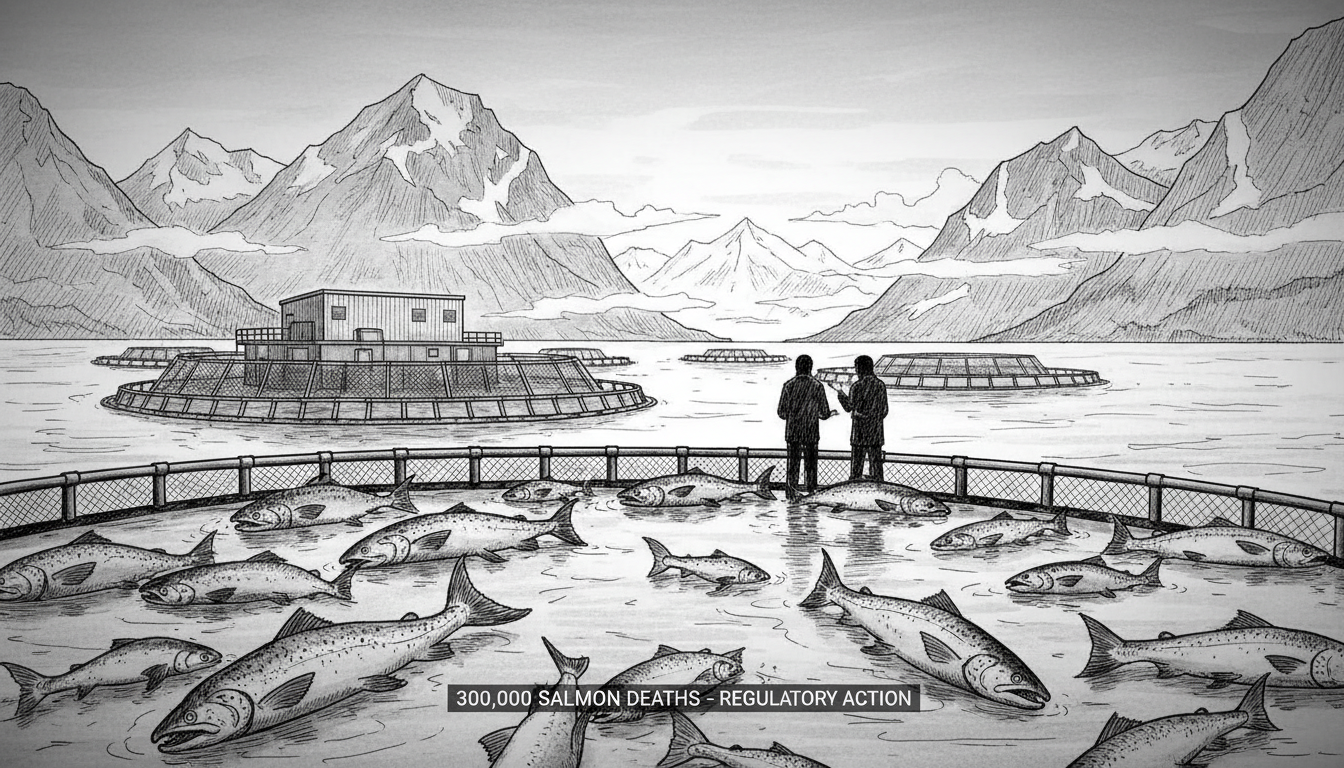
Norwegian food safety authorities have imposed strict measures following the death of over 300,000 salmon at a fish farm near Ålesund. The incident at the Oksebåsen facility in Giske municipality has triggered significant regulatory response and daily penalty threats.
The Norwegian Food Safety Authority conducted an inspection at the Mowi-operated facility on November 4. Officials identified gill disease as the primary cause of the mass mortality event. The authority subsequently issued formal orders requiring immediate corrective actions from the aquaculture company.
Despite Mowi reporting the situation was under control, regulators determined the company's response was insufficient. The Food Safety Authority has now mandated additional measures and warned of daily fines totaling 320,000 kroner if compliance deadlines are missed. Penalties could begin as early as December 2 if requirements remain unmet.
In their official assessment, authorities described the situation as indefensible from an animal welfare perspective. The scale of mortality raises serious questions about disease management in Norway's valuable aquaculture sector.
Mowi responded to the regulatory pressure by emphasizing their cooperation with authorities. The company stated they naturally follow all government directives and maintain good working relationships with regulatory bodies.
This incident highlights ongoing challenges in Norway's salmon farming industry. The sector has experienced multiple disease outbreaks in recent years, particularly in the productive fjord systems along the western coast. The Giske location near Ålesund represents a prime aquaculture region where water temperatures and conditions can sometimes facilitate disease spread.
Norwegian aquaculture operations face increasing scrutiny as the industry expands. The country remains the world's largest Atlantic salmon producer, making such mortality events economically significant. Recent years have seen growing public concern about fish welfare and environmental impacts of large-scale operations.
The regulatory response demonstrates Norway's strict approach to animal welfare in food production. The Food Safety Authority's willingness to impose substantial daily penalties signals serious concern about current conditions at the facility.
Industry analysts note that such incidents can affect Norway's international reputation for sustainable seafood production. Export markets increasingly demand high welfare standards and transparent production methods. The mass mortality event comes during a period of global price volatility for salmon products.
Local communities near fish farming operations often express concern about environmental impacts. The concentration of fish in net pens can lead to disease transmission and water quality issues if not properly managed. This latest incident may renew debates about optimal production densities and location choices.
Norway's aquaculture regulations have tightened in recent years following similar events. The industry continues developing new technologies and management practices to reduce disease risks. This case will likely influence ongoing policy discussions about sustainable growth in the valuable sector.
The coming weeks will show whether Mowi can meet regulatory requirements before penalty implementation. The company's response may set precedents for how Norway handles future disease outbreaks in its strategically important aquaculture industry.