
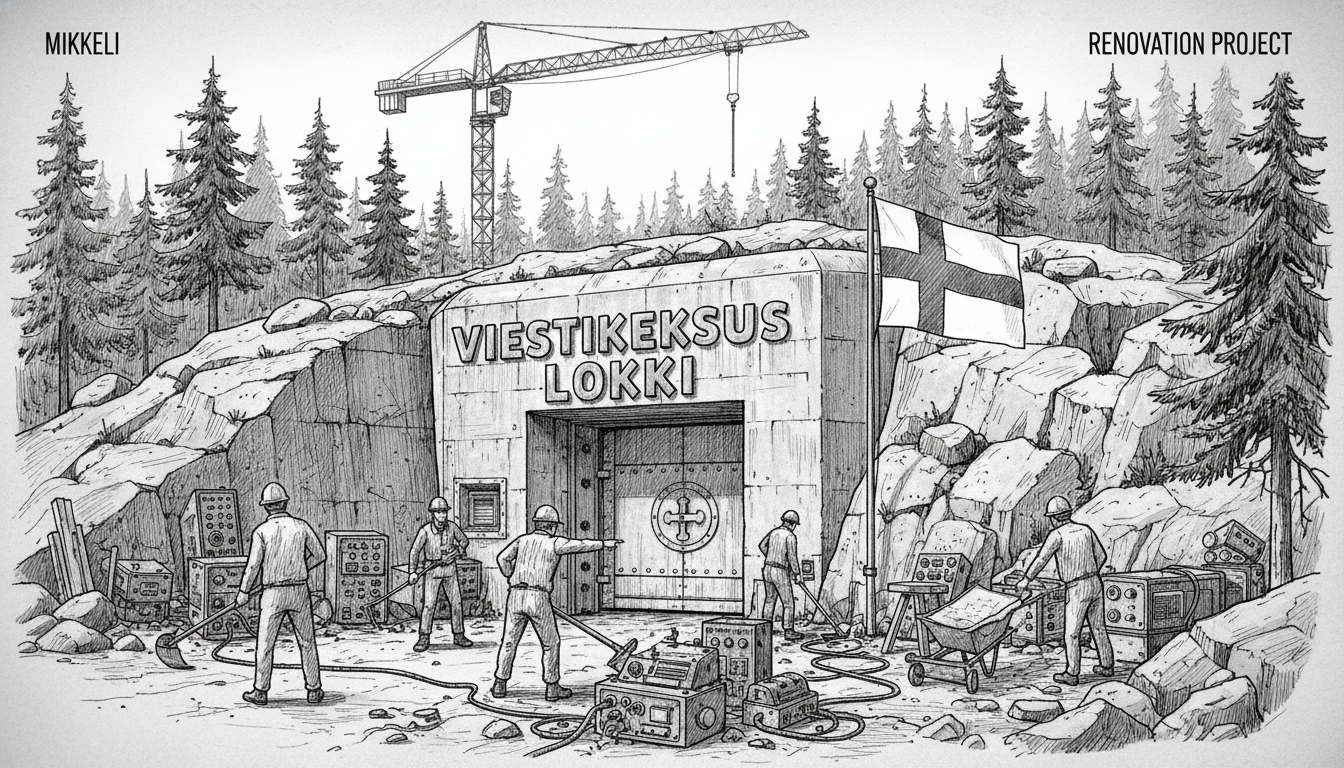
The city of Mikkeli has begun a major project to restore the Viestikeskus Lokki communications bunker, a Cold War-era facility. Workers emptied the underground complex this week. The goal is to eventually open the doors to the public. This process marks the first step in a renovation expected to cost hundreds of thousands of euros. A local transport company, Veljekset Rahikainen, handled the clearing operation with hired movers. The work moved at a brisk pace on Wednesday morning. This was not a volunteer effort by the local communications guild. It was a formal municipal contract.
The Lokki bunker is a significant piece of Finnish national history. It served as a regional communications center during the Cold War. Such facilities were part of a nationwide network designed to maintain government operations during a crisis. The decision to renovate it reflects a broader trend in Finland. Many municipalities are now grappling with how to preserve and repurpose these historical defense sites. They represent a complex legacy from a specific period in Nordic security policy.
Finland's approach to its Cold War heritage is pragmatic. The country maintains a policy of military non-alignment while investing heavily in civil defense. Converting a former communications bunker into a public site fits this model. It acknowledges history while finding a new, peaceful purpose. The project in Mikkeli will require careful planning. Underground structures present unique challenges for ventilation, moisture control, and accessibility. The cost, running into the high six figures, is a substantial investment for a mid-sized Finnish city. Councilors must justify it to taxpayers who expect efficient use of public funds.
The renovation raises immediate questions. What will the bunker become? A museum seems the most likely outcome. It could educate visitors about Finland's defense history and the technology of the era. Other possibilities include a secure archive or a unique event space. The city has not yet announced definitive plans for the post-renovation phase. The current focus is solely on the structural restoration. This project is more than a local construction job. It is a step in deciding how Finland preserves and interprets its 20th-century defense architecture. The work in Mikkeli will be watched by other cities with similar sites. The success or challenges of this renovation could set a precedent for future projects across the country.
From a political perspective, funding for cultural heritage projects often involves negotiation. The City Council must balance this initiative against other budgetary demands like schools and infrastructure. National heritage grants could potentially offset some costs. The project also connects to Finland's evolving identity. It transforms a symbol of past preparedness into a site for future learning. This is a common thread in Nordic societies. They frequently repurpose industrial or military sites for cultural and community use. The Lokki bunker's journey from a secret facility to a potential public venue tells that larger story.