
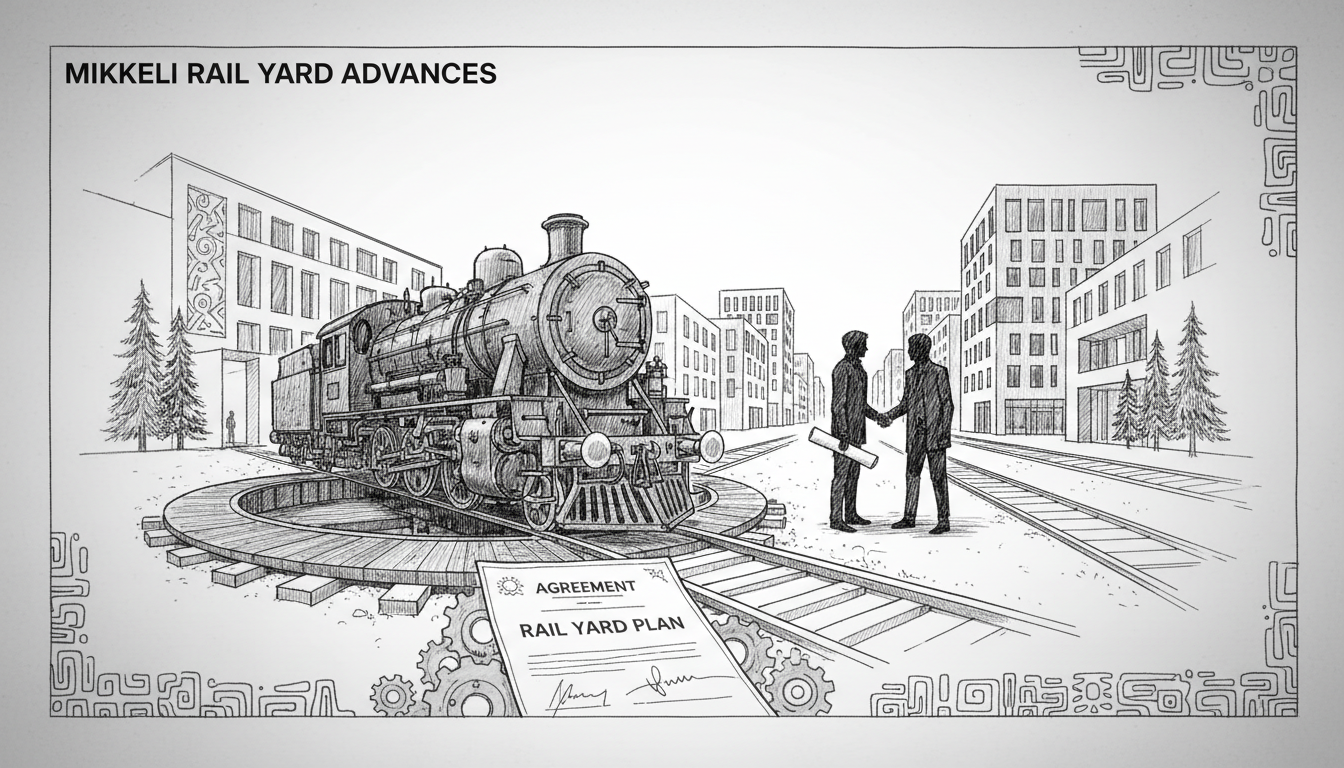
A significant urban development plan in the Finnish city of Mikkeli has moved forward after a crucial agreement was reached. The property developer Nordicon and the Finnish Transport Infrastructure Agency, known as Väylävirasto, concluded negotiations on Thursday regarding the future of the historic Veturitallien, or Locomotive Halls, area. The parties agreed that a locomotive turntable, a key heritage feature, will be integrated into the planned development zone. This breakthrough resolves a major point of contention and allows the detailed zoning process to proceed.
The negotiations, held in a positive spirit according to officials, centered on balancing modern development with the preservation of industrial heritage. The locomotive turntable is a central piece of railway history, used to rotate steam and diesel engines for direction changes. Its inclusion in the final plan represents a concession to cultural preservation advocates. The agreement paves the way for Nordicon to submit a formal, detailed plan to the City of Mikkeli's planning board for review and a public consultation period.
This development is emblematic of a broader trend across Finnish regional cities. Municipalities are actively repurposing old industrial and transport brownfield sites to stimulate economic growth and increase housing density. These projects often involve complex negotiations between private developers, state agencies like Väylävirasto which manages state-owned transport land, and local heritage groups. The Finnish planning system requires careful alignment of municipal master plans with detailed local plans, a process that can be lengthy but aims for comprehensive stakeholder input.
For Mikkeli, the capital of the South Savo region, the project holds substantial economic importance. Successful redevelopment of the centrally located rail yard could attract new business investment and residents, countering regional population decline trends. The project's progression will now depend on the city's planning authority and eventual approval by the local council. The outcome will be watched closely by other cities with similar post-industrial sites, as it tests a model for public-private cooperation in urban regeneration. The real test will be whether the final design genuinely honors the site's history while creating a functional, modern urban space that serves the community's future needs.