
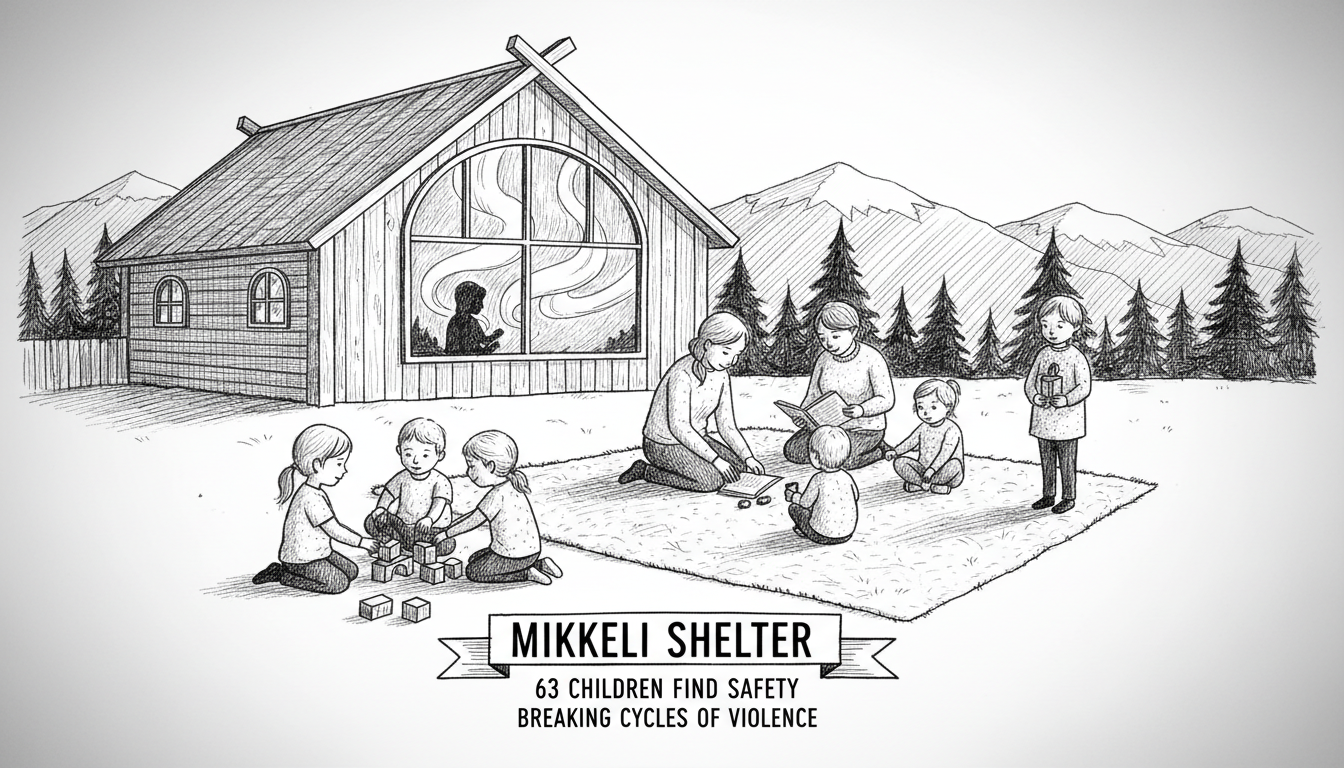
A shelter in Mikkeli, Finland has provided refuge to 63 children already this year, with most victims being under five years old. The facility reports that many children arriving at the shelter have witnessed violence between their parents, while others have experienced psychological or physical abuse directly from a parent.
Minna Hautala, a social worker at the Mikkeli shelter, explained the changing approach to child protection. "Previously, shelters didn't systematically address children's needs. Since 2015 legislation transferred shelter funding and development to the National Institute for Health and Welfare, children have received better consideration," Hautala said in an interview.
The shelter now treats children as equal clients from their first day. Staff members meet with children, explain the shelter environment, and engage in play and conversation. "It's crucial that children can simply be children in the shelter, doing things they enjoy," Hautala noted. Some parents observe their children becoming more relaxed in the shelter than they were in their own homes.
Exposure to domestic violence creates long-term effects on children's wellbeing. Shelter staff commonly observe anxiety, sleep difficulties, nightmares, and appetite changes among young residents. "Our staff's role involves stabilizing the situation and providing support so children can settle in," Hautala explained. Some children become withdrawn, while others show fear toward staff members, requiring careful trust-building efforts.
Maintaining normal routines represents another critical aspect of shelter work. When possible, children continue attending their regular daycare or school. For those arriving from distant locations, remote learning options are arranged. "Maintaining routines supports both the child's sense of security and the parent's coping ability," Hautala emphasized.
The shelter encourages openness with educational institutions about family situations. "When schools understand what children are experiencing, they can better respond to behavioral changes or symptoms," Hautala said.
Addressing family violence with children requires careful consideration of age and developmental level. Staff collaborate with parents to determine appropriate explanations. "Children have a right to information, and most parents want their children to understand the situation," Hautala noted. Staff might tell younger children that "adults are working things out" while discussing what constitutes violence with older children.
Small children often understand more about violence than adults assume. "Violence creates thoughts and feelings in children, and we're ready to listen and discuss them," Hautala said. Staff focus on providing opportunities for children to be heard rather than acting as investigators determining what occurred.
Conversations consistently reinforce that violence is wrong. "It's tremendously important that someone tells this to the child directly," Hautala stressed. "No one may have said this before. Violence can become normalized for children, potentially leading them to either use violence or enter violent relationships later in life. We need to break this intergenerational cycle of violence."
Last year, the Mikkeli shelter served 168 clients, including 76 minors. Among adult clients, 36 women and 14 men arrived without children, while 42 adults—mostly women—came with children. Shelter stays averaged 11 days, ranging from a few days to several months.
Finland's network of shelters provides crucial protection for those experiencing intimate partner violence or threats. The country has strengthened legal protections and funding for shelter services in recent years, though demand continues to outpace resources in many regions. The high number of very young children in shelters underscores how early domestic violence affects victims and highlights the importance of early intervention to prevent long-term trauma.
The situation in Mikkeli reflects broader Nordic patterns where increasing awareness and reporting of domestic violence has created greater demand for shelter services. While Nordic countries typically rank high in gender equality metrics, domestic violence remains a persistent challenge across the region, with shelters playing a vital role in breaking cycles of intergenerational trauma.