
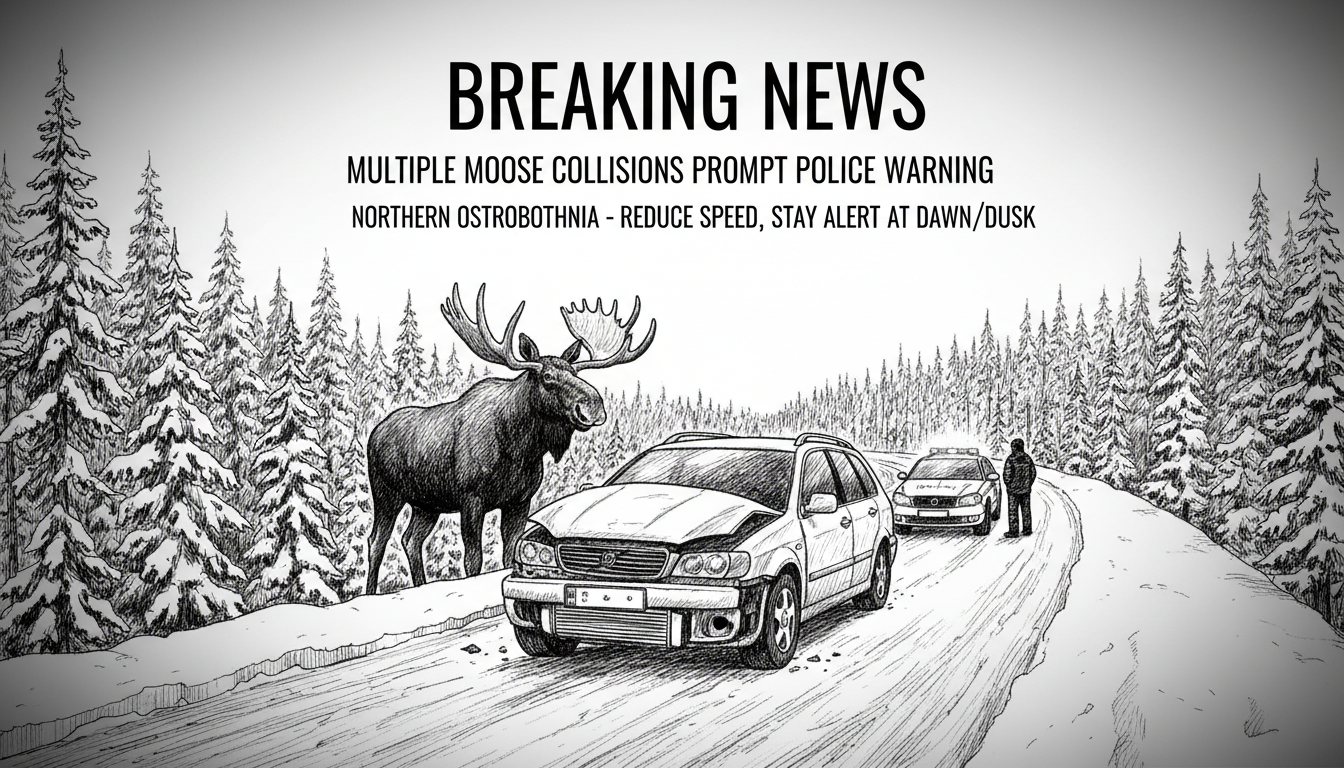
Police in Northern Ostrobothnia have issued an urgent warning to drivers after multiple moose collisions occurred across the region. Authorities report several serious accidents involving vehicles and moose during recent days.
The incidents happened primarily in the Jokilaakso area. One collision involved a train striking a moose near the border between Siikajoki and Liminka. Another accident occurred on Huhtakyläntie road in Kalajoki, where a car collided with a moose and sustained substantial damage. Police noted the road surface was icy and extremely slippery at the time.
In the early hours of Monday morning, a similar moose collision happened in Utajärvi, leaving another vehicle damaged. No human fatalities were reported in these incidents, but the accidents highlight the growing danger on regional roads.
Moose pose particular risks to Nordic drivers, especially during autumn and winter months. These large animals can weigh up to 700 kilograms and cause devastating damage when colliding with vehicles. Their dark coloration makes them difficult to spot in low light conditions, and they often move unpredictably across roads.
Northern Ostrobothnia has one of Finland's highest moose populations, with an estimated 15,000-20,000 animals in the region. The area's extensive forest coverage and numerous water bodies create ideal moose habitat but also increase vehicle collision risks.
Police emphasize that moose are currently very active and advise drivers to maintain high alertness, particularly during dawn and dusk hours. Authorities recommend reducing speed in forested areas and being prepared for sudden animal crossings. They also suggest using high beams when possible and watching for reflective eye shine along road edges.
Finland records approximately 4,000 moose-vehicle collisions annually, with Northern Ostrobothnia consistently ranking among regions with the highest incident rates. These accidents cause millions of euros in vehicle damage each year and pose serious safety risks to motorists.
The timing of these recent collisions coincides with the moose mating season, when animals become more mobile and less cautious. Wildlife experts note that younger moose, now independent from their mothers, are also learning migration routes and may cross roads more frequently.
Local transportation officials have previously discussed installing more wildlife warning reflectors and fencing along high-risk road sections. Some municipalities have also considered controlled hunting to manage moose populations near major roads, though these measures remain controversial among environmental groups.
For international readers and expats in Finland, understanding moose collision risks is crucial for safe driving. Foreign drivers may underestimate the size and behavior of these animals, which can appear suddenly and stand much taller than expected. Insurance companies typically cover moose collision damage under comprehensive policies, but deductibles can be substantial.
The police warning serves as a critical reminder that Nordic driving requires constant vigilance for wildlife, especially in rural areas during seasonal transition periods. Drivers should plan extra travel time during high-risk hours and remain prepared to brake suddenly if moose appear on the road.