
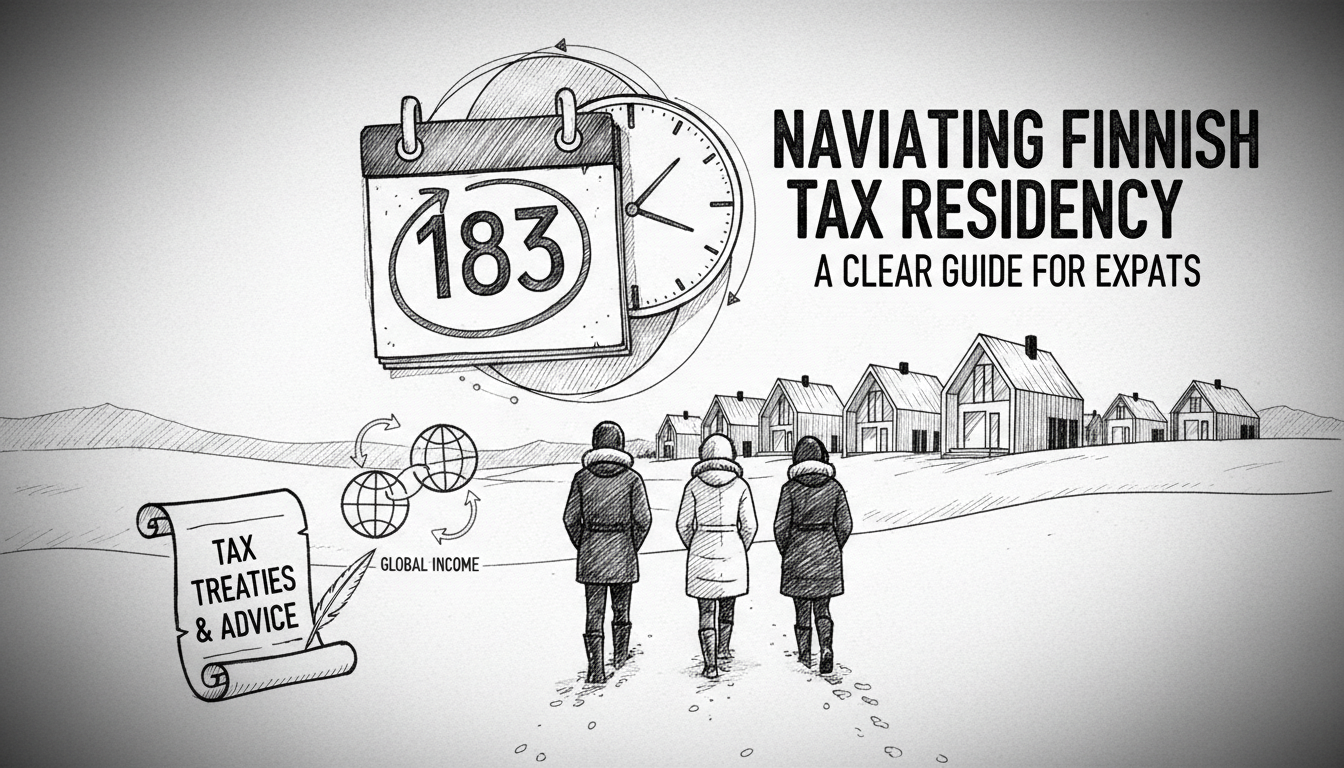
A software engineer from Berlin moved to Helsinki for a job at Supercell. After 183 days, she received a letter from the Finnish Tax Administration. It stated she was now a Finnish tax resident. Her global income became taxable in Finland. This surprise is common for expats who misunderstand the rules.
Finnish tax residency is not just about physical presence. It determines where you pay tax on your worldwide income. Getting it wrong leads to penalties and double taxation. This guide explains how Finland decides your status.
The 183-Day Rule and Permanent Home Test
Spend 183 days or more in Finland within a calendar year. You become a tax resident automatically. Days count if you are physically present at midnight. Short trips abroad do not reset the clock.
Tools
Call home for less
Save up to 90% on international calls to family and friends.
Links may be monetized via affiliate partners.
Spend fewer than 183 days. Authorities apply the "permanent home" test. They assess if your center of vital interests lies in Finland. Key factors include your family location and economic ties.
Consider a Canadian consultant named Liam. He works remotely for a Toronto firm. He rents an apartment in Tampere for eight months. His wife and children remain in Canada. He maintains his Canadian bank accounts. Finland likely views him as a non-resident. His Finnish-sourced income is taxed locally. His global income stays in Canada.
Economic and Personal Ties Assessment
The tax authority examines your connections to Finland. A permanent home is a dwelling available continuously. A leased apartment for one year qualifies. A hotel room does not.
Economic ties include employment or business activities. Working for a Finnish company like Kone or Stora Enso creates strong links. Finnish bank accounts and investments also matter.
Personal ties focus on family. If your spouse and children live with you in Finland, residency is probable. Social memberships and location of personal belongings add weight.
An American researcher named Anya accepts a two-year contract at the University of Turku. She moves with her partner. They lease a flat and enroll their child in a local school. They join a sports club. Finland will deem Anya a tax resident from arrival. Her fellowship income and any foreign rental income face Finnish tax.
The Domicile Principle and Double Taxation Treaties
Finland also uses a domicile principle for citizens. Finnish nationals often keep tax residency even when living abroad. This applies unless they prove permanent departure.
Double taxation treaties override domestic rules sometimes. Finland has treaties with over 70 countries. These agreements include tie-breaker clauses.
Imagine a British entrepreneur named David. He lives 140 days in Helsinki and 140 days in London. He has a home in both cities. His business is incorporated in the UK. The Finland-UK tax treaty resolves the conflict. It examines his permanent home available to him. It then looks at his personal and economic relations. The treaty may assign residency to the UK. David would then pay Finnish tax only on his Finnish business income.
Practical Steps to Determine Your Status
First, track your days in Finland. Use a calendar or app like TripIt. Record every midnight spent in the country.
Second, gather documents. Collect rental agreements, employment contracts, and family records. Keep bank statements showing Finnish transactions.
Third, use the official tax residency test. The Finnish Tax Administration offers an online questionnaire. It provides preliminary guidance. The service is free.
Fourth, consult a professional if your situation is complex. Firms like KPMG Finland or Deloitte Finland offer residency assessments. Expect fees starting from 500 euros. For definitive rulings, submit form 7900 to the tax authority. They provide binding decisions in about six months.
Consequences of Tax Residency
Finnish tax residents pay tax on global income. This includes salaries, business profits, and investment gains. The progressive state tax rate reaches 31.25 percent. Municipal tax averages about 20 percent.
Non-residents pay tax only on Finnish-sourced income. This includes work performed in Finland. The withholding tax rate is 35 percent for most employment income.
Register with the tax office upon becoming resident. File an annual tax return by May. Use the MyTax online portal. The system pre-fills data from employers and banks. You must declare foreign assets exceeding 50,000 euros.
Frequently Asked Questions
How does Finland count the 183 days?
Finland counts each day you are physically present at midnight. Arrival and departure days both count if you are in Finland at midnight. The count resets each calendar year.
I work remotely for a foreign company. Am I a tax resident?
Possibly. Your physical presence triggers the 183-day rule. Your permanent home and economic ties also matter. Remote work from Finland creates Finnish-source income. That income is always taxable in Finland.
What if I qualify as a tax resident in two countries?
Consult the double taxation treaty between Finland and the other country. Treaty tie-breaker rules determine your residency. Provide the treaty article to both tax authorities.
Do I pay Finnish tax on my foreign rental income?
Yes, if you are a Finnish tax resident. You must declare worldwide income. You may claim foreign tax credits to avoid double taxation.
How do I prove my tax residency to my home country?
Request a certificate of residence from the Finnish Tax Administration. Use form 8302e. Processing takes about four weeks. Some countries accept Finnish tax cards as proof.
What happens if I fail to declare foreign income?
The tax authority imposes penalties. Interest accrues on unpaid taxes. In severe cases, criminal charges for tax evasion apply.
Can I be a tax resident without a personal identity code?
Yes. Tax residency and the identity code are separate. You become a tax resident based on the criteria. You need an identity code to file taxes properly. Apply at the Digital and Population Data Services Agency.