
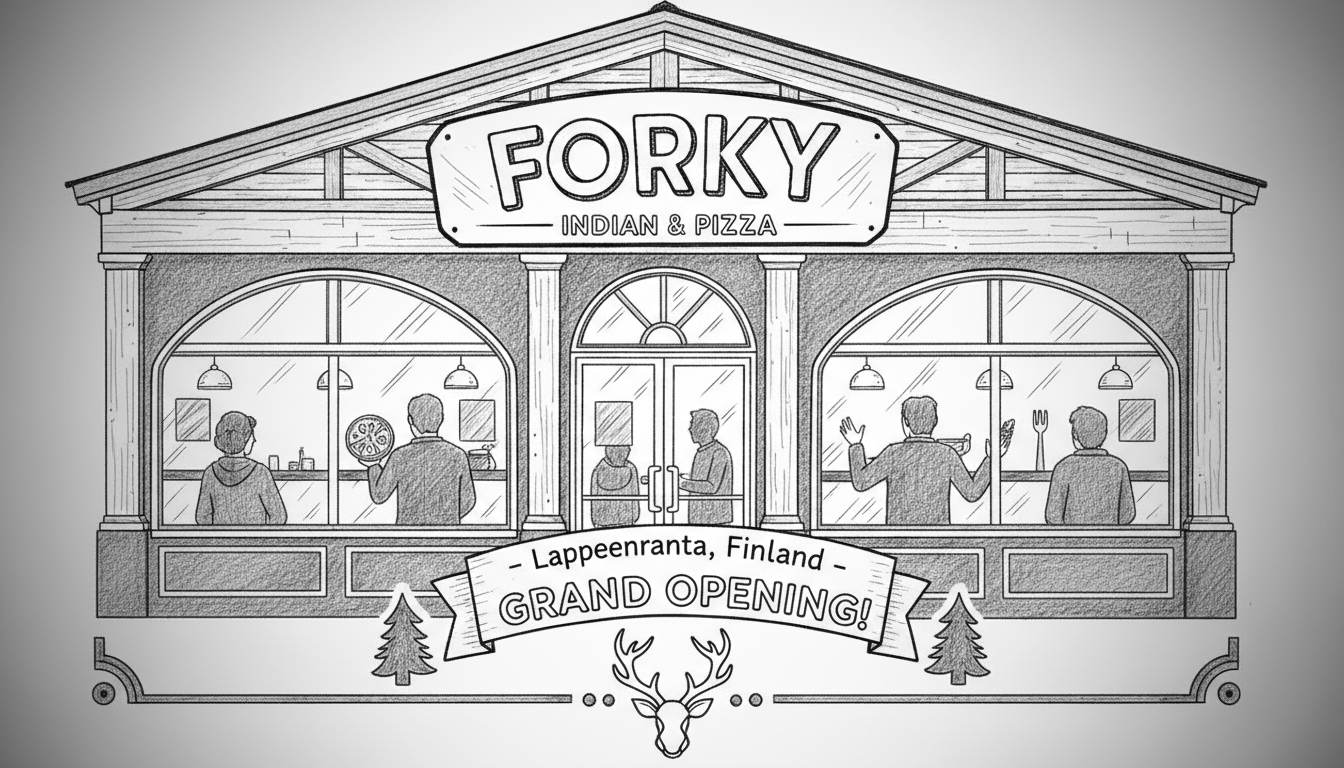
A new restaurant named Forky opened its doors in Lappeenranta on Monday, bringing a fusion of Indian cuisine and popular fast-food items to the South Karelian city. First-time restaurateur Amin Sheikh Ruhul, partnering with an experienced entrepreneur from Mäntyharju, launched the venture in the Armilanlinna premises. The establishment will feature an Indian-focused menu alongside pizza, kebabs, and burgers, with weekday lunch buffets and plans for evening and weekend service. The owners also intend to secure a license to serve alcohol.
This opening represents a small but notable development in Finland's regional hospitality sector, which faces distinct challenges outside major urban centers. Lappeenranta, a city of approximately 72,000 residents near the Russian border, has a diverse culinary scene influenced by its university population and international connections. New food service businesses must navigate Finland's strict alcohol licensing laws, administered by the National Supervisory Authority for Welfare and Health (Valvira), and high operational costs, including wages and ingredients.
The success of such ventures often hinges on local economic health and consumer spending power. Finland has experienced subdued economic growth, impacting discretionary spending on dining. Restaurants offering varied menus, like Forky's combination of ethnic and familiar fare, may appeal to broader customer segments seeking value. The decision to pursue an alcohol license is financially strategic, as beverage sales typically provide higher margins than food alone in the hospitality industry.
For international readers and potential expatriates, this story highlights aspects of Finnish business culture and daily life. Entrepreneurial activity in smaller cities reflects local resilience and community support for new services. The Finnish restaurant industry is characterized by high-quality standards, seasonal ingredients, and a strong lunch culture, where many working Finns enjoy subsidized meals. A new restaurant contributes to local employment and becomes a social hub, factors important for community cohesion in all Nordic regions.
The broader Nordic context shows similar trends where immigrant entrepreneurs frequently enrich the food landscape, introducing global flavors to local markets. In Sweden and Norway, for instance, such ventures are common drivers of gastronomic diversity. Forky's launch, while a local event, fits a recognizable pattern of small business development that supports regional economies and cultural exchange. Its future performance will depend on consistent quality, effective marketing, and the sustained patronage of Lappeenranta residents and visitors.