
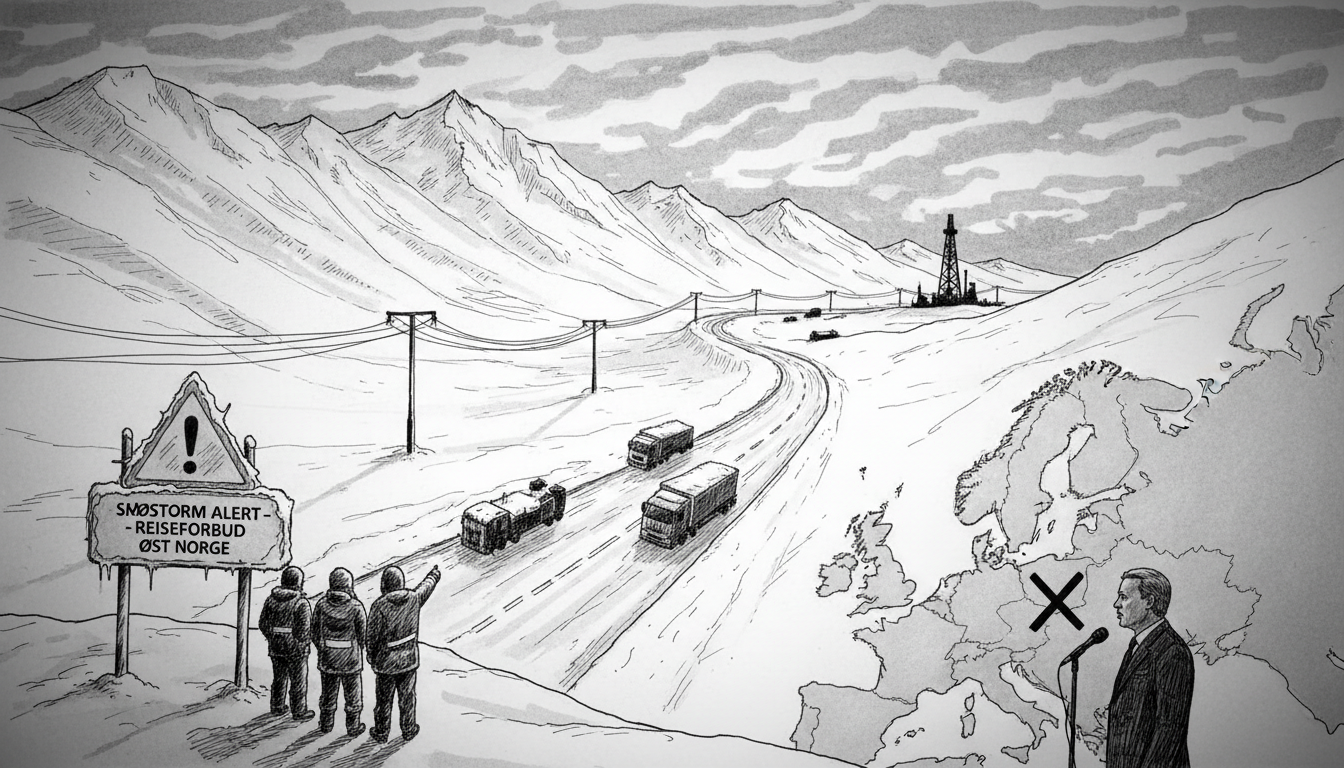
A severe winter storm is moving eastward across Norway, triggering fresh snow alerts for multiple regions. The Norwegian Meteorological Institute issued warnings for heavy snowfall and strong winds. These conditions will impact major transport corridors and daily life from the inland valleys to the eastern counties.
Road authorities report that the E6 highway, a critical national artery, faces significant disruptions. Secondary routes in Hedmark and Oppland are also affected. Travelers should expect delays and possible road closures. The storm complicates logistics for both commuters and freight transport.
This weather event carries direct implications for Norway's energy sector and political oversight. Heavy snow and ice in the North Sea can delay supply ship movements to offshore oil and gas installations. Fields like Statfjord and Snorre require constant resupply. Any prolonged disruption affects production timelines and export schedules.
The Storting's Energy and Environment Committee monitors such situations closely. Committee members receive briefings from the Norwegian Coastal Administration and the Petroleum Safety Authority. "Infrastructure resilience is a permanent priority," a committee member said in a recent hearing. They emphasized the link between reliable weather response and stable energy output.
Winter preparedness is a core function of Norwegian municipal governance. Local authorities in affected areas have activated their emergency plans. This includes deploying snowplows and ensuring shelter capacity. The system relies on cooperation between the state, counties, and municipalities. Past storms have tested this framework, leading to incremental improvements in response coordination.
For international observers, this highlights a recurring Nordic challenge. Norway's geography and economy depend on managing extreme weather. The country's vast territory and scattered population demand robust infrastructure. Energy exports, which fund the state budget, require uninterrupted maritime and overland transport. A snowstorm is not just a weather story. It is a test of systemic reliability with economic consequences.
The immediate focus remains on public safety and transport restoration. Energy companies are adjusting their logistics chains to mitigate delays. The situation will likely prompt renewed political discussion about infrastructure investment. Particularly in northern and eastern regions, where climate change is altering historical weather patterns. The current storm offers a real-time case study in national resilience.
Officials advise residents to follow official channels for updates. They recommend postponing non-essential travel in the warning zones. The storm is expected to persist for the next 48 hours before conditions gradually improve.