
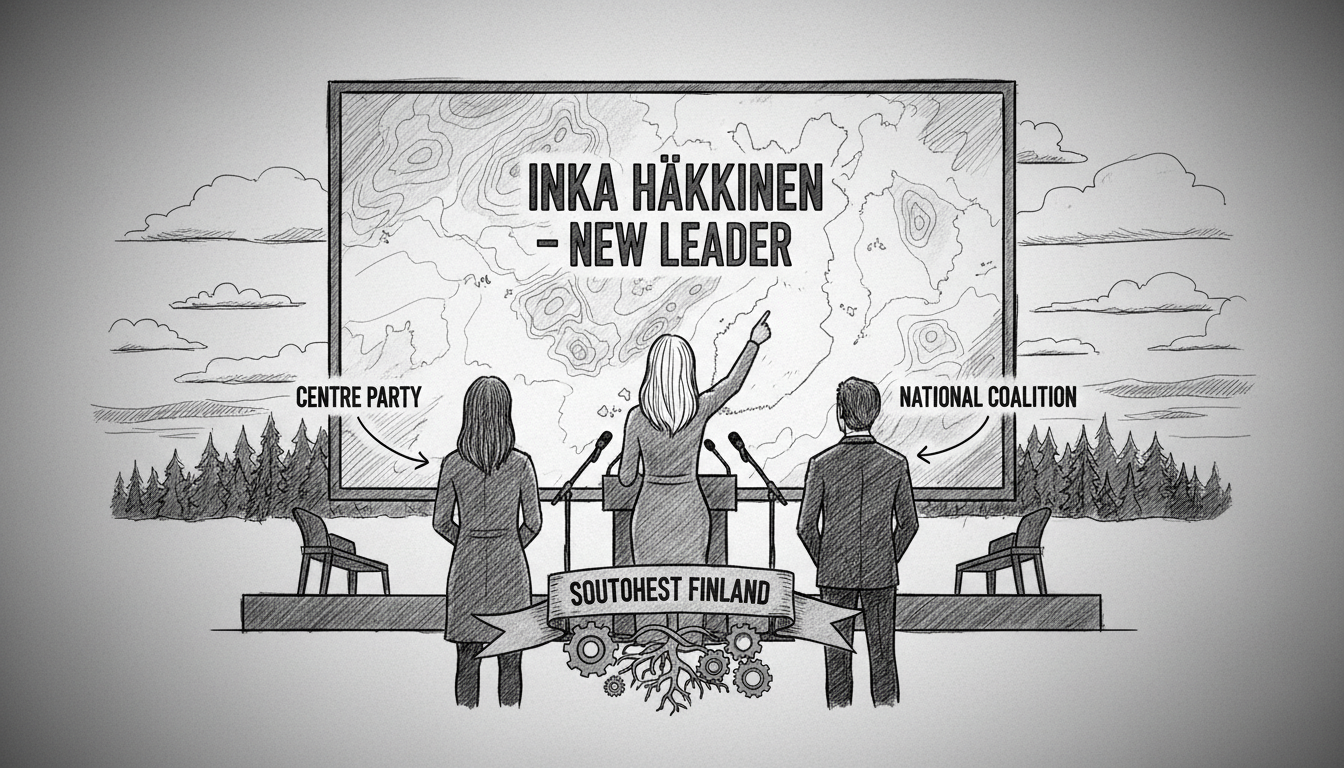
Inka Häkkinen from Kouvola secured the position of chairperson for the Southeast Finland Social Democrats during a party district meeting on Saturday. Her two-year term will commence at the start of the next calendar year. Häkkinen defeated Matias Kvisti from Mikkeli in a vote of 24 to 12, marking a clear leadership change for the regional party branch. The election concluded the three-term tenure of outgoing chair Hannu Repo from Luumäki, who did not seek re-election. Häkkinen currently serves as the chair of the Kouvola City Council and held the role of first deputy chair in the district board, giving her a strong foundation in both municipal and party politics. The district assembly also elected Kvisti as the first deputy chair and Kia Hänninen from Taipalsaari as the second deputy chair, completing the new leadership team.
This leadership transition occurs within a critical political context for the Social Democratic Party (SDP) in Finland. The party, a key component of the current governing coalition in Helsinki, faces pressure to maintain strong regional organizations. These local branches are vital for mobilizing voter support and implementing national policy agendas at the municipal level. The election in Southeast Finland, a region with significant industrial heritage, signals a potential shift in local political priorities. The new chair will need to navigate issues like regional economic development and social welfare, which are central to the SDP's platform and are often debated within the Finnish Parliament, the Eduskunta.
Concurrently, other major Finnish political parties held their own district assemblies in late November, solidifying their regional structures. In a notable development, Liisa Varjola from Kouvola was confirmed for a third term as chair of the Centre Party's Kymenlaakso district. Her deputies, Janne Walli and Vappu Kuokka, were also re-elected. This continuity suggests a stable local base for the Centre Party, which is currently in opposition at the national level. Meanwhile, the leadership of the Southeast Finland National Coalition Party (Kokoomus) remained unchanged, with Oskari Valtoja continuing as chair, supported by deputies Kai Savolainen and Lilla Saaristo. Kokoomus, as the leading party in the national government, relies on these regional strongholds to support its legislative program.
These simultaneous leadership confirmations across three major parties highlight the ongoing consolidation of political power bases outside the capital region. For international observers, this underscores the decentralized nature of Finnish politics, where regional party organizations hold substantial influence. The decisions made in these district meetings in cities like Kouvola and Mikkeli directly affect candidate selection, policy focus, and grassroots campaigning. The stability in the Centre and National Coalition leadership contrasts with the change in the Social Democrats, potentially indicating different internal dynamics. The real test for Häkkinen and her counterparts will be translating local mandates into effective political influence, both in their municipalities and in the broader national discourse that shapes Finland's approach to EU directives and domestic policy.