
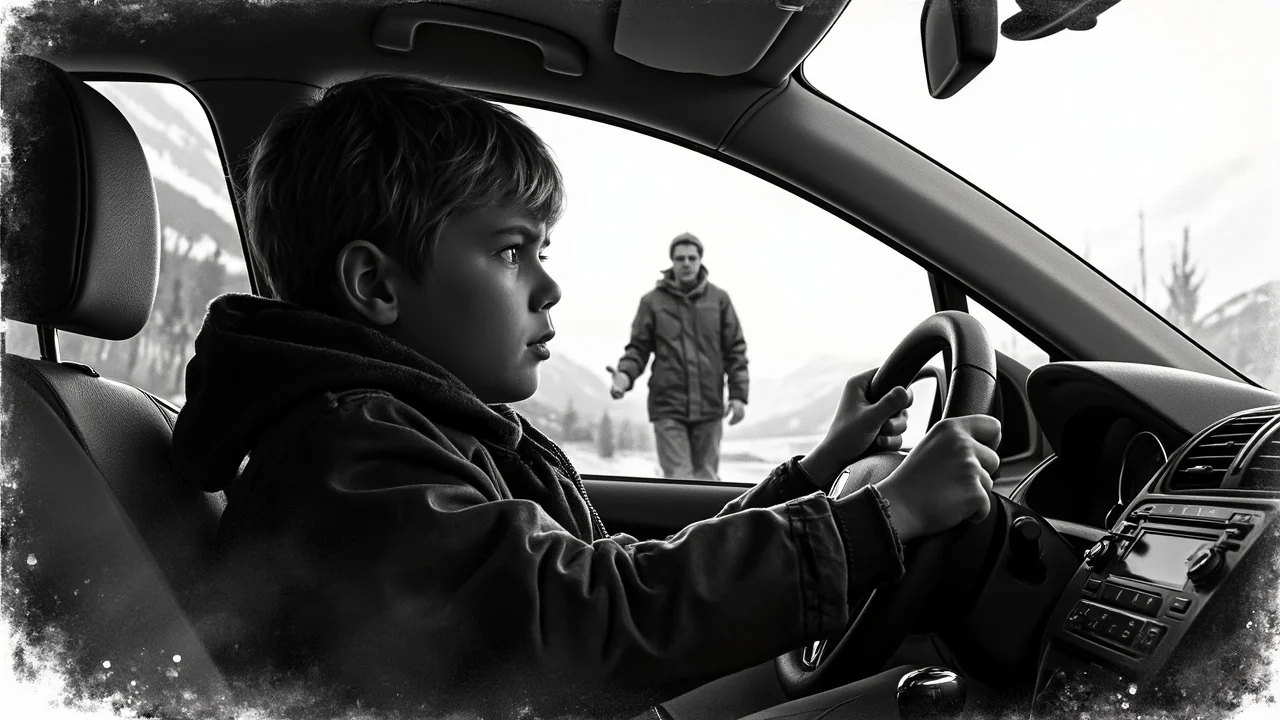
Norway police have reported a case where a 10-year-old boy was behind the wheel of a car that ended up in a ditch, with his father present as a passenger. The personal car veered off near the turnoff to Steinvik Camping by Moelv before landing in the ditch. The driver was found to be far too young to hold a license, while the father was a passenger, police stated. The father has been reported to authorities and has had his driver's license temporarily confiscated.
A Startling Incident at Moelv
The event occurred near Moelv in Innlandet county, a region known for its lakes and quieter roads rather than such unusual traffic violations. According to the police report, the car left the roadway and ended up in a ditch close to Steinvik Camping. Initial reports did not indicate serious injuries, but the focus quickly shifted to the identity of the driver. Upon investigation, officers discovered the driver was a child who had not yet reached the legal age for any form of driver's license in Norway.
Immediate Legal Consequences for Parent
The police response was swift in terms of legal action against the adult responsible. The father, who was in the passenger seat during the incident, was immediately reported for his role. A key administrative penalty was the temporary seizure of his driving license. This measure is a common enforcement tool Norwegian police use in situations where an individual's judgment or responsibility is called into question, posing a potential immediate risk to road safety. The confiscation underscores the severity with which authorities viewed the adult's decision to allow the child to operate the vehicle.
Legal Framework and Child Welfare
This incident intersects two critical areas of Norwegian law: traffic regulations and child welfare. The Traffic Act strictly prohibits unlicensed driving, with severe penalties for those who enable it. More profoundly, the Children Act imposes a duty of care on parents and guardians to protect children from harm. Allowing a 10-year-old to drive a car on a public road would likely be seen as a significant breach of this duty. The case automatically triggers considerations by child welfare services, who must assess whether the child's home environment is safe and whether the parent requires intervention or support to ensure the child's safety in the future.
Broader Implications for Parental Responsibility
The case near Moelv is not just a traffic statistic, it acts as a stark point of discussion on parental responsibility. It raises questions about the judgment of guardians and the boundaries of allowing children to engage in high-risk activities. While Norway has a culture that encourages independence and outdoor activity for children, this is fundamentally balanced against clear legal and safety frameworks. The public and official reaction to such cases typically reinforces that certain boundaries, especially those involving mechanical power and public roads, are non-negotiable for the safety of the child and the general public.
A Community's Perspective
For residents in areas like Moelv, such an event is deeply unusual. Local communities rely on shared norms of safety and responsibility, particularly on roads that may be used by families, cyclists, and campers. The incident serves as an unsettling reminder that breaches of these fundamental norms can occur anywhere. It reinforces the community's reliance on clear laws and responsive authorities to uphold the standards that keep public spaces safe for everyone, especially children who depend on adult protection. The conversation it prompts locally is likely one of disbelief coupled with a reinforced commitment to those safety norms.