
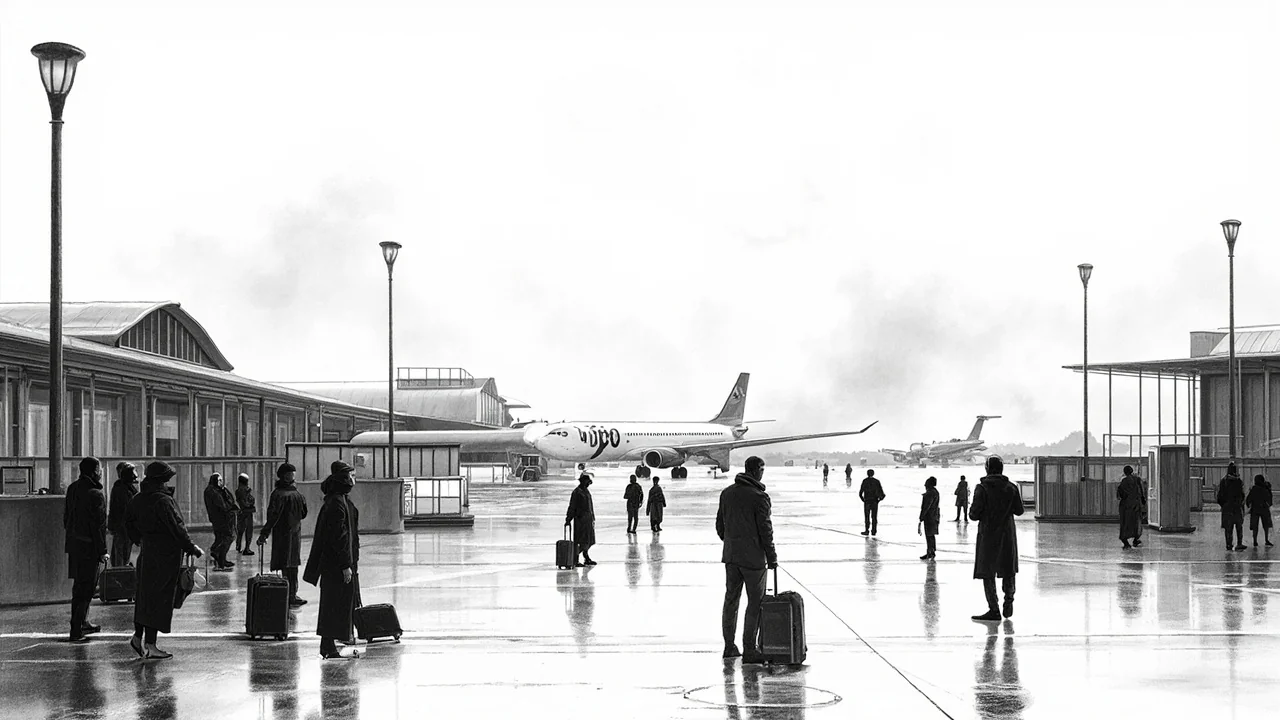
Norway's Stavanger Sola Airport has suspended all flight operations due to severe winter conditions. Airport Director Anette Sigmundstad confirmed the complete halt, citing significant challenges with snow clearing and de-icing caused by strong winds. The sudden closure has stranded passengers and disrupted critical air links to Norway's energy capital, with no immediate timeline for a full restart.
“It is on and off in connection with snow clearing. Some challenges with de-icing now because of the wind. Several are also choosing to fly to other airports,” Sigmundstad said in a statement. She advised all travelers to contact their airlines directly for updates and warned that delays should be expected even after operations resume. The situation highlights the persistent vulnerability of Norway's transport infrastructure to Arctic weather, even at major international hubs.
A Critical Hub Paralyzed
Stavanger Sola Airport is not a minor regional field. It is the primary gateway to the southwestern county of Rogaland, the undisputed heart of Norway's offshore oil and gas industry. The airport handles millions of passengers annually, including a high volume of business traffic from energy firms, supply companies, and offshore workers commuting to North Sea installations. A full stop here sends immediate shockwaves through the national economy. Every hour of closure delays personnel rotations, postpones critical meetings, and disrupts supply chains that rely on air freight.
The problems are twofold: heavy snowfall and, more critically, high winds. While Norwegian airports are experts at snow removal, powerful gusts make the de-icing process for aircraft both dangerous and ineffective. Applying de-icing fluid in high winds is futile, as it is blown away before it can work. This creates an impossible safety calculus for ground crews and air traffic control. The decision to halt all operations, while disruptive, is a standard safety protocol when conditions exceed operational limits.
The Ripple Effect Across Norway
The shutdown at Sola creates a domino effect across Scandinavia's aviation network. Sigmundstad noted that many passengers are being redirected to other airports. The most likely alternatives are Bergen Airport Flesland to the north or Oslo Airport Gardermoen to the east. This places sudden, intense pressure on those hubs, their ground transport links, and their capacity to handle extra traffic. It also turns a regional travel problem into a national logistical puzzle.
For the stranded passenger, the advice is clear but frustrating: contact your airline. In such scenarios, airlines activate contingency plans, which can include rebooking on later flights, arranging bus transport to alternative airports, or providing hotel vouchers for overnight delays. However, with the weather affecting a wide area, capacity on alternative routes fills rapidly. The human impact is considerable—missed connections, family plans upended, and business schedules thrown into chaos. The true economic cost will be tallied in lost productivity and emergency accommodations.
Norway's Winter Resilience Tested
This incident is a stark test of Norway's much-vaunted winter preparedness. The country invests heavily in keeping its society functional during the long, dark winters. From heated sidewalks in Oslo to massive snowplow fleets, adaptation is a national imperative. Aviation is a particular point of pride, with Norwegian pilots renowned for their skill in challenging conditions. Yet, this event proves that absolute nature still holds a veto. Some weather events are simply too powerful for even the most advanced technology and procedures.
It raises ongoing questions about infrastructure investment. Sola Airport has undergone expansions and upgrades, but its coastal location on the exposed southwestern coast makes it uniquely susceptible to North Sea storms. Climate change adds a layer of complexity, potentially altering precipitation patterns and storm intensity. Policymakers in the Storting continually balance the cost of building for extreme resilience against the economic damage caused by shutdowns. This closure will undoubtedly fuel debates in Parliament about future funding for transport infrastructure hardening.
The Energy Sector's Achilles' Heel
The paralysis of Sola exposes a key vulnerability for the Norwegian energy sector. The industry's just-in-time logistics and 24/7 operational tempo depend on reliable air connections. Offshore installations operate on strict crew change schedules, and many specialists fly in from around the world for short-term projects. A closed airport acts as a plug in the pipeline of human expertise. While some critical personnel are transported by helicopter directly from nearby heliports, these too can be grounded by the same weather systems.
This is not merely an inconvenience; it has real operational and safety implications. Delayed crew changes can lead to worker fatigue on platforms. Postponed equipment deliveries can stall maintenance work. The financial impact on companies, from the state-owned giant Equinor down to small subcontractors, runs into the millions of kroner per day. It serves as a reminder that Norway's vast offshore wealth is ultimately reliant on the fragile link of coastal airports.
Looking Beyond the Immediate Crisis
As airport crews battle the wind and snow, the immediate focus is on restoring safe operations. However, the broader conversation will continue. How can Norway better future-proof its critical aviation nodes? Solutions are complex and expensive. They could involve investing in even more powerful snow-removal technology, constructing better windbreaks around airport aprons, or enhancing digital systems for passenger communication during crises. There is also the strategic question of diversification—whether strengthening rail and road links to provide more resilient alternatives is a necessary long-term investment.
For now, travelers and the nation wait. The shutdown at Stavanger Sola is a powerful demonstration of nature's authority over human enterprise. It tests technology, logistics, and patience. It is a very Norwegian problem—a modern, technologically advanced society momentarily humbled by the ancient, fierce weather of its homeland. The snow will eventually be cleared, the winds will die down, and the jets will once again line up for takeoff. But the memory of this full stop will linger in boardrooms and government offices, a cold reminder of the price of operating at the edge of the Arctic.