
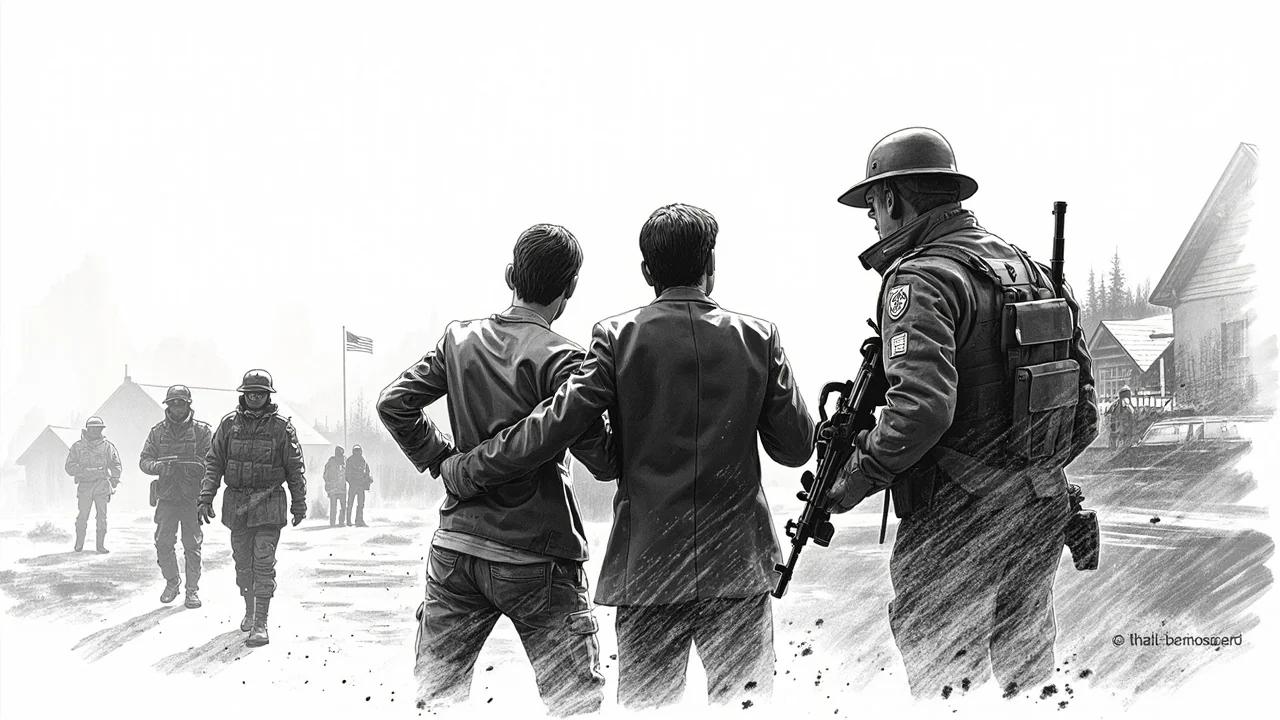
Norwegian police armed with automatic weapons descended on the Sparbu district of Steinkjer after reports of a violent fight involving threatening objects. The operation led to the swift arrest of one man in his thirties and medical treatment for another man in his forties who sustained minor injuries.
"When the report contained information that threatening objects were being used, authorization for armed deployment was given for the assignment," operations manager Christopher James White said in a statement. The decision to send a heavily armed unit highlights the immediate risk assessment made by the Trøndelag Police District. White confirmed that police have now secured the scene. "Therefore, there is no danger to any outsiders now," he stated.
The Incident at Sparbu
Police received the call regarding a physical altercation between two parties in the residential and commercial area of Sparbu, located on the eastern outskirts of Steinkjer municipality. The specific nature of the "threatening objects" mentioned in the emergency call has not been disclosed by authorities. This detail was the critical factor that escalated the response from a standard patrol to a sanctioned armed intervention. The injured man, identified as being in his forties, received treatment from ambulance personnel at the scene for what were described as minor wounds.
Armed Police Protocols in Norway
Norwegian police are not routinely armed. The decision to deploy officers with weapons, typically Heckler & Koch MP5 submachine guns or pistols, requires authorization from an operations manager based on an immediate threat assessment. Guidelines mandate that the threat must be specific and serious, often involving weapons or a high risk of violence. The Steinkjer incident falls squarely within these parameters, triggering a targeted armed response. Such deployments, while rare in smaller towns, are a standard procedural tool when intelligence suggests a elevated risk to officers or the public.
Police Investigation Underway
Following the containment of the immediate situation, the investigative phase began. "Police are working to investigate the background of the fight," White said. This work will involve questioning both individuals involved, any witnesses, and examining evidence from the scene. Determining the relationship between the two men and the sequence of events that led to the violence is now the priority. Charges are likely to be considered once the investigation establishes whether the threatening objects constituted illegal weapons.
Context for Steinkjer and Trøndelag
Steinkjer, a town of approximately 21,000 inhabitants and the administrative center of Trøndelag county, generally experiences low levels of serious violent crime. Incidents requiring armed police response are noteworthy events for the community. The police district's ability to rapidly deploy specialized resources to a municipality over 70 kilometers northeast of Trondheim demonstrates the integrated nature of Norway's emergency response network. It also reflects standard preparedness for incidents that, while statistically uncommon, can occur anywhere.
Aftermath and Community Response
The quick resolution of the incident likely limited public disruption. By confirming that there was no ongoing danger to the wider public, police aimed to reassure the local community promptly. The focus now shifts from operational response to judicial processing. The man in his thirties who was taken into control will be held for questioning and is subject to potential pre-trial detention hearings, depending on the severity of the suspected charges. The injured party will cooperate with the investigation as the victim of the alleged assault.
The Legal Framework for Use of Force
The actions of the police will be evaluated against Norway's strict laws on the use of force. Police authority is governed by the Police Act and regulations that emphasize proportionality. The presence of armed officers is itself a show of force intended to gain immediate control and de-escalate. Their restraint in not discharging weapons, as indicated by the minor nature of the injuries reported, will be seen as an operation that followed its intended procedural course. The investigation will also determine if the civilians involved will face charges under the Penal Code for violence or weapons possession.