
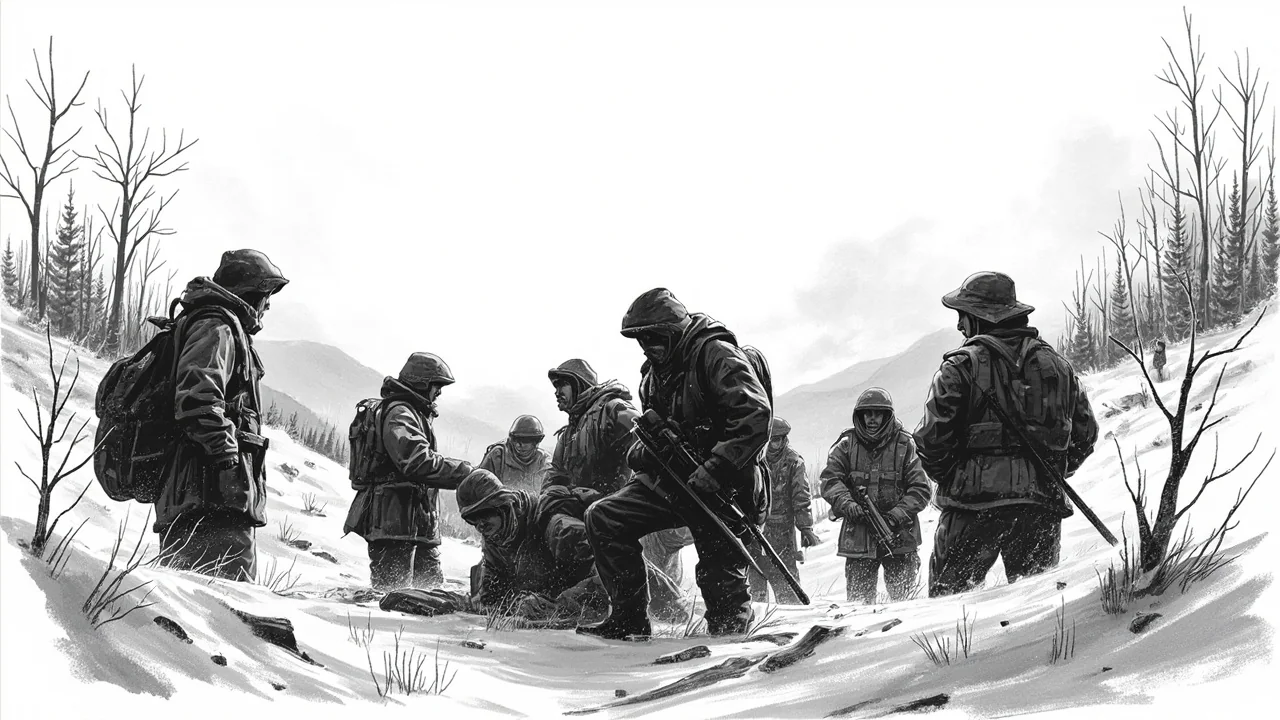
Norway’s military has launched an investigation after at least six conscripts were hospitalized with frostbite following a grueling winter exercise in the far north. A total of 76 soldiers from the Jegerbataljonen garrison in Sør-Varanger completed a 60-kilometer ski march from Polmark to Bugøyfjord in Finnmark this week, an operation designed to test Arctic readiness.
Soldiers Evacuated for Treatment
The first reports emerged Saturday that two soldiers had been sent to the University Hospital of North Norway (UNN) in Tromsø for examination and treatment of frostbite. Another twelve were assessed by a doctor at the military camp's sick bay. By Sunday, the Defence Forces confirmed the situation had escalated. 'Another four soldiers of the 14 already described with frostbite were sent to UNN in Tromsø on Saturday evening for medical assessment and treatment,' said Chief Physician of the Army, Jørn Einar Rasmussen. He stressed that all affected personnel were receiving thorough care from both military and civilian medical staff.
Command Response and Internal Review
The incident has triggered a formal review ordered by the head of the Army, Major General Lars S. Lervik. The investigation will be led by personnel from the Defence Forces' Winter School and begins Monday. 'We take it seriously that so many on one exercise got frostbite, and we will do the investigations required to get to the bottom of what happened, and learn from it,' said Lieutenant Colonel Audun Jørstad of the Jegerbataljon. Jørstad noted that while the battalion's nearly 1,000 soldiers handle about 1,500 missions along the Russian border each month with few serious cold injuries, this case warranted a close look.
Medical Prognosis and Training Realities
Chief Physician Rasmussen provided details on the soldiers' conditions, indicating the injuries were not the most severe category. 'None of the soldiers have gotten more than second-degree frostbite,' Rasmussen said. 'Experience suggests most can return to service, but the individual's health is prioritized first.' The final scope and severity of the injuries are still being determined through ongoing medical evaluations. The Army has stated there is no new information that changes their initial assessment of the incident's severity.
The Demands of Arctic Preparedness
This event highlights the inherent risks of Norway's high-tempo Arctic military training, even for a force considered among the world's most experienced in cold-weather operations. The exercise in Finnmark, Norway's northernmost and most sparsely populated county, replicates the extreme conditions soldiers could face in a real conflict scenario. Temperatures in the region during winter routinely plunge well below -20 degrees Celsius, and wind chill during a multi-day ski march can pose severe challenges to even well-equipped troops. The Jegerbataljon, or Ranger Battalion, based in Sør-Varanger, has primary responsibility for monitoring Norway's 198-kilometer land border with Russia, making its operational readiness a national security priority.
Broader Implications for Conscript Service
The fact that those injured were first-time conscripts adds another layer of scrutiny. Norway's mandatory military service relies on training young citizens to operate in the nation's challenging environment. Incidents like this test public confidence in the system and the military's duty of care. The Army's statement that it will 'seek to facilitate the service for the soldiers who have gotten frostbite' points to the need for tailored follow-up, both medical and potentially psychological, for those affected. The military's reputation for excellence in Arctic operations is a point of national pride and a key strategic asset, maintaining that standard requires demonstrating that lessons are learned when training goes wrong.
A Look Ahead
The swift launch of an investigation indicates the Army recognizes the operational and reputational stakes. The findings from the Winter School team will be closely watched, not just within the Norwegian armed forces but by allied nations who train in Norway's Arctic conditions. The primary focus remains on the recovery of the injured soldiers. As Chief Physician Rasmussen stated, their health is the priority. Yet, the outcome of this probe will influence winter training protocols for one of NATO's most critical border garrisons, with implications for how the alliance prepares for Arctic security challenges. The incident serves as a stark reminder that even for a winter-warfare specialist, the Arctic environment remains a formidable and unforgiving adversary.