
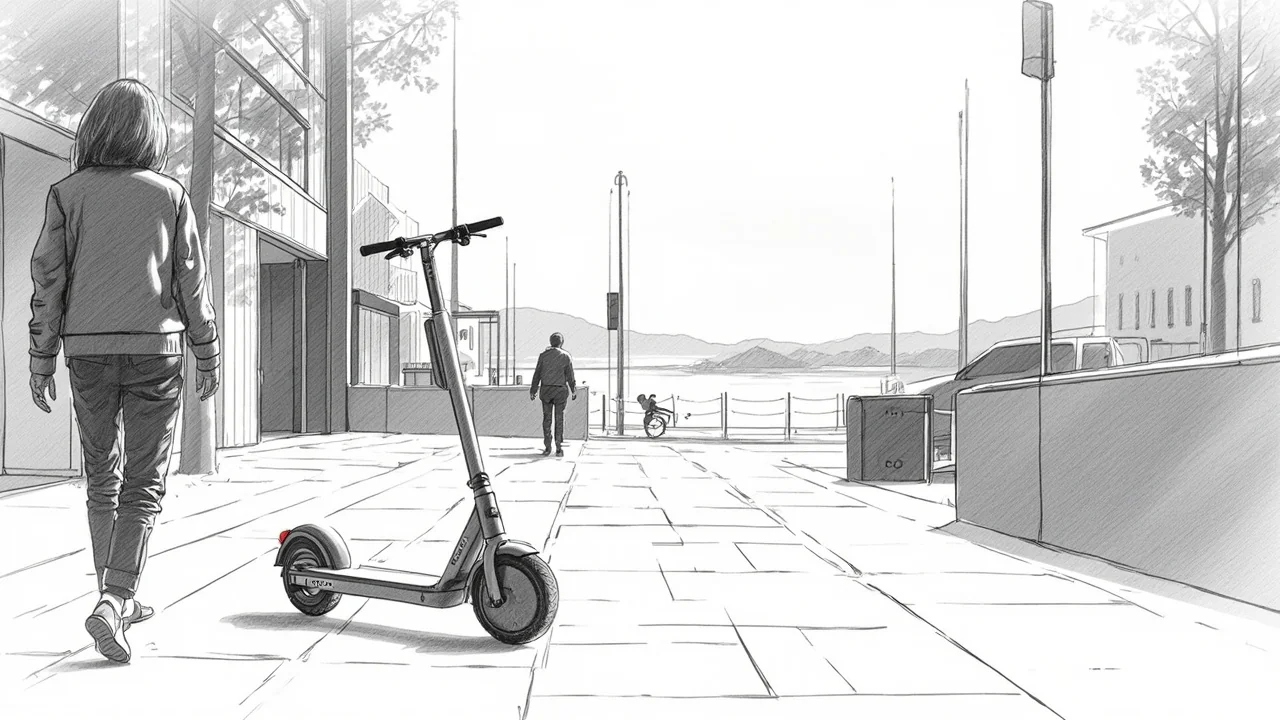
Norway's Parliament has empowered Oslo to ban electric scooters from city sidewalks, a move that will reshape urban transport in the capital. The Storting voted Tuesday to grant municipalities new authority to tighten e-scooter regulations, a power Oslo's city government confirmed it will use immediately. This decision marks a significant policy shift aimed at reducing pedestrian conflicts and follows years of public debate over the safety and clutter caused by shared micromobility services.
"It is good that more parties are joining the Liberal Party's proposal to get e-scooters off the sidewalk," said Marit Vea, Oslo's City Councilor for Environment and Transport. "The goal is a better city for pedestrians, where the level of conflict is reduced, and the use of e-scooters becomes safer for everyone." The cross-party majority supporting the measure indicates a broad political consensus that the current model is unsustainable.
A Capital Forced to Adapt
Oslo's streetscape has been transformed since shared e-scooters arrived several years ago. The convenience for riders was quickly offset by complaints from pedestrians, the elderly, and disability advocates. Sidewalks in neighborhoods like Grünerløkka and Majorstuen became obstacle courses of parked scooters, while silent, speeding scooters created a persistent sense of unease for those on foot. The city has attempted regulation through geofencing, speed limits, and parking zones, but enforcement proved difficult.
The new legal amendment allows municipalities to designate where e-scooters can and cannot be ridden. Oslo's plan will effectively confine them to bicycle lanes and the roadway. This places Norway's approach in contrast to some European capitals that have opted for outright bans or stricter operator licensing. The policy reflects a characteristically Norwegian attempt to find a balanced, practical solution—regulating the vehicle's use rather than prohibiting the technology itself.
The Safety Calculus and Urban Priorities
Data on e-scooter accidents has been a key driver for politicians. While national aggregated statistics are scarce, reports from Oslo's emergency rooms and police have highlighted a steady stream of injuries involving both riders and pedestrians. A 2022 report by the Norwegian Institute of Public Health noted a concerning rise in e-scooter related head injuries. For the Conservative and Labour parties, who backed the measure, this public health concern outweighed the argument for flexible, green transport.
"This is about prioritizing the weakest traffic participants," said a Conservative Party spokesperson from the Storting's transport committee. "The sidewalk must be a safe zone. E-scooters have a role in our transport mix, but that role is not alongside children walking to school or elderly people with walkers." The decision signals a reassertion of pedestrian primacy in the city center, aligning with Oslo's long-term vision of a car-reduced, people-focused urban environment.
Industry Reaction and Implementation Challenges
E-scooter operators, including major international firms like Tier and Voi, have acknowledged the need for better integration. In statements, they expressed a willingness to work with Oslo on the new rules but highlighted the necessity of adequate infrastructure. Their central concern is that without a comprehensive network of safe bicycle lanes, forcing scooters onto roads could increase accidents with cars and deter ridership.
This presents a tangible challenge for City Councilor Vea. Oslo has expanded its cycle path network in recent years, but it remains fragmented. The success of the sidewalk ban may hinge on accelerating the construction of protected bike lanes. "The city's responsibility now increases," noted a transport planner at the Institute of Transport Economics. "You cannot simply ban scooters from sidewalks without providing a safe, viable alternative space. This puts infrastructure investment front and center."
A Broader Nordic Transport Trend
Norway's move places it within an ongoing Nordic recalibration of micromobility policy. Copenhagen has enforced strict parking zones and imposed higher fees on operators, while Stockholm has experimented with reduced speed limits in pedestrian-heavy areas. Finland has taken a more liberal approach in some cities. Oslo's sidewalk ban is among the most restrictive in the region regarding where scooters can be ridden, setting a precedent other Norwegian cities like Bergen and Trondheim may follow.
The policy also intersects with Norway's ambitious climate goals. E-scooters are often touted as a green alternative for short trips that might otherwise be taken by car. The government must carefully balance safety regulations with the need to encourage zero-emission transport. Analysts suggest the new rules could ultimately benefit the industry by legitimizing and structuring it, potentially increasing public acceptance if safety improves.
What Comes Next for Oslo's Streets
Implementation is expected in the coming months. The city must draft specific local regulations, likely designating sidewalk riding as a traffic violation subject to fines. Public education campaigns will be crucial to ensure both riders and pedestrians understand the new rules. Police and municipal enforcement officers will face the practical task of monitoring compliance, a resource-intensive endeavor.
The ultimate test will be on the asphalt of Karl Johans gate and along the Akerselva river. Will displaced scooter traffic lead to safer sidewalks but more congested bike lanes? Will riders migrate to electric bikes, or will some abandon micromobility altogether? Oslo has decided that pedestrian peace and safety are non-negotiable. This policy shift is more than a traffic regulation; it is a statement about the kind of urban life Oslo chooses to foster. The world will be watching to see if this Scandinavian solution can successfully tame the chaotic era of shared e-scooters.